
Close Menu
  • News
    • Medical
    • Nanomaterials
    • AI & Robotics
    • 2D Materials
    • Metamaterials
    • Nanoelectronics
    • ETF’s
    • Medicine
  • Environment
    • Earth.com
    • TreeHugger
    • Nanomuscle
  • Beauty
    • Makeupanalysis
What's Hot

Biomass-Derived Nanomaterials Offer a Greener Route to Pollution Cleanup

September 1, 2026

Nanozyme Aptasensors Show Promise for Faster Food, Health, and Environmental Testing

September 1, 2026

Researchers Solve Two Major Problems Holding Back SiC Electronics

September 1, 2026
Facebook X (Twitter) Instagram
  • Contact Us
  • Privacy Policy
  • Terms & Conditions
Facebook X (Twitter) Instagram
Elnano – Global Innovative Nanotechnology SolutionsElnano – Global Innovative Nanotechnology Solutions
  • News
    • Medical
    • Nanomaterials
    • AI & Robotics
    • 2D Materials
    • Metamaterials
    • Nanoelectronics
    • ETF’s
    • Medicine
  • Environment
    • Earth.com
    • TreeHugger
    • Nanomuscle
  • Beauty
    • Makeupanalysis
Elnano – Global Innovative Nanotechnology SolutionsElnano – Global Innovative Nanotechnology Solutions
Home » Establishing a Global Benchmark for Graphene Quality Control
Nanoelectronics

Establishing a Global Benchmark for Graphene Quality Control

April 2, 2026No Comments2 Mins Read
Share
Facebook Twitter LinkedIn Pinterest Email

University of Manchester and National Physical Laboratory scientists have established a global benchmark for verifying graphene’s single-atom thickness.
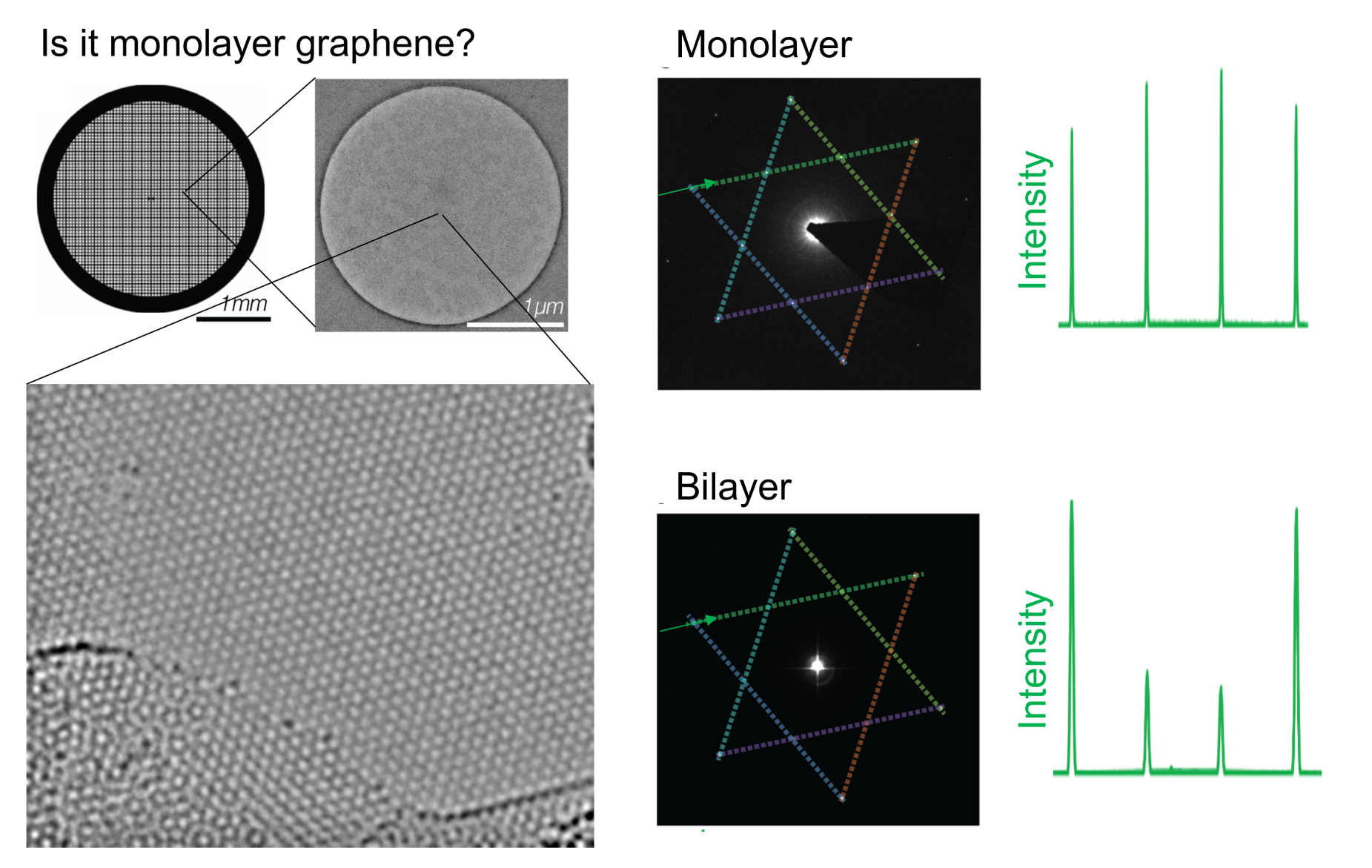
Electron diffraction analysis of monolayer graphene. Image Credit: University of Manchester

The benchmark was established using high-resolution transmission electron microscopy (TEM). The work is reported in the journal 2D Materials.

Graphene has the potential to revolutionize various sectors, including electric vehicles and smartphones, but only where its quality can be assured. The University of Manchester has spearheaded the largest global study aimed at establishing a new international standard for assessing the single-atom thickness of graphene.

The research team has created a dependable methodology that will serve as the foundation for future industrial benchmarks. The study supports the development of a new ISO technical specification for graphene.

To incorporate graphene and other 2D materials into industrial applications, from light-weight vehicles to sports equipment, touch screens, sensors, and electronics, you need to know you’re working with the right material. This study sets a global benchmark that industry can trust.

Dr. William Thornley, The University of Manchester

“Electron diffraction has long been used to distinguish monolayer from few-layer graphene, but it’s often applied without a full treatment of uncertainties. By collaborating across 15 leading labs. including the original pioneers, we’ve mapped the pitfalls and shown how to get reliable results,” added Dr. Evan Tillotson.

We’ve designed this protocol so it works in real labs, not just in specialist centers. And for organizations without TEM capability, we can provide measurements commercially through our partnership with the Royce Institute.

Sarah Haigh, Professor, Materials, The University of Manchester

The results are directly incorporated into the ISO/TS 21356-2 international standard, which is currently in press and anticipated to be published in 2026.

This work builds on the NPL Good Practice Guide 145 ‘Characterization of the Structure of Graphene’ developed in partnership with the University of Manchester, and one of NPL’s most downloaded guides.

Dr. Andrew Pollard, Principal Scientist and Strategy Lead, Surface Technology Group and Advanced Materials, National Physical Laboratory

Journal Reference:

Pollard, A., et al. (2025). A large interlaboratory electron diffraction study of monolayer graphene. 2D Materials. DOI: 10.1088/2053-1583/ae2ca1. 

See also  Revolutionizing Nanoparticle Production with Laser Ablation

Source link

Benchmark Control Establishing global graphene quality
Share. Facebook Twitter Pinterest LinkedIn Tumblr Email

Related Posts

Ultra-Large Spin Hall Oscillator Lattices Achieve Nanosecond Synchronization

September 1, 2026

Self-Heating Nanopores Turn Salt Precipitation Into Neuromorphic Memory

August 31, 2026

Scientists Unveil Technique to Build Ultra-Thin Material Stacks That Promise Quantum Breakthrough

August 31, 2026

6-Channel Piezo Driver for Precision Actuators & Transducers

April 6, 2026
Add A Comment

Comments are closed.

Top Posts

Electrons Flow Like Liquid in Graphene: New Study Insights

September 19, 2025

Scientists develop heat-activated protein control for targeted cell death

September 21, 2025

Tiny Hidden Vibrations Could Make Aircraft More Fuel Efficient

August 31, 2026

Subscribe to Updates

Get the latest sports news from SportsSite about soccer, football and tennis.

Explore the future with our Nanotech blog—covering innovations, research, applications, and breakthroughs shaping science, medicine, and modern technology.

We're social. Connect with us:

Facebook X (Twitter) Instagram YouTube
Top Insights

Biomass-Derived Nanomaterials Offer a Greener Route to Pollution Cleanup

September 1, 2026

Nanozyme Aptasensors Show Promise for Faster Food, Health, and Environmental Testing

September 1, 2026

Researchers Solve Two Major Problems Holding Back SiC Electronics

September 1, 2026

Subscribe to Updates

Get the latest creative news from FooBar about art, design and business.

  • Contact Us
  • Privacy Policy
  • Terms & Conditions

© 2026 elnano.com - All rights reserved.

Type above and press Enter to search. Press Esc to cancel.