
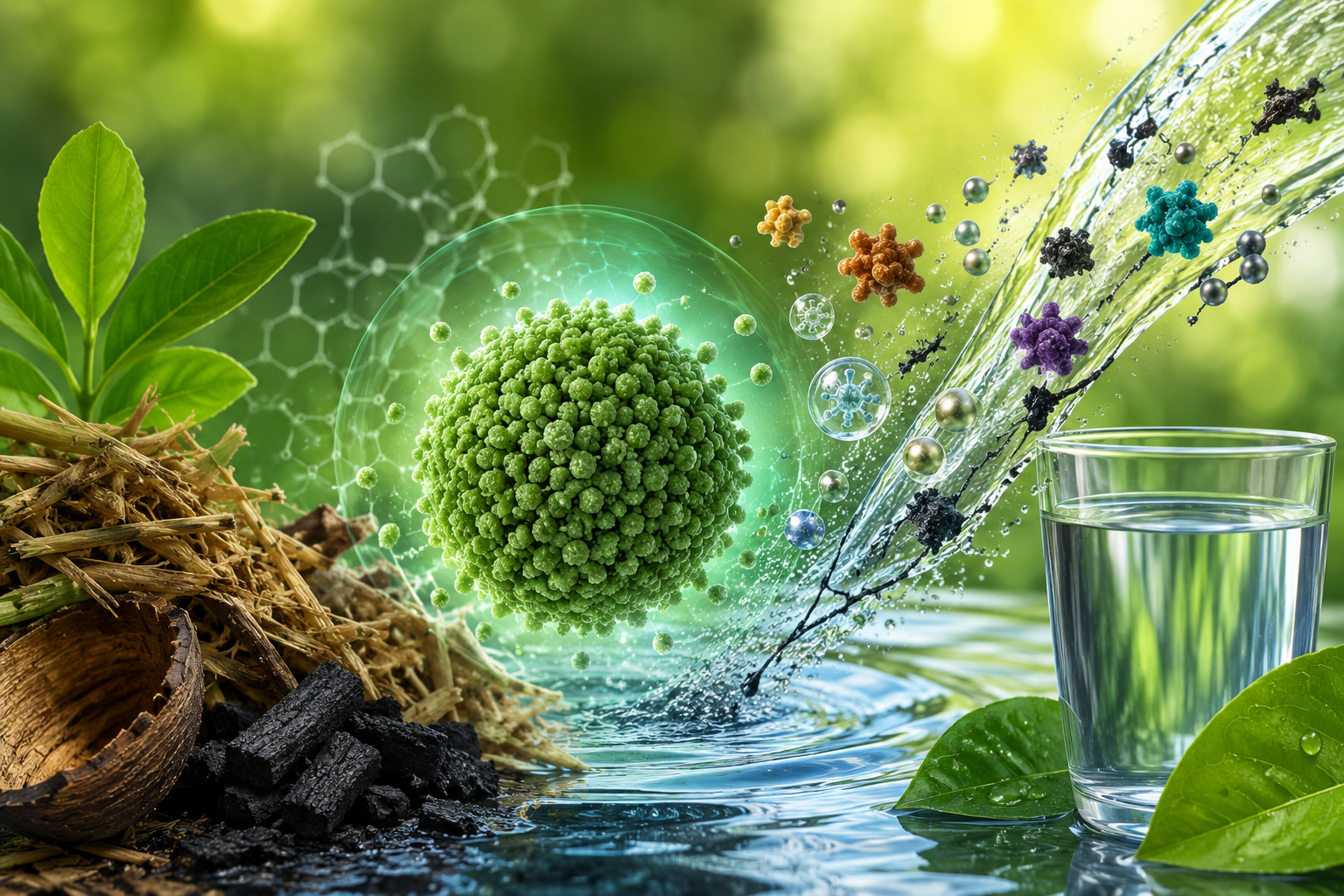
From agricultural waste to engineered nanoparticles, researchers show how biomass-derived materials could tackle metals, dyes, and pesticides while revealing the safety and scale-up hurdles that still stand between laboratory success and real-world cleanup.
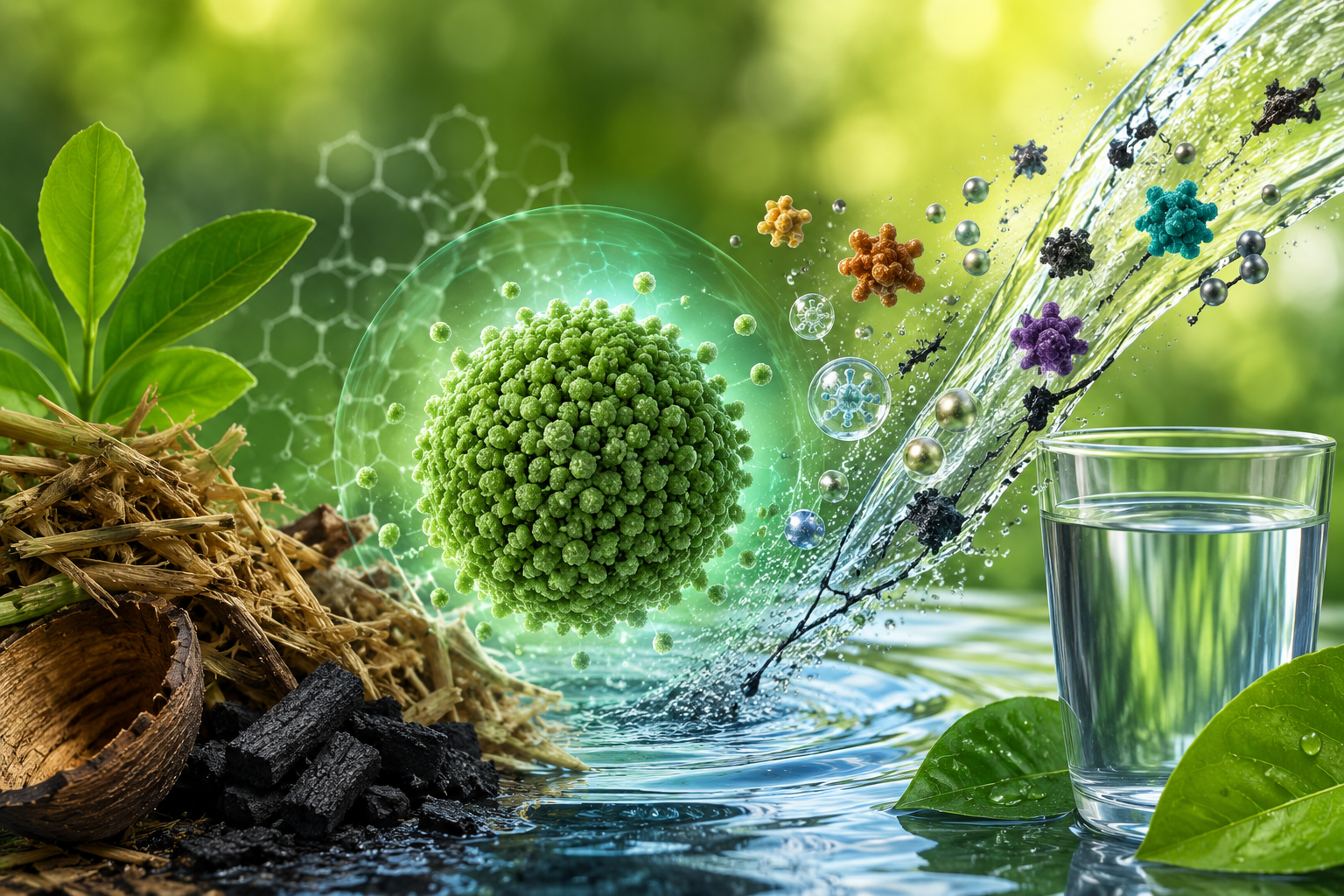
Paper: Nanotechnology advances in biomass-derived green nanomaterials for mitigating environmental toxicity. AI-generated conceptual image created using ChatGPT/OpenAI.
In a recent review article published in the journal Discover Nano, researchers explored advances in biomass-derived green nanomaterials for sustainable and efficient mitigation of environmental toxicity caused by persistent pollutants.
Environmental Pollution Challenges
Environmental pollution from persistent, toxic contaminants such as pesticides, synthetic dyes, heavy metals, and microplastics has become a critical global concern due to their ability to bioaccumulate and harm ecosystems and human health. Conventional pollutant removal methods often rely on energy-intensive, costly, and sometimes secondary-pollution-generating techniques.
In response, green nanotechnology, notably biomass-derived nanomaterials, has emerged as a promising sustainable alternative. These nanomaterials can be synthesized from renewable biological resources such as plant extracts, microorganisms, and agricultural waste using eco-friendly processes that reduce energy use and reliance on hazardous chemical reagents.
The nanoscale properties of these materials, such as high surface area, catalytic efficiency, and biocompatibility, enable enhanced adsorption, catalytic degradation, and redox interactions with pollutants.
This review examines recent advances in the synthesis, characterization, mechanisms, and applications of biomass-derived nanomaterials for environmental remediation, emphasizing their pollutant-specific performance and sustainability within circular bioeconomy frameworks.
Biomass-Derived Nanomaterial Synthesis
The article provides a comprehensive overview of green synthesis approaches for biomass-derived nanomaterials with a focus on environmentally benign techniques. Key synthesis methods discussed include hydrothermal treatment, microwave-assisted processes, and biologically mediated reduction using microbial enzymes, alongside low-energy, solvent-free approaches that aim to reduce energy use and dependence on hazardous reagents.
The review examines how morphology, crystallinity, surface functional groups, and particle size, alongside pH, temperature, precursor concentration, and biomass content, influence nanomaterial formation, stability, and performance.
The review also outlines the principal mechanisms through which these materials interact with contaminants, including adsorption, ion exchange, photocatalysis, catalytic degradation, and redox reactions. Pollutant-specific studies highlight parameters affecting performance such as pH, temperature, reaction time, concentration, and precursor biomass composition.
The review also addresses approaches to improve nanomaterial efficiency, including surface functionalization with heteroatoms (e.g., oxygen, nitrogen, phosphorus, sulfur), which modulates electrostatic interactions and catalytic sites. Life cycle assessments (LCA) provide insights into the environmental footprint of nanomaterial synthesis, emphasizing lower energy use and greenhouse gas emissions compared to conventional methods.
To contextualize scalability, the paper cites pilot-scale biochar production units and integrated waste valorization platforms that transform diverse agri-residues, such as rice husk and sugarcane bagasse, into functional carbon-based nanomaterials.
Hybrid bio-nano systems and artificial intelligence”>AI-driven design strategies are proposed as future tools to optimize properties and synthesis reproducibility. Toxicity and environmental fate evaluations, life-cycle impacts, and regulatory considerations are also discussed, with emphasis on biosafety and ecological risk assessments.
Pollutant Removal Mechanisms
The reviewed literature demonstrates substantial advances in the production and application of biomass-derived nanomaterials with pollutant removal efficiencies that can match or exceed those of conventionally synthesized nanomaterials in some applications.
Heavy metals such as lead and cadmium can be removed through adsorption, ion exchange, and surface complexation. Across the studies examined, the review reports heavy-metal removal efficiencies exceeding 95% under optimized conditions.
For synthetic dyes, catalytic degradation rates ranging from 90% to 98% are reported under optimized conditions. The review also discusses nanozymes, nanomaterials with enzyme-like activity, as an emerging strategy for pollutant degradation.
Pesticide remediation studies show adsorption efficiencies up to 85% under optimized conditions. Across pollutant classes, adsorption is facilitated by surface functional groups through interactions such as hydrogen bonding, π- π interactions, electrostatic attraction, and ion exchange. The review also considers microplastics as an emerging environmental threat, particularly because they can transport co-existing heavy metals and organic pollutants and alter their mobility and toxicity. Importantly, the review cautions that removal efficiencies above 90- 95% reported under controlled conditions may decline in real environmental matrices due to competing ions, fluctuating pH, and organic loads.
The discussion outlines challenges related to the heterogeneity of biomass sources, which impacts nanoparticle size distribution and performance consistency. Stability issues in environmental conditions, including aggregation and surface degradation, limit long-term applicability. Reusability is often limited to 3-10 cycles, constraining long-term economic feasibility.
Scaling up remains a critical hurdle due to variability in biomass precursors, lack of standardized synthesis protocols, and potential environmental impacts from biomass sourcing and processing emissions. Despite lower overall energy consumption than traditional nanomaterial production, energy use can still reach roughly 1- 5 kWh/kg depending on the synthesis route, while biomass preprocessing steps such as drying, grinding, and activation can substantially increase process costs.
Sustainability and Future Directions
This review underscores that biomass-derived green nanomaterials offer a promising approach to reduce the environmental burden associated with conventional nanomaterials for mitigating toxicity from pollutants such as heavy metals, synthetic dyes, and pesticides, while also addressing emerging threats including microplastics.
The integration of advanced strategies such as AI-driven design and hybrid bio-nano systems promises to address these limitations. Adhering to circular bioeconomy models for biomass waste valorization, combined with comprehensive life cycle and toxicity assessments, is critical to ensuring environmental safety and societal acceptance. The authors emphasize that toxicity can vary with particle size, morphology, concentration, and surface charge, and that even biogenic nanoparticles may pose ecological or health risks under chronic or high-dose exposure.
Moving forward, establishing standardized protocols and regulatory frameworks will be pivotal for the successful commercial-scale implementation of these green nanotechnologies, fostering sustainable environmental remediation while minimizing ecological risks.