
Close Menu
  • News
    • Medical
    • Nanomaterials
    • AI & Robotics
    • 2D Materials
    • Metamaterials
    • Nanoelectronics
    • ETF’s
    • Medicine
  • Environment
    • Earth.com
    • TreeHugger
    • Nanomuscle
  • Beauty
    • Makeupanalysis
What's Hot

Biomass-Derived Nanomaterials Offer a Greener Route to Pollution Cleanup

September 1, 2026

Nanozyme Aptasensors Show Promise for Faster Food, Health, and Environmental Testing

September 1, 2026

Researchers Solve Two Major Problems Holding Back SiC Electronics

September 1, 2026
Facebook X (Twitter) Instagram
  • Contact Us
  • Privacy Policy
  • Terms & Conditions
Facebook X (Twitter) Instagram
Elnano – Global Innovative Nanotechnology SolutionsElnano – Global Innovative Nanotechnology Solutions
  • News
    • Medical
    • Nanomaterials
    • AI & Robotics
    • 2D Materials
    • Metamaterials
    • Nanoelectronics
    • ETF’s
    • Medicine
  • Environment
    • Earth.com
    • TreeHugger
    • Nanomuscle
  • Beauty
    • Makeupanalysis
Elnano – Global Innovative Nanotechnology SolutionsElnano – Global Innovative Nanotechnology Solutions
Home » Scientists Unveil Technique to Build Ultra-Thin Material Stacks That Promise Quantum Breakthrough
Nanoelectronics

Scientists Unveil Technique to Build Ultra-Thin Material Stacks That Promise Quantum Breakthrough

August 31, 2026No Comments3 Mins Read
Share
Facebook Twitter LinkedIn Pinterest Email

Scientists have unveiled a new fabrication technique for the ultra-clean manufacturing of 2D heterostructures – materials just a few atoms thick – which could be used in quantum technology and electronics.
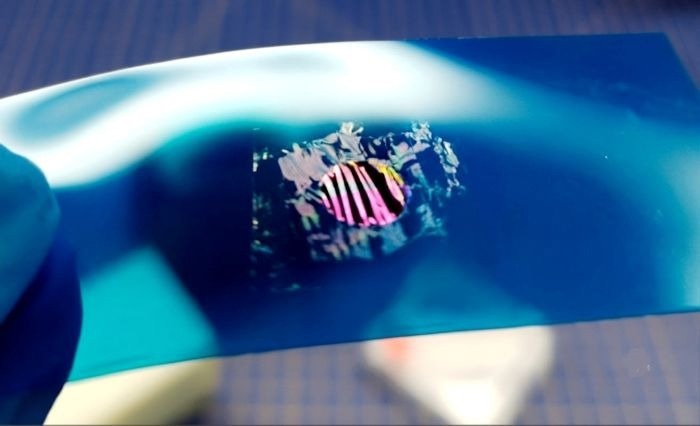
New method makes assembly both cleaner and cheaper. Image Credit: University of Southampton

Experts from Southampton and Singapore say the method could be used to develop next-generation devices used for accelerating research in quantum computing.

The research behind their technique, published in Nature Communications, was developed in collaboration between the Institute for Functional Intelligent Materials, National University of Singapore and the University of Southampton.

Current manufacturing methods to build two-dimensional materials rely on sticky synthetic polymers to assemble the atomic layers.

However, these often leave behind microscopic residues that contaminate the tiny structures and disrupt the performance of electronic devices they are used in.

The research team instead used the natural mineral muscovite, or mica, to stack the atomically thin materials together.

Their findings showed that replacing the messy polymers with mica makes the material atomically flat and offers better surfaces to precisely stack the atomic layers on top of each other.

Lead author Dr Makars Šiškins, a Lecturer in Experimental Physics at the University of Southampton, said the new method makes assembly both cleaner and cheaper.

He added: “When 2D materials, like graphene and hexagonal boron nitride, are stacked into layered structures with controlled angle between the layers, they exhibit entirely new properties – from exotic superconductivity to tunable magnetism.

“Our new method allows us to precisely align the layers to create these complex structures that were previously too hard to make.

See also  Electrons Flow Like Liquid in Graphene: New Study Insights

“This level of precision is vital for quantum material research, where even a tiny amount of contamination can obscure the results.”

Efforts to develop an ultra-clean fabrication method for 2D materials are viewed by scientists as a critical step toward the development of future nanoelectronics, and to eventually make microchips faster and more reliable, added Dr Šiškins.

Co-lead Prof Alexey Berdyugin from the National University of Singapore said building atomic stacks without any contamination is a major challenge in nanotechnology.

He added: “Because mica is an inorganic crystal, rather than a soft polymer, it avoids many of the contamination issues that plague conventional methods.

“It also produces ultra-clean surfaces, allowing the electronic components to function at their full potential.

“It could help us finally unlock the full power of these advanced 2D heterostructure electronics, leading to major breakthroughs in both fundamental science and future quantum technology.”

Source:

University of Southampton

Source link

breakthrough build material Promise Quantum Scientists Stacks Technique Ultrathin Unveil
Share. Facebook Twitter Pinterest LinkedIn Tumblr Email

Related Posts

Nanozyme Aptasensors Show Promise for Faster Food, Health, and Environmental Testing

September 1, 2026

Ultra-Large Spin Hall Oscillator Lattices Achieve Nanosecond Synchronization

September 1, 2026

Self-Heating Nanopores Turn Salt Precipitation Into Neuromorphic Memory

August 31, 2026

6-Channel Piezo Driver for Precision Actuators & Transducers

April 6, 2026
Add A Comment
Leave A Reply Cancel Reply

Top Posts

Explore PI’s Precision Motion Innovations for Life Sciences at Neuroscience 2025

October 29, 2025

Nanobodies from camels and llamas offer promise for treating schizophrenia and Alzheimer’s disease

November 5, 2025

“AI Is Not Intelligent at All” – Expert Warns of Worldwide Threat to Human Dignity

September 20, 2025

Subscribe to Updates

Get the latest sports news from SportsSite about soccer, football and tennis.

Explore the future with our Nanotech blog—covering innovations, research, applications, and breakthroughs shaping science, medicine, and modern technology.

We're social. Connect with us:

Facebook X (Twitter) Instagram YouTube
Top Insights

Biomass-Derived Nanomaterials Offer a Greener Route to Pollution Cleanup

September 1, 2026

Nanozyme Aptasensors Show Promise for Faster Food, Health, and Environmental Testing

September 1, 2026

Researchers Solve Two Major Problems Holding Back SiC Electronics

September 1, 2026

Subscribe to Updates

Get the latest creative news from FooBar about art, design and business.

  • Contact Us
  • Privacy Policy
  • Terms & Conditions

© 2026 elnano.com - All rights reserved.

Type above and press Enter to search. Press Esc to cancel.