
Close Menu
  • News
    • Medical
    • Nanomaterials
    • AI & Robotics
    • 2D Materials
    • Metamaterials
    • Nanoelectronics
    • ETF’s
    • Medicine
  • Environment
    • Earth.com
    • TreeHugger
    • Nanomuscle
  • Beauty
    • Makeupanalysis
What's Hot

Biomass-Derived Nanomaterials Offer a Greener Route to Pollution Cleanup

September 1, 2026

Nanozyme Aptasensors Show Promise for Faster Food, Health, and Environmental Testing

September 1, 2026

Researchers Solve Two Major Problems Holding Back SiC Electronics

September 1, 2026
Facebook X (Twitter) Instagram
  • Contact Us
  • Privacy Policy
  • Terms & Conditions
Facebook X (Twitter) Instagram
Elnano – Global Innovative Nanotechnology SolutionsElnano – Global Innovative Nanotechnology Solutions
  • News
    • Medical
    • Nanomaterials
    • AI & Robotics
    • 2D Materials
    • Metamaterials
    • Nanoelectronics
    • ETF’s
    • Medicine
  • Environment
    • Earth.com
    • TreeHugger
    • Nanomuscle
  • Beauty
    • Makeupanalysis
Elnano – Global Innovative Nanotechnology SolutionsElnano – Global Innovative Nanotechnology Solutions
Home » Ultrathin racetrack memory devices now work without insulating buffer layers
Nanotech

Ultrathin racetrack memory devices now work without insulating buffer layers

November 6, 2025No Comments3 Mins Read
Share
Facebook Twitter LinkedIn Pinterest Email
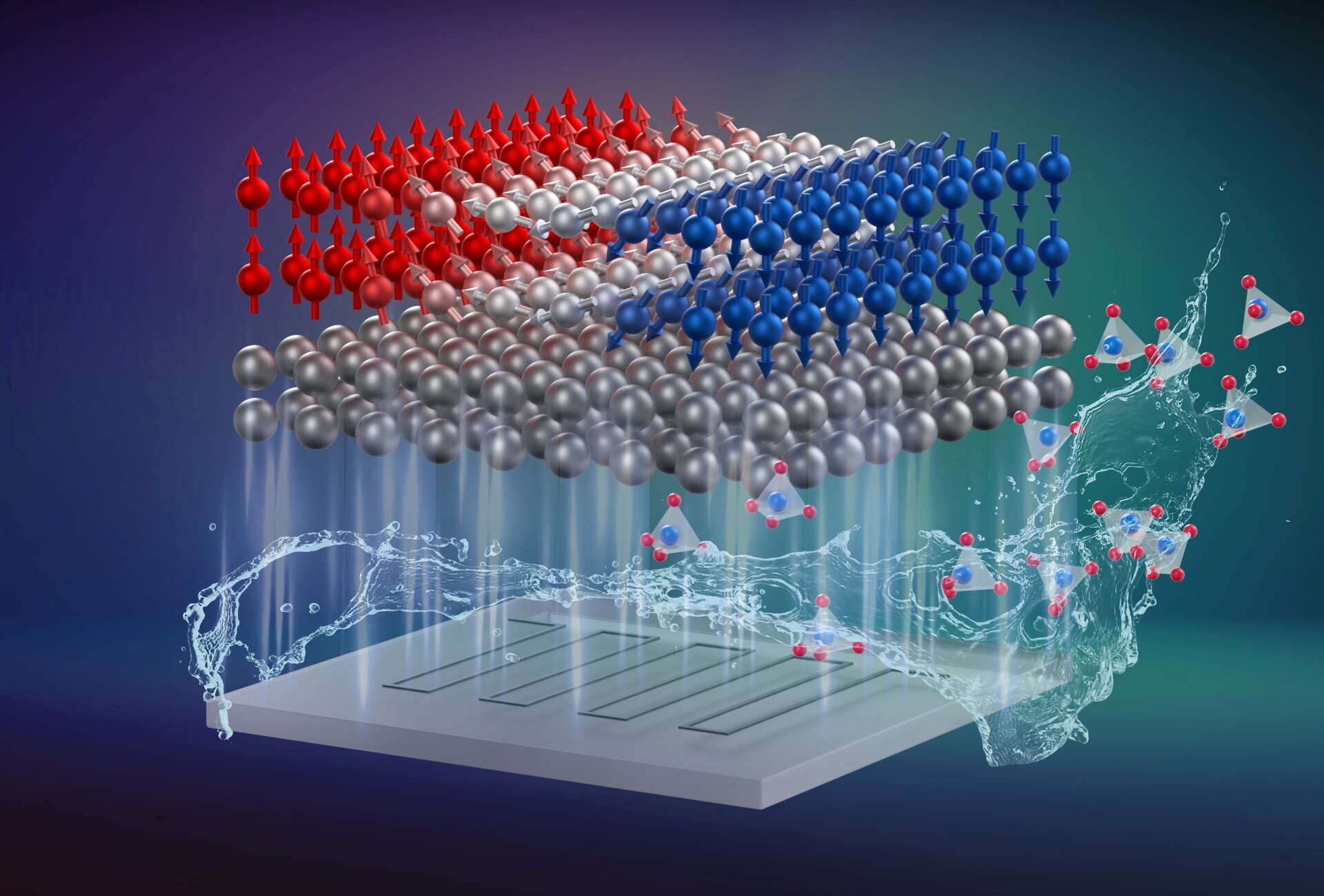
Ultrathin, freestanding racetrack membranes couple with transfer bases. Credit: Ke Gu, MPI für Mikrostrukturphysik, Masha Formenko

A new study reveals that insulating buffer layers are no longer needed for ultrathin magnetic racetrack devices, unlocking new paths for seamless integration with functional substrates.

Modern computing devices rely on memory technologies that are not only energy-hungry, but physically separated from the processing units—leading to inefficiencies in speed and power. A promising alternative lies in spintronics, particularly racetrack memory (RTM), where data is stored in the form of movable magnetic domain walls (DWs) along nanowire-like “tracks.” These devices are non-volatile, energy-efficient, and can potentially unify memory and logic on a single chip.

To expand the design flexibility and integration potential of such devices, researchers have explored using freestanding membranes—thin films that are lifted off their original substrates and transferred onto receiving surfaces, including patterned bases with 3D structures.

However, this process usually requires a buffer layer, such as magnesium oxide (MgO), to support high-quality magnetic layer growth. The buffer, while useful during fabrication, acts as an insulating barrier in the final device, preventing electrical or magnetic interaction with the underlying transfer bases.

In a recently published paper in Advanced Materials, scientists from the Max Planck Institute of Microstructure Physics have shown that this buffer layer is no longer necessary.

In their new study, they demonstrate that a sacrificial oxide layer—Sr₃Al₂O₆ (SAO)—can directly support the growth of high-performance magnetic multilayers (Pt/Co/Ni/Co), enabling the fabrication of freestanding racetrack memory devices without any buffer layer. Remarkably, these buffer-free membranes exhibit better DW mobility than their buffered counterparts—despite being less than 4 nm thick.

Going a step further, the team transferred these membranes onto pre-patterned Pt underlayers, showing that the DW dynamics could be locally engineered—a key capability for future racetrack-based logic and memory architectures.

See also  Dual-Mode Memory for Energy Efficiency

The study also confirms the remarkable robustness of these ultrathin racetracks. Devices maintain their performance after repeated mechanical bending, long-term ambient air exposure, thermal annealing, and electrical stress. The research not only deepens the understanding of interface engineering in freestanding magnetic films, but also opens a pathway to vertical or lateral coupling with functional substrates. This advances the vision of highly integrated, high-density spintronic devices.

More information:
Ke Gu et al, Atomically‐Thin Freestanding Racetrack Memory Devices, Advanced Materials (2025). DOI: 10.1002/adma.202505707

Provided by
Max-Planck-Institut für Mikrostrukturphysik

Citation:
Ultrathin racetrack memory devices now work without insulating buffer layers (2025, November 5)
retrieved 6 November 2025
from https://phys.org/news/2025-11-ultrathin-racetrack-memory-devices-insulating.html

This document is subject to copyright. Apart from any fair dealing for the purpose of private study or research, no
part may be reproduced without the written permission. The content is provided for information purposes only.


Source link

buffer Devices insulating layers memory racetrack Ultrathin work
Share. Facebook Twitter Pinterest LinkedIn Tumblr Email

Related Posts

New Versatile Nanoplatelet Platform Optimizes Tumor Imaging and Cancer Destruction

September 1, 2026

IBM debuts world’s first sub-1 nanometre chip technology

August 31, 2026

Self-Heating Nanopores Turn Salt Precipitation Into Neuromorphic Memory

August 31, 2026

Atom-by-atom manufacturing takes a step forward

August 31, 2026
Add A Comment

Comments are closed.

Top Posts

New 3D-Printable Bioactive Glass for Bone Repair

September 24, 2025

Designing random nanofiber networks, optimized for strength and toughness

October 3, 2025

AI optical microscope analyzes 2D materials as precisely as human experts

October 27, 2025

Subscribe to Updates

Get the latest sports news from SportsSite about soccer, football and tennis.

Explore the future with our Nanotech blog—covering innovations, research, applications, and breakthroughs shaping science, medicine, and modern technology.

We're social. Connect with us:

Facebook X (Twitter) Instagram YouTube
Top Insights

Biomass-Derived Nanomaterials Offer a Greener Route to Pollution Cleanup

September 1, 2026

Nanozyme Aptasensors Show Promise for Faster Food, Health, and Environmental Testing

September 1, 2026

Researchers Solve Two Major Problems Holding Back SiC Electronics

September 1, 2026

Subscribe to Updates

Get the latest creative news from FooBar about art, design and business.

  • Contact Us
  • Privacy Policy
  • Terms & Conditions

© 2026 elnano.com - All rights reserved.

Type above and press Enter to search. Press Esc to cancel.