

Micro-robot can goal, seize, and transfer particular person cells
A brand new robotic simply 10 microns throughout is ready to navigate in a physiological surroundings and carry out quite a lot of duties, each autonomously or via exterior management by a human operator.
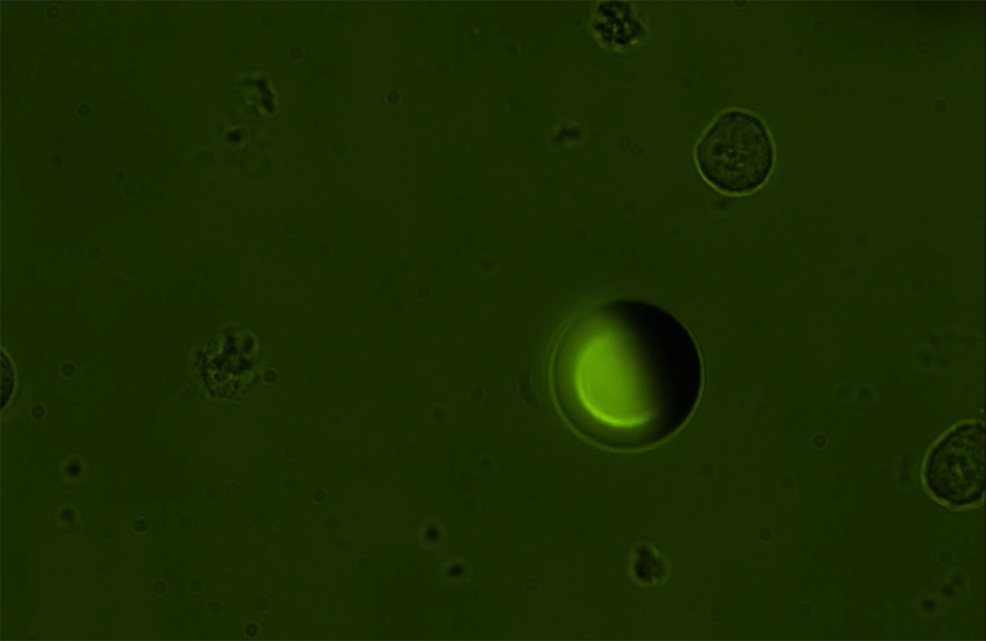
Researchers from Tel Aviv College (TAU) have developed a brand new “hybrid micro-robot” the scale of a single organic cell. This may be managed and moved utilizing two completely different mechanisms – electrical and magnetic.
The tiny, spherical system is ready to navigate between completely different cells in a organic pattern, distinguish between completely different cell sorts, determine whether or not they’re wholesome or dying, after which transport the specified cell for additional research, equivalent to genetic evaluation. The micro-robot can even transfect a drug and/or gene into the captured focused single cell.
In response to the researchers, the event might assist promote analysis within the essential subject of ‘single cell evaluation’, in addition to discover use in medical prognosis, drug transport and screening, surgical procedure, and environmental safety.
“Creating the robotic’s skill to maneuver autonomously was impressed by organic micro-swimmers, equivalent to micro organism and sperm cells,” explains Gilad Yossifon, Professor within the Micro-Fluidics and Nano-Robotics Laboratory at TAU. “That is an revolutionary space of analysis that’s growing quickly, with all kinds of makes use of in fields equivalent to medication and the surroundings, in addition to a analysis device.”
As an illustration of the micro-robot’s capabilities, Professor Yossifon and his staff used it to seize single blood and most cancers cells and a single bacterium and confirmed that it might distinguish between cells with completely different ranges of viability – equivalent to a wholesome cell, one broken by a drug, or a cell dying or present process a pure ‘suicide’ course of known as apoptosis (such a distinction could also be important, for instance, when growing anti-cancer medicine).
After figuring out the specified cell, the micro-robot captured it and moved the cell to the place it might be additional analysed. One other essential innovation is the flexibility of the micro-robot to determine goal cells which might be unlabelled – it might recognise the kind of cell and its situation (equivalent to diploma of well being) utilizing a built-in sensing mechanism primarily based on the cell’s distinctive electrical properties.
Yossifon says: “Our new growth considerably advances the expertise in two primary points: hybrid propulsion and navigation by two completely different mechanisms – electrical and magnetic. As well as, the micro-robot has an improved skill to determine and seize a single cell, with out the necessity for tagging, for native testing or retrieval and transport to an exterior instrument. This analysis was carried out on organic samples within the laboratory for in-vitro assays, however the intention is to develop sooner or later micro-robots that may also work contained in the physique – for instance, as efficient drug carriers that may be exactly guided to the goal.
“The micro-robots which have operated till now primarily based on {an electrical} guiding mechanism weren’t efficient in sure environments characterised by comparatively excessive electrical conductivity, equivalent to a physiological surroundings, the place the electrical drive is much less efficient. That is the place the complementary magnetic mechanism comes into play, which could be very efficient whatever the electrical conductivity of the surroundings.”
Professor Yossifon concludes: “We developed an revolutionary micro-robot with essential capabilities that considerably contribute to the sphere: hybrid propulsion and navigation via a mix of electrical and magnetic fields, in addition to the flexibility to determine, seize, and transport a single cell from place to position in a physiological surroundings. These capabilities are related for all kinds of purposes, in addition to for analysis. Amongst different issues, the expertise will help medical prognosis on the single cell stage, introducing medicine or genes into cells, genetic enhancing, carrying medicine to their vacation spot contained in the physique, cleansing the surroundings from polluting particles, drug growth, and making a ‘laboratory on a particle’ – a microscopic laboratory designed to hold out diagnostics in locations accessible solely to micro-particles.”
Comments »
For those who loved this text, please take into account sharing it: