
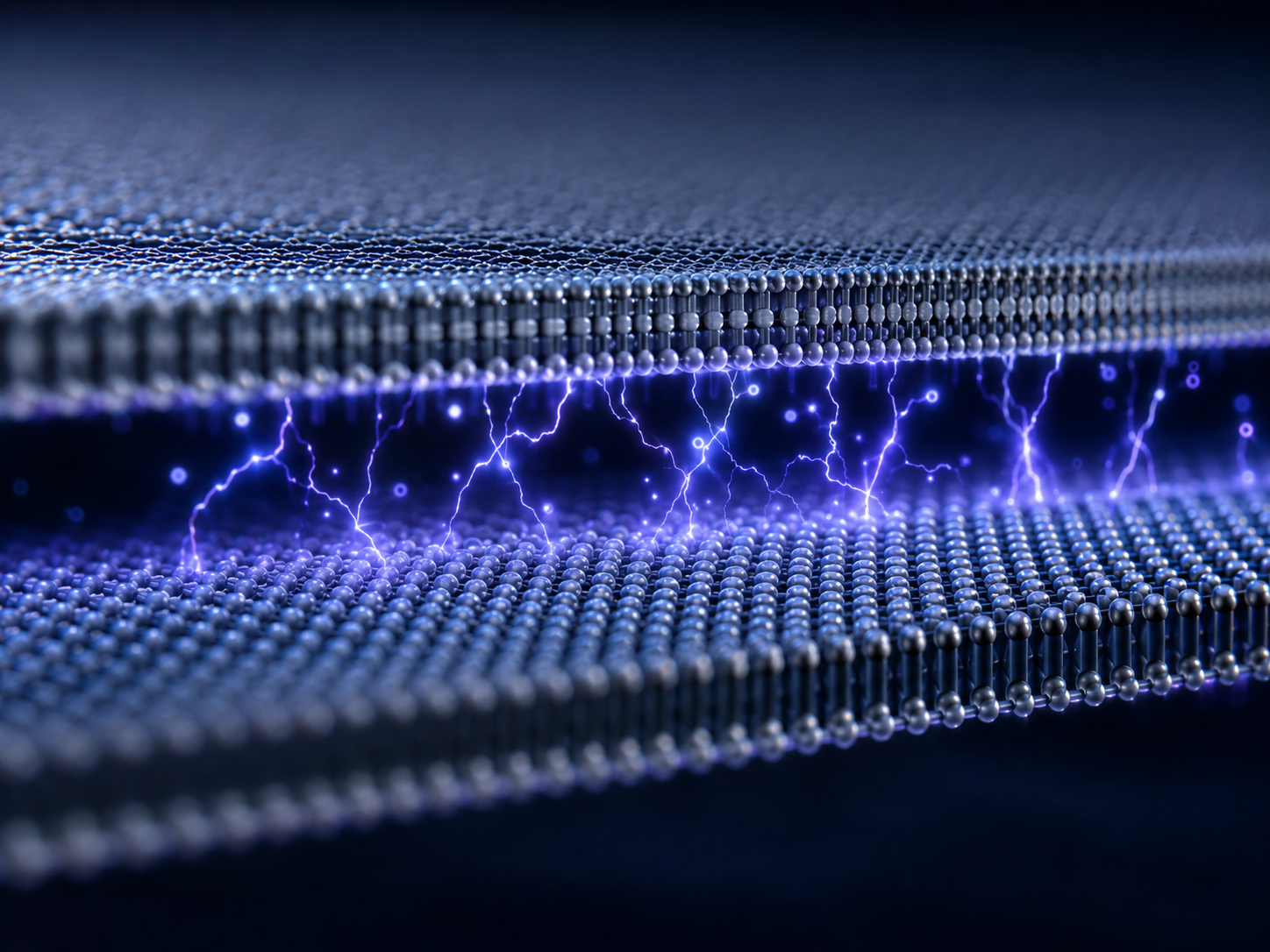
Controlled electrical discharges could enable triboelectric nanogenerators to achieve higher peak currents, extending nano-enabled energy harvesting into chemical processing and self-powered sensing.
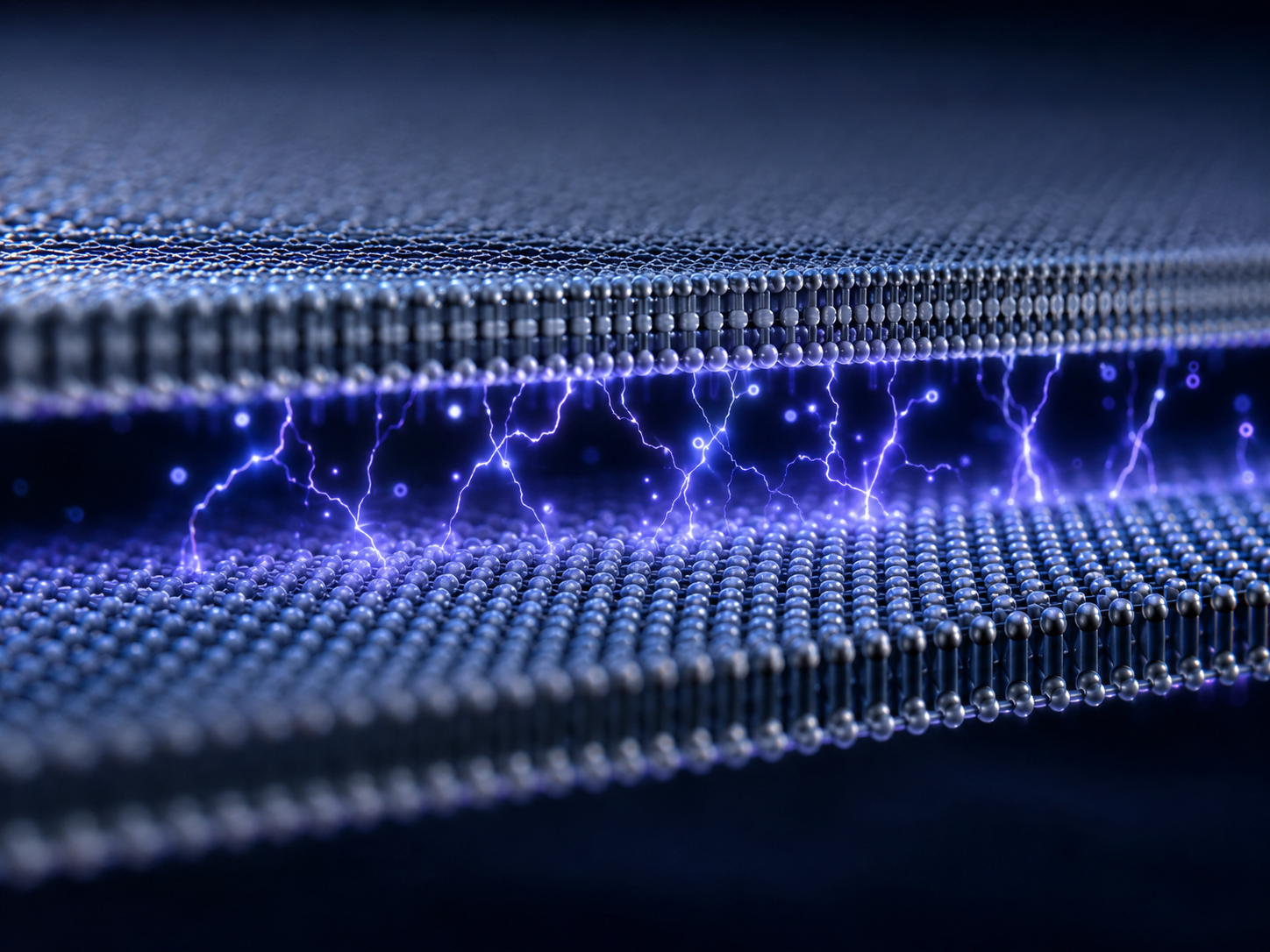
Paper: Electrostatic discharge as a breakthrough strategy for triboelectric nanogenerators. Image credit: AI-generated image created using ChatGPT/OpenAI
A new review published in the journal Communications Materials explores how electrostatic discharge (ESD) can help address long-standing performance limitations in triboelectric nanogenerators (TENGs). The review highlights how ESD enables current amplification through the electron avalanche effect while also allowing direct-current (DC) generation in specific device architectures. It also summarizes recent advances in ESD-based TENG architectures and emerging applications in chemical decontamination, nitrogen fixation, ammonia synthesis, and gas sensing.
Overcoming the Limitations of Conventional Triboelectric Nanogenerators
Triboelectric nanogenerators (TENGs) have emerged as promising devices for sustainable energy harvesting. They convert mechanical energy from everyday activities, such as motion, vibration, and airflow, into electrical energy. Their lightweight design, broad material compatibility, and ability to operate under low-frequency mechanical motion make them well-suited for wearable electronics, wireless sensors, and Internet of Things (IoT) devices.
Despite these advantages, conventional TENGs still face significant challenges. Most devices generate alternating current (AC) with outputs limited to the nanoampere or microampere range. Many electronic systems, however, are designed for DC power and require higher usable current levels for reliable operation. Researchers have increased surface charge density to boost device performance, but conventional devices still generally produce low current outputs. As a result, large-scale commercialization of TENGs has remained challenging.
This review explores a different strategy that deliberately uses controlled electrostatic discharge (ESD) instead of suppressing it. Although ESD is traditionally viewed as harmful because sudden electrical discharges can damage electronic components, controlled ESD can dramatically increase peak current output while generating DC-based output in some architectures. It also highlights how this strategy expands potential TENG applications beyond energy harvesting into chemical removal, fertilizer production, and self-powered sensing technologies.
Exploring Electrostatic Discharge Across TENG Designs
The authors provide a comprehensive overview of recent advances in ESD-based triboelectric nanogenerators, focusing on device design, operating mechanisms, electrical performance, and emerging applications. This broad assessment illustrates how electrostatic discharge can significantly improve TENG performance.
The first section of the review explains the mechanism behind ESD-assisted energy generation. When a strong electric field develops across a small air gap, it ionizes nearby gas molecules, creating a conductive channel. The resulting electron avalanche rapidly multiplies charge carriers, producing a much higher current than conventional triboelectric devices. The temporary air gap also serves as an electrical switch, enabling several TENG designs to generate direct current rather than alternating current.
The authors classified ESD-based TENGs into three major categories: contact-separation devices, sliding-mode devices, and complex architectures that incorporate additional electrical components or approaches for analyzing ESD phenomena. They also summarized applications that use ESD-generated microplasma and ionization for chemical removal, nitrogen fixation for fertilizer production, ammonia synthesis, and gas sensing.
Electrostatic Discharge Significantly Expands TENG Performance
The review summarizes studies in which electrostatic discharge can substantially alter the electrical output characteristics of triboelectric nanogenerators. The electron avalanche triggered by ESD amplifies electrical current from the microampere range to the milliampere or even ampere range, potentially addressing one of the key limitations of conventional TENGs.
Another major advantage of ESD-based TENGs is their ability to generate direct current. In several contact-separation and sliding-mode designs, the temporary air gap acts as an electrical switch, preventing reverse charge flow during operation. Some designs can therefore produce DC-based output without external rectifier circuits, although the resulting signals may still consist of short, high-current pulses. This capability may improve compatibility with practical electronic systems, although power-management circuits remain necessary to match the high-impedance output with conventional electronics.
The review also reports substantial performance improvements across different device architectures. One contact-separation design produced DC peak power of about 1.83 mW, while ion-enhanced field-emission TENGs produced peak currents of 100–250 mA and delivered 635% higher average power than conventional devices. Sliding-mode systems achieved a constant DC output, whereas a non-contact sliding system with an ion gate reported an average power density 2,454 times higher than a conventional TENG.
The review describes self-powered systems that generate microplasma to degrade the sulfur-mustard simulant 2-chloroethyl ethyl sulfide (2-CEES), achieving more than 99% removal under the reported conditions. Nitrogen microplasma discharge can also support nitrogen fixation for nitrate-containing fertilizer production and low-yield ammonia synthesis. ESD also enables self-powered gas sensors that sense carbon dioxide concentration and distinguish gas composition, including argon and helium, under controlled conditions. These examples show how ESD could extend TENGs beyond simple energy harvesters into potentially multifunctional platforms for environmental, agricultural, and sensing applications.
Assessing the Path Toward Commercialization of Self-Powered Nanogenerators
The review identifies electrostatic discharge as a promising strategy for overcoming the performance limitations of conventional triboelectric nanogenerators. By exploiting the electron avalanche effect, ESD-based devices deliver much higher current outputs while generating DC-based output in specific architectures. These advances could improve compatibility with real-world electronic systems and broaden the practical role of TENGs beyond energy harvesting.
The authors also identify several challenges that must be addressed before widespread commercialization. Future research should develop energy storage systems capable of handling short, high-current discharge pulses, design materials that withstand microplasma-induced carbonization and damage during repeated electrostatic discharges, and optimize power management circuits that efficiently match TENG outputs with conventional electronics. Refining device architectures for specific applications may help improve energy conversion efficiency and overall performance.
While TENGs are being developed for self-powered sensors and wearable systems, the ESD-based applications reviewed here remain mostly experimental and focus on gas sensing and sustainable chemical processing. As demand for autonomous and energy-efficient technologies grows, ESD-based TENGs could become useful platforms for next-generation nanotechnology, but they require validation beyond laboratory experiments.