
For the first time, researchers have successfully fabricated and characterized a fully functional mirror-image nanopore—a molecular gateway built entirely from D-amino acids, the mirror-image forms of the natural building blocks of proteins. The work, led by Prof. Dr. Kozhinjampara R. Mahendran at the Rajiv Gandhi Center for Biotechnology (India) in collaboration with Constructor University and other partners, demonstrates not only a major milestone in nanoscience but also opens promising biomedical applications, including potential cancer therapies.
Proteins in nature are almost exclusively built from L-amino acids, while their D-amino acid counterparts usually play only minor roles. Constructing entire proteins from D-amino acids is extremely challenging, yet offers striking advantages: Such mirror-image structures are often more resistant to degradation and may interact differently with biological systems.
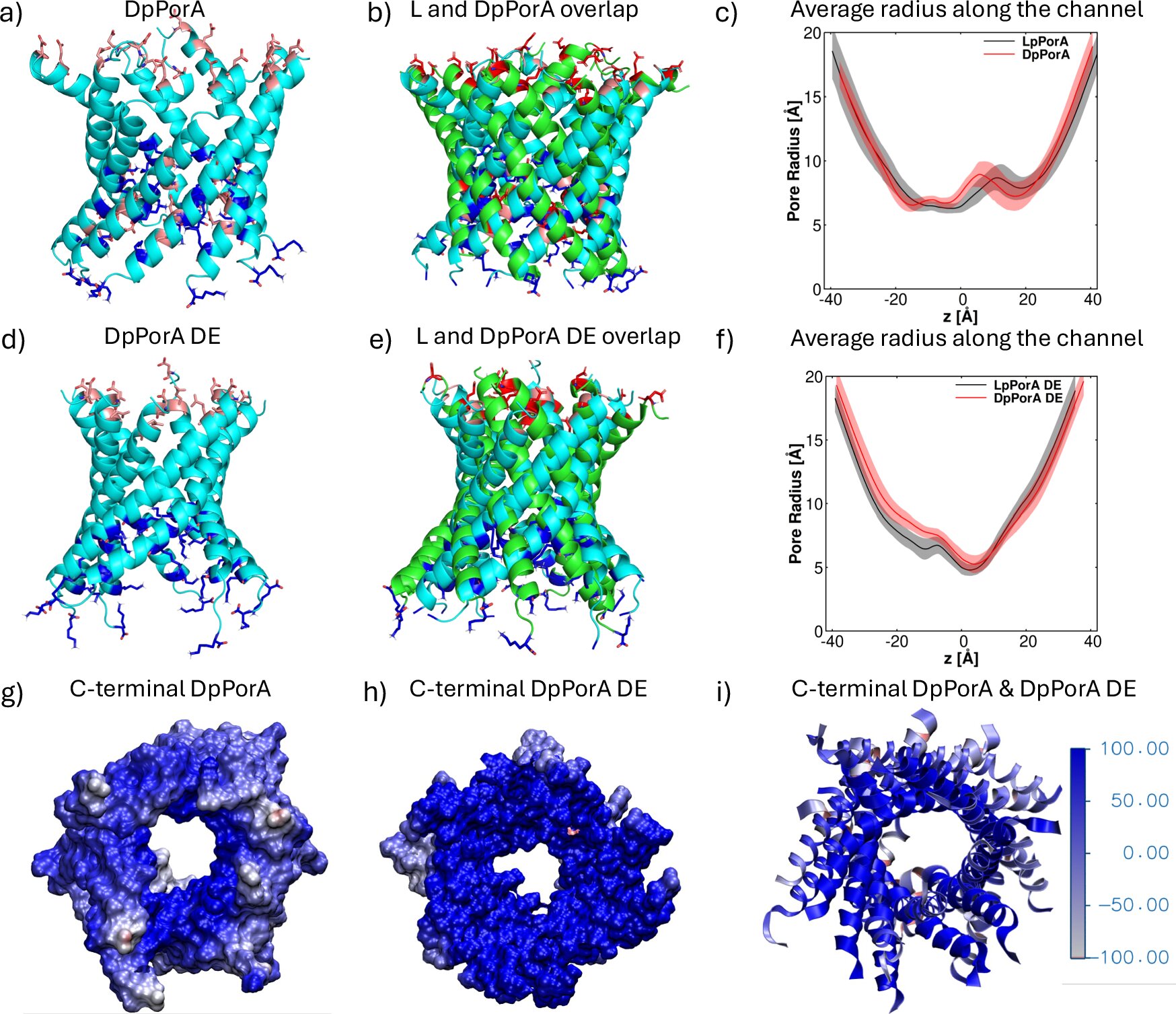
In this study, the team designed a synthetic stable and well-defined D-peptide pore called DpPorA. Remarkably, by modifying the charge distribution, they were able to create superior versions of these pores with enhanced conductance and selectivity under different salt conditions.
Experiments revealed that these pores can detect a broad spectrum of biomolecules at the single-molecule level, including peptides, cyclic sugars, certain proteins including one that is central to Parkinson’s disease research. Fluorescence imaging confirmed that the pores form large, flexible channels in membranes, enabling size-dependent transport of molecules.
“Our simulations provided the molecular-level picture needed to prove that these mirror-image pores are exact counterparts of their natural analogs,” says Prof. Dr. Ulrich Kleinekathöfer, Professor of Physics at Constructor University in Bremen and co-author of the study published in Nature Communications. “This understanding was essential to explain the experiments and will guide the design of improved pore variants in the future.”
The simulations carried out by scientists at Constructor University were key to verifying the architecture of the mirror-image pore. By comparing the D-pore with its natural L-counterpart, the molecular dynamics studies confirmed that the two are perfect structural reflections, while also explaining subtle differences in conductance and selectivity observed in the experiments.
“The computational work gave us the confidence that we were indeed looking at a true mirror-image pore,” explains Dr. Kalyanashis Jana, postdoctoral researcher in Kleinekathöfer’s group and equally contributing first author of the paper.
Beyond fundamental science, the results suggest exciting biomedical potential. In cell studies, fluorescently tagged mirror-image pores showed strong membrane-disrupting effects in cancer cells but had no impact on normal cells, hinting at selective cytotoxicity that could one day be harnessed for cancer therapy.
The study also reflects the continuity of scientific collaboration across borders and generations. Both Mahendran and his colleague Dr. Harsha Bajaj earned their Ph.D.s under Prof. Dr. Mathias Winterhalter at the former Jacobs University Bremen (now Constructor University). Today, they continue to collaborate with Constructor University scientists, exemplifying the long-lasting networks of expertise that drive scientific progress.
More information:
Neilah Firzan CA et al, Fabrication of cytotoxic mirror image nanopores, Nature Communications (2025). DOI: 10.1038/s41467-025-64025-6
Citation:
Breakthrough mirror-image nanopores open door to new biomedical applications (2025, October 11)
retrieved 11 October 2025
from https://phys.org/news/2025-10-breakthrough-mirror-image-nanopores-door.html
This document is subject to copyright. Apart from any fair dealing for the purpose of private study or research, no
part may be reproduced without the written permission. The content is provided for information purposes only.