
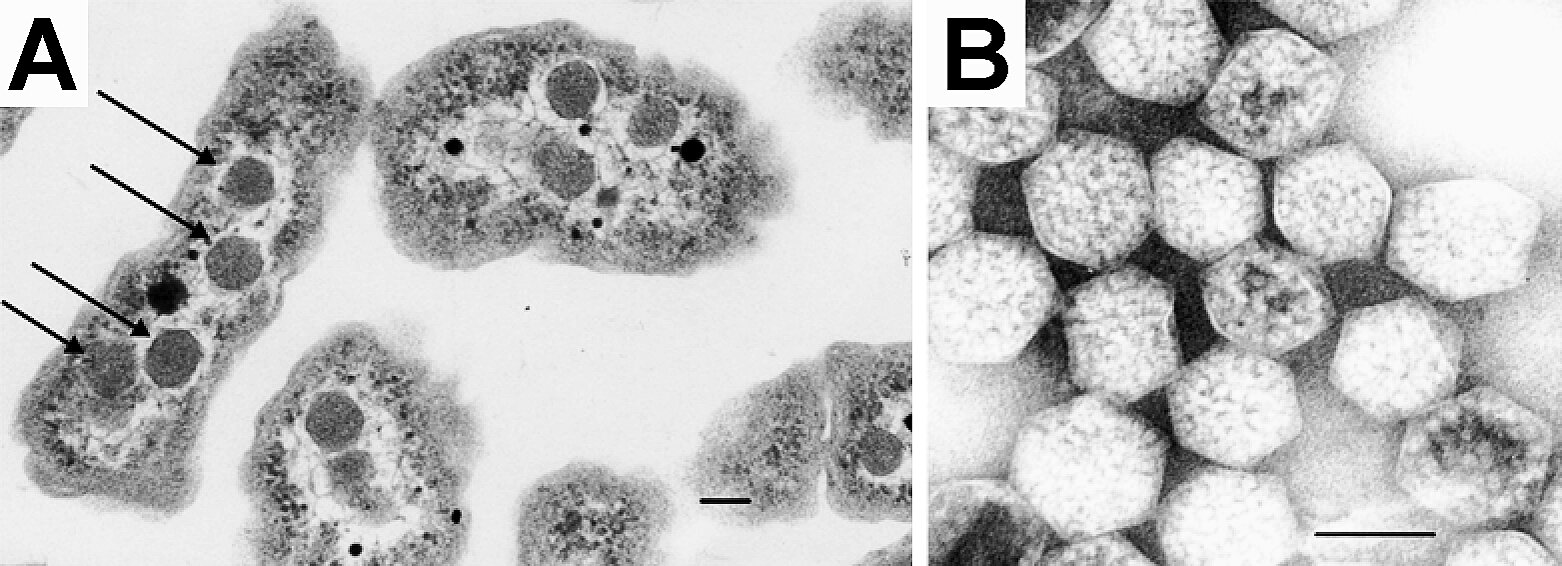
University of Liverpool and Newcastle researchers have uncovered how bacterial organelles assemble, opening new routes for bioengineering and climate innovation.
The collaborative team has unveiled the most detailed picture yet of how bacteria construct microscopic compartments known as carboxysomes—natural nanomachines that play a vital role in capturing and converting carbon dioxide (CO₂).
The study uses cutting-edge structural biology techniques to resolve long-standing mysteries surrounding one of the carboxysome’s key enzymes, carbonic anhydrase. The findings could inform future advances in biotechnology, agriculture, and sustainable materials design.
The paper is published in the journal Proceedings of the National Academy of Sciences.
Carboxysomes are protein-based organelles that help many bacteria thrive in environments where CO₂ is scarce. By concentrating and converting CO₂ into usable forms, they are central to the global carbon cycle. Yet, despite decades of research, scientists have struggled to understand exactly how carbonic anhydrase is structured, assembled, and positioned inside these nanoscopic compartments.
Using single-particle cryo-electron microscopy, the team captured the carbonic anhydrase enzyme (CsoSCA) from the model bacterium Halothiobacillus neapolitanus at near-atomic resolution. They also engineered synthetic “mini-shells”—laboratory-built versions of carboxysome shells—to test how the enzyme is recruited and organized within these protein cages.
Their results reveal that the enzyme forms an unusual hexameric (six-part) structure and is encapsulated through flexible, non-specific interactions with shell proteins—challenging previous assumptions that a specific linker protein was required. Remarkably, part of the enzyme was also shown to interact with Rubisco, another critical CO₂-fixing enzyme, suggesting a modular “toolkit” design that bacteria may use to optimize their carbon-capture machinery.
The researchers propose a new model for carboxysome organization, offering a clearer view of how enzymes are spatially coordinated for maximum efficiency. This insight not only deepens understanding of microbial metabolism but also opens the door to engineering synthetic carboxysomes for practical use.
Potential applications include enhancing CO₂ fixation in crops to improve yields, creating designer nanomaterials for catalysis or biosensing, and developing new bio-inspired technologies for carbon capture.
However, the team notes that some aspects of enzyme assembly were inferred from synthetic systems, meaning the dynamic behavior of carbonic anhydrase in living cells may differ. Future research will employ advanced imaging and molecular engineering techniques to refine these models and develop improved artificial shells capable of encapsulating high concentrations of catalytic enzymes.
Professor Luning Liu, Chair of Microbial Bioenergetics and Bioengineering at the University of Liverpool and lead author of the study, said, “By visualizing how nature builds these tiny carbon-fixing factories, we can begin to replicate and redesign them for a range of sustainable technologies. It’s an exciting step forward for synthetic biology and environmental innovation.”
Dr. Jon Marles-Wright, co-author and Academic lead for Electron Microscopy at Newcastle University said, “These exciting structural insights into carboxysomes were made possible thanks to access to electron microscopy facilities at the University of York and the national cryo-EM facility at eBIC.”
This latest work highlights how structural biology can illuminate the hidden architecture of life’s smallest machines—and how those insights may one day help tackle some of the planet’s biggest challenges.
More information:
Liu, Lu-Ning et al, Structure and encapsulation of carbonic anhydrase within the α-carboxysome, Proceedings of the National Academy of Sciences (2025). DOI: 10.1073/pnas.2523723122.
Citation:
Blueprint for nature’s carbon-capturing nanomachines paves path for bioengineering and climate innovation (2025, November 10)
retrieved 10 November 2025
from https://phys.org/news/2025-11-blueprint-nature-carbon-capturing-nanomachines.html
This document is subject to copyright. Apart from any fair dealing for the purpose of private study or research, no
part may be reproduced without the written permission. The content is provided for information purposes only.