
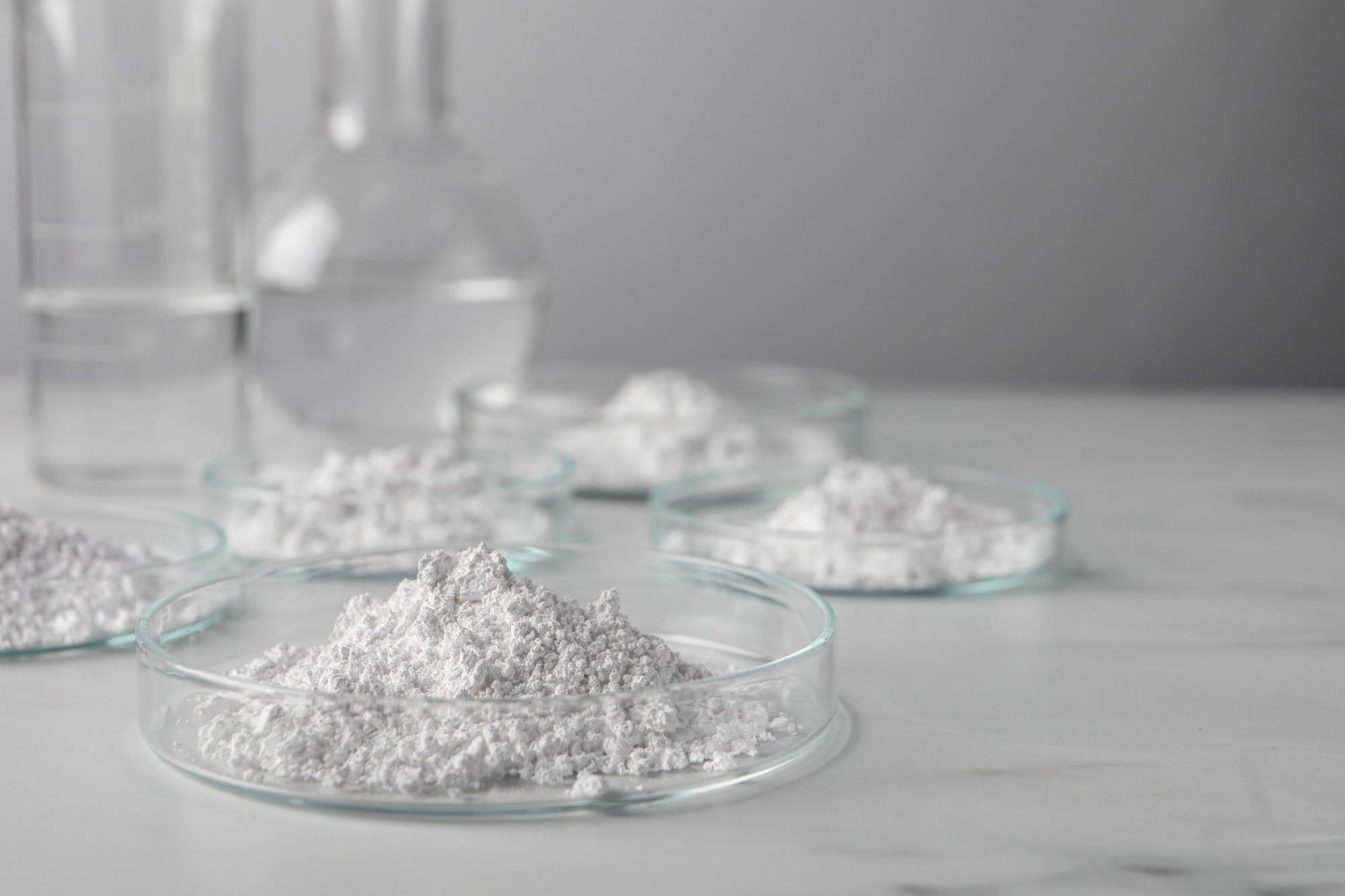
By harnessing the chemistry of nanoscale silicon, scientists are uncovering a powerful way to produce and store hydrogen more safely, cheaply, and efficiently.
 Image Credit: New Africa/Shutterstock.com
The new study in Nanomaterials explores how silicon nanostructures could advance both the generation and storage of hydrogen, a clean energy carrier often hailed as a key player in a post-fossil-fuel world.
Researchers examined a wide range of silicon-based materials, including nanoparticles, nanowires, porous silicon, and amorphous silicon. They found that these nanostructures can spontaneously produce hydrogen from water and also store it effectively, under mild conditions and without high energy input.
The Hydrogen Challenge
Hydrogen offers high energy density and only emits water when used as fuel. However, its widespread adoption has been constrained by production inefficiencies, costly transport, and storage issues. Existing methods, such as liquefaction or high-pressure tanks, are energy-intensive and pose safety risks.
Solid-state storage materials are emerging as alternatives, and silicon, one of the Earth’s most abundant elements, is especially promising.
It is cheap, chemically reactive in nanoparticle form, and compatible with scalable manufacturing methods. The study highlights its ability to meet U.S. Department of Energy (DOE) targets for hydrogen storage, such as 6.5 wt% capacity and operation between −20 °C and 100 °C at near-ambient pressure, at least under lab conditions.
Material Performance
The team assessed how different silicon nanostructures interact with water or alcohol-based solutions to produce hydrogen via surface oxidation and hydrolysis. They also modeled desorption behaviors in nanocrystalline silicon embedded in amorphous matrices, revealing a two-stage release process dependent on temperature.
Silicon nanoparticles, especially those under 100 nm, performed well. Smaller particles reacted more rapidly in alkaline conditions, producing up to 1589 mL of hydrogen per gram at room temperature, and rising to 580 mL/min/g at 50 °C.
Ball-milled powders showed increased reactivity due to higher dislocation density, although this method was still energy-intensive. More sustainable synthesis approaches such as stain etching and plasma-assisted processing are also explored.
Porous silicon, with surface areas up to 430 m2/g, demonstrated a dual mechanism: chemisorption through Si–H bonds and physisorption within its pore network. Temperature-programmed desorption confirmed hydrogen release across a wide thermal range. Decorating porous silicon with lithium or palladium further enhanced its capacity by promoting multilayer physisorption.
Fuel Cells to Medicine
Silicon nanowires stood out for their ability to produce hydrogen in ambient conditions without light or catalysts, thanks to their intrinsic surface strain and high porosity.
Integrated into photocathodes and paired with non-precious catalysts like cobalt phosphide and silver nanoparticles, silicon structures also performed well in photoelectrochemical cells, achieving faradaic efficiencies of above 98 %, comparable to platinum-based systems.
Beyond energy applications, the study highlighted a lesser-known use case of hydrogen: biomedical hydrogen therapy.
Silicon nanoparticles can generate hydrogen in the gastrointestinal tract, offering antioxidant effects that are potentially useful in conditions like Parkinson’s disease and ischemic injury. This intersection of nanomaterials and health signals is garnering interest in silicon’s possible medical versatility.
Future Work and Potential
While promising, the real-world deployment of silicon nanomaterials faces the usual challenges; Scaling synthesis, reducing energy inputs, and ensuring long-term stability remain priorities.
Interestingly, the study distinguishes between irreversible hydrogen generation through silicon oxidation and reversible hydrogen production in photoelectrochemical systems, important for future system design.
The findings position silicon nanostructures as a flexible, potentially scalable platform for both hydrogen storage and on-demand production. Whether in drones, portable electronics, or even medical devices, the material’s versatility could be a much-needed bridge between sustainable energy and practical use.
Journal Reference
Mussabek, G., et al. (2025, October). Silicon Nanostructures for Hydrogen Generation and Storage. Nanomaterials, 15(19), 1531. DOI: 10.3390/nano15191531, https://www.mdpi.com/2079-4991/15/19/1531