
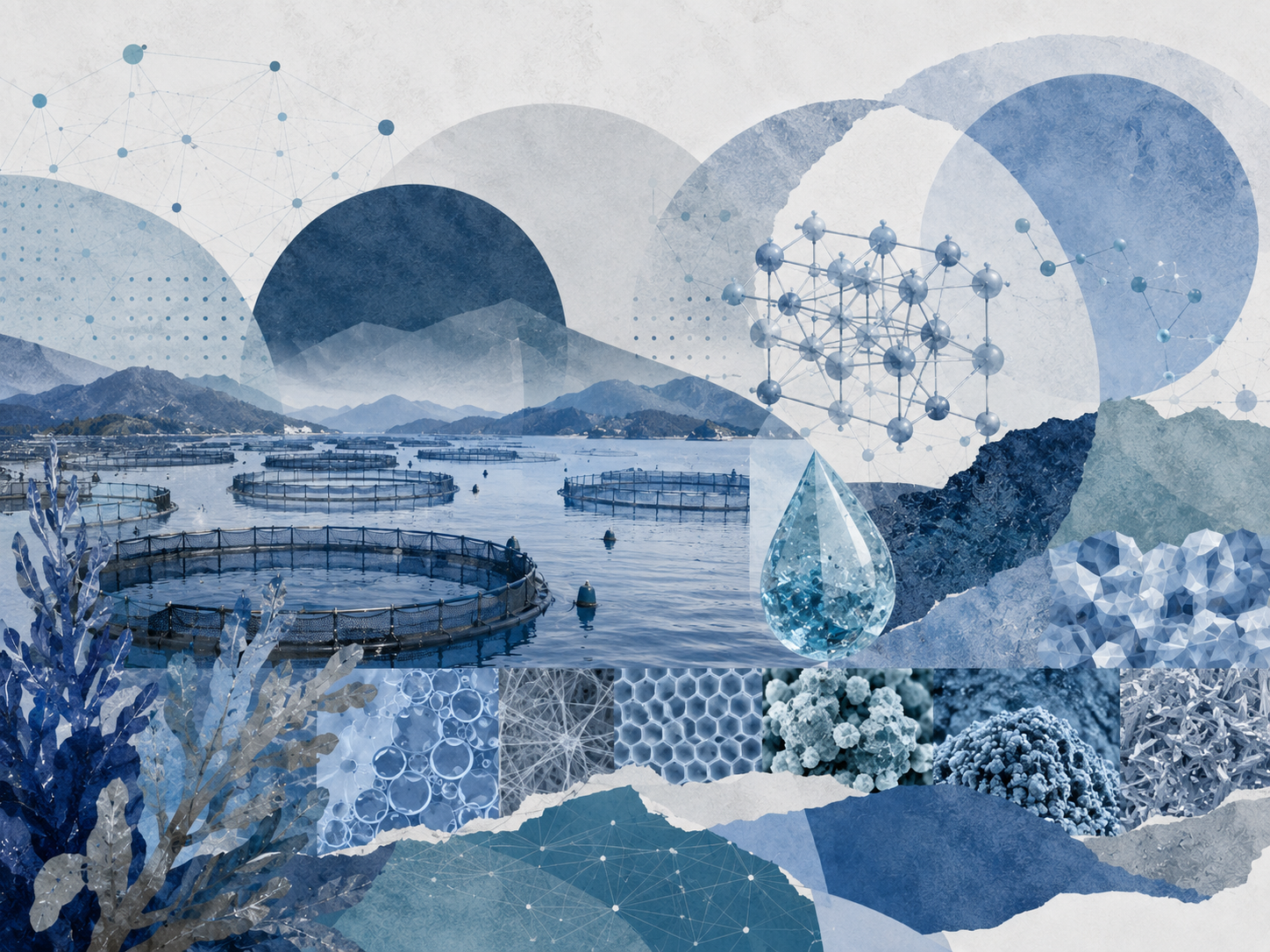
From fighting fish pathogens to cleaning contaminated water, nanoparticles are being explored across the aquaculture production chain, but important questions remain about how these tiny materials behave outside the laboratory.
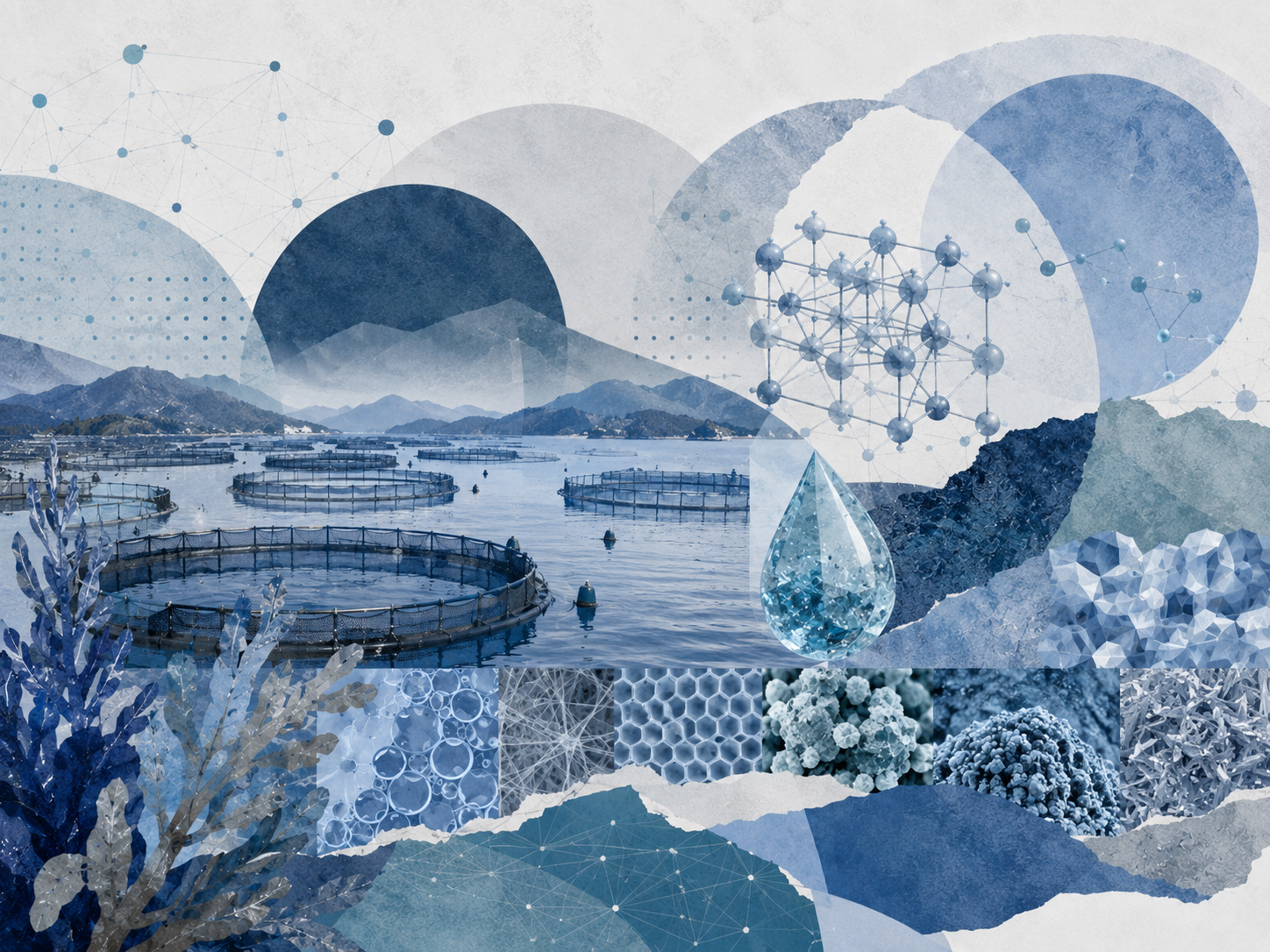
Paper: Nanoparticles: Small Interventions for Major Challenges in Aquaculture. AI-generated conceptual image created using ChatGPT/OpenAI
The aquaculture sector faces significant challenges, including infectious diseases, water pollution, and the need to reduce the use of antibiotics and other chemicals. Nanotechnology could offer novel solutions to these problems.
Nanoparticles (NPs) can combat bacterial infections, improve the delivery of vaccines and medicines, and remove or degrade contaminants from water. A paper recently published in the journal Biology reviewed the latest developments in the use of NPs across the aquaculture production chain. The review also examined nanoparticle-based disease diagnostics and post-harvest applications.
Removal of Water Pollutants
Nanoscale mixed-metal composites offer potential applications in wastewater treatment due to their large surface area-to-volume ratio, magnetic properties, and high adsorption capacity.
These NPs remove contaminants through adsorption or catalytic degradation. Certain metallic NPs can inactivate microorganisms by damaging cell membranes and triggering apoptosis.
Commonly investigated metallic NPs include copper (Cu), iron (Fe), zinc (Zn), titanium (Ti), and silver (Ag), which are combined with inorganic NPs, carbon-based materials, or other metals.
These nanomaterials can effectively target aquaculture-related contaminants, including antibiotics such as amoxicillin, ciprofloxacin, and rifampicin; heavy metals like cadmium and chromium; and nitrogen residues and phosphates.
Despite the potential of nanomaterials, large-scale application remains limited by economic and technical challenges, such as high costs. Regeneration and reusability are essential for maintaining sustainability.
Additionally, many nanosorbents display decreased adsorption efficiency after repeated regeneration cycles, limiting their long-term effectiveness and practical application in wastewater treatment. Research on nanoparticle-based water remediation in aquaculture also remains largely at the laboratory scale.
NPs with Direct Antimicrobial Activity
NPs, particularly metal-based ones such as Ag, Cu, and gold (Au), have shown promising direct antimicrobial activity owing to their distinct properties. For instance, silver nanoparticles (AgNPs) disrupt bacterial cells at several levels.
Smaller AgNPs exhibit enhanced anti-biofilm and antibacterial activity compared to larger particles due to their greater specific surface area, which leads to more extensive interactions with bacterial cells.
AgNPs inactivated different bacterial fish pathogens, including Vibrio parahaemolyticus (V. parahaemolyticus), Aeromonas hydrophila, and Pseudomonas aeruginosa. One in vivo study reported enhanced immune parameters and improved growth performance after AgNPs were added to zebrafish culture water for 30 days.
Similarly, AgNPs obtained from Flammulina velutipes extracts significantly reduced mortality in V. parahaemolyticus-infected Manila clams. However, studies have also demonstrated AgNP activity against non-bacterial pathogens affecting animals and humans.
Additionally, the increasing environmental accumulation and release of Ag-based antimicrobial agents may contribute to the growing prevalence of Ag-resistant bacteria. Bacterial resistance could arise from increased efflux of Ag from the cell, reduced interaction between bacterial cells and Ag, and promotion of AgNP aggregation.
However, direct antimicrobial use of metal-based NPs in aquaculture remains largely experimental, and strong laboratory activity may not translate directly to farming conditions. Their behavior can be influenced by water chemistry, organic matter, and other components of production systems.
NPs for Agent Delivery
Using NPs for targeted delivery of therapeutics is a promising approach to disease control, as this strategy accelerates recovery of fish, improves therapeutic efficacy, and minimizes the risk of side effects. Improved stability and solubility of these nanocarriers lead to enhanced bioavailability of therapeutic compounds.
Organic NPs, such as lipid- and polymer-based carriers, are commonly used as nanocarriers owing to their exceptional biodegradability and biocompatibility, as well as the availability of simple techniques for material encapsulation. They are often used as nanocapsules and nanospheres.
Among polymers, chitosan nanoparticles (CSNPs) have received significant attention. Chitosan can be used to encapsulate unstable compounds, ensuring controlled release. One study showed that incorporating vitamins E and C into CSNPs improved the response to Streptococcus agalactiae infection and salt-induced stress in Nile tilapia.
Similarly, another study found that incorporating selenium-loaded CSNPs into the diet improved immunostimulatory and antioxidant responses in Nile tilapia. Studies also showed enhanced antibacterial activity and improved antioxidant and immune responses when immune-related proteins, N-acetyl-D-glucosamine, or phytochemicals were encapsulated.
Vaccine Delivery
Vaccine delivery is another CSNP application in aquaculture. Encapsulation enhances immunogenicity by preventing antigens from degradation by bodily enzymes. Studies primarily used encapsulated deoxyribonucleic acid (DNA) molecules in chitosan for protection against viruses or bacteria.
Results displayed the induction of non-specific immune responses and specific cellular and humoral immunity. Additionally, improvements were observed in vaccine mucoadhesivity and permeability, thereby enhancing efficacy.
Thus, vaccine encapsulation in biocompatible carriers improves immunogenicity, targeted delivery, and stability, representing a promising strategy for improving disease control. Natural polysaccharides have also been explored for vaccine delivery.
For instance, the use of double-stranded synthetic ribonucleic acid (RNA) embedded within phytoglycogen NPs induced an antiviral state through the upregulation of interferon-stimulated genes in the head kidney and intestine and enhanced IFN1 levels of rainbow trout when compared with fed controls.
Yet, the application of nanocarrier delivery systems in practical aquaculture processes remains challenging, as their performance depends on manufacturing costs, scalability of production methods, stability during administration and storage, loading capacity, and formulation reproducibility.
In conclusion, nanotechnology has shown significant potential to increase sustainability, efficiency, and eco-friendliness in aquaculture. However, its safety cannot be generalized across all nanomaterials because toxicity can vary with particle composition, size, physicochemical properties, species, and environmental conditions. Further in vivo and field research, along with nanoparticle-specific safety assessments, is required before widespread adoption.
Source:
- González-Rodríguez, L., Pereiro, P., Novoa, B., & Figueras, A. (2026). Nanoparticles: Small Interventions for Major Challenges in Aquaculture. Biology, 15(16), 1431. DOI: 10.3390/biology15161431, https://www.mdpi.com/2079-7737/15/16/1431