
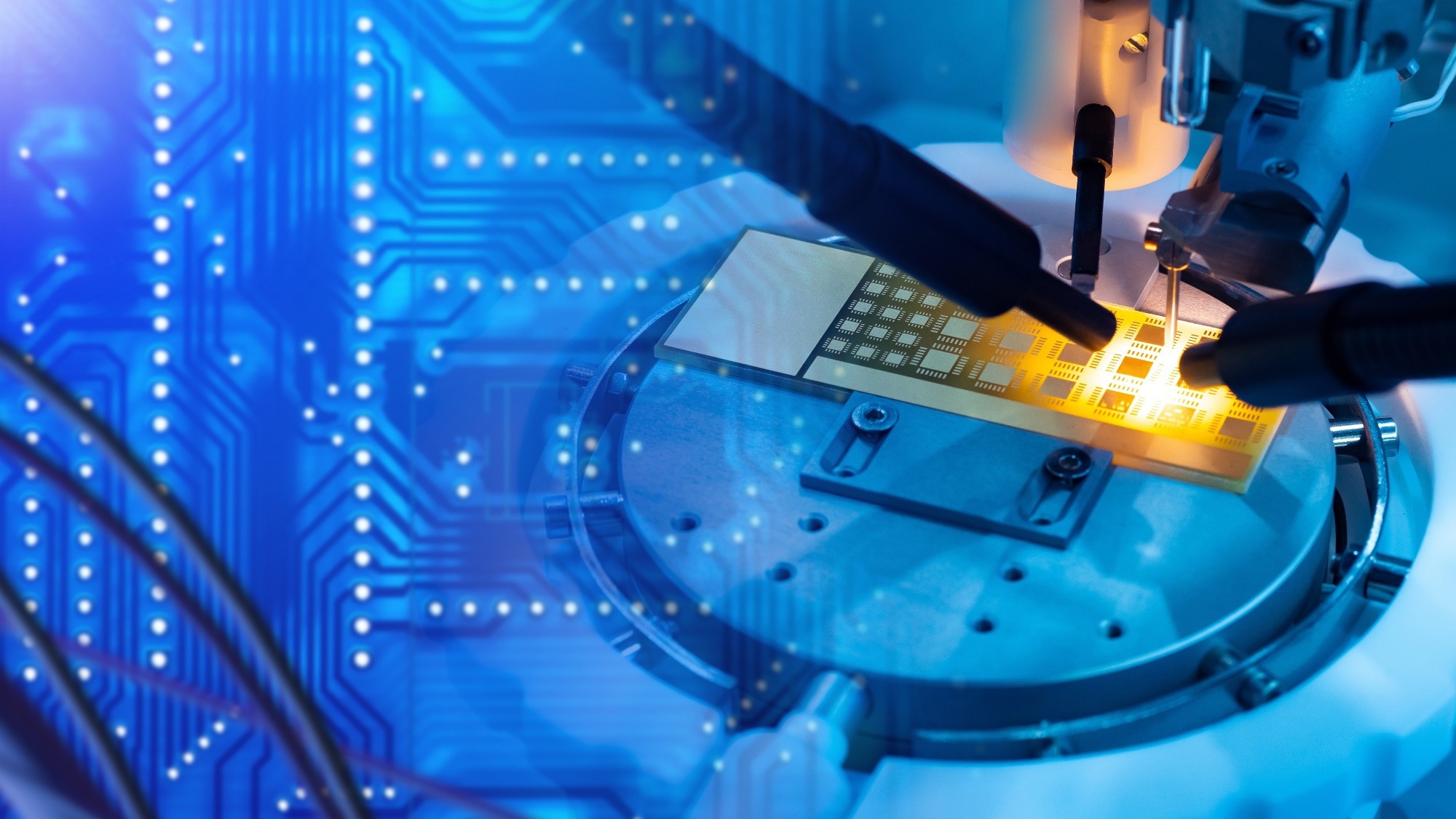
A new method for printing 2D material transistors delivers flexibility and performance without the toxic trade-offs of traditional fabrication.
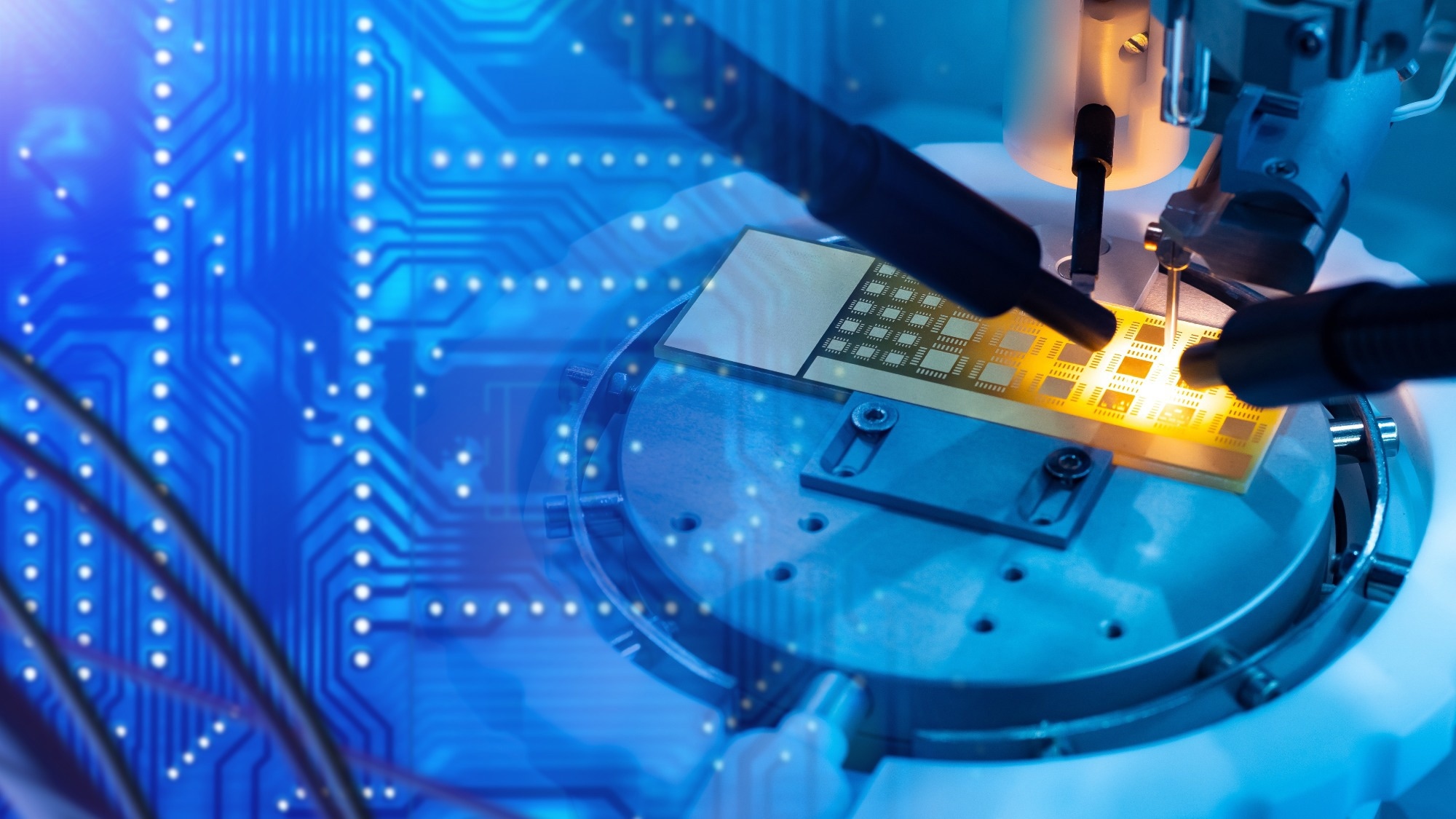 Study: Ionic-Liquid Free and Flexible Transistors Made of 2D Material Inks. Image Credit: FOTOGRIN/Shutterstock.com
Published in Small, the study introduces a scalable, low-temperature method for producing all-2D transistors on both rigid and flexible substrates, without relying on ionic liquid gating, acid treatments, or high-temperature processes.
It’s the first demonstration of an all-2D thin-film transistor (TFT) fabricated on a flexible substrate without ionic-liquid gating, overcoming long-standing barriers to stability and large-scale production.
Flexible electronics are central to future technologies such as wearable sensors, bendable displays, and smart textiles. However, conventional rigid devices struggle with mechanical adaptability and limitations in manufacturing.
Two-dimensional materials, such as molybdenum disulfide (MoS2) and tungsten disulfide (WS2), renowned for their exceptional electrical, optical, and mechanical properties, could offer an alternative.
While 2D materials can be processed at lower temperatures, traditional fabrication often requires harsh acids or ionic liquids. These methods enhance short-term performance but limit scalability and long-term device reliability.
The new approach eliminates these drawbacks, unlocking the full potential of 2D materials for next-generation flexible electronics.
Innovative Fabrication Method
The team used a supramolecular Liquid–Liquid Interfacial (LLI) assembly to form uniform MoS2 films from electrochemically exfoliated nanosheets.
The films, temporarily free-standing during transfer, achieved thicknesses under 100 nm, ideal for transistor performance.
By introducing perfluorinated molecules during assembly, researchers enhanced the hydrophobicity of nanosheets, resulting in smooth, defect-free films. These MoS2 layers were then transferred onto silicon and polyimide (PI) substrates using a scooping method that preserved structural integrity.
Graphene and hexagonal boron nitride (h-BN) inks were printed to create the contact and dielectric layers, respectively.
The water-based, inkjet-printable materials enabled low-temperature, solution-processed fabrication, providing a cleaner and more scalable alternative to conventional high-temperature or vacuum-based approaches.
Get all the details: Grab your PDF here!
Performance And Reliability
The resulting all-2D transistors demonstrated impressive performance, with carrier mobilities of up to 2.47 cm2/Vs using silver electrodes and 0.46 cm2/Vs with graphene contacts.
Tests found they operated at low voltages (≤3 V) and exhibited negligible leakage currents.
The devices also retained stability and conductivity under ambient conditions and during repeated bending, confirming their durability for flexible use.
Incorporating h-BN as the dielectric further improved insulation and environmental stability. This fabrication method was both reproducible and scalable, allowing large-area film production suited for industrial applications.
Applications And Outlook
The successful creation of all-2D flexible TFTs opens new possibilities for wearable electronics, smart textiles, and other adaptable systems.
With its low cost, water-based chemistry, and compatibility with inkjet printing, it holds promise for the mass production of lightweight, flexible circuits without requiring expensive infrastructure.
Future work will focus on refining device performance, exploring additional 2D materials, and testing long-term stability under real-world conditions.
Journal Reference
Chen, L., et al. (2025, October). Ionic-Liquid Free and Flexible Transistors Made of 2D Material Inks. Small, e08360. DOI: 10.1002/smll.202508360