
Close Menu
  • News
    • Medical
    • Nanomaterials
    • AI & Robotics
    • 2D Materials
    • Metamaterials
    • Nanoelectronics
    • ETF’s
    • Medicine
  • Environment
    • Earth.com
    • TreeHugger
    • Nanomuscle
  • Beauty
    • Makeupanalysis
What's Hot

Nanotechnology Plus Medicine Equal NanoMedicine

February 3, 2026

Improving PPE’s Antimicrobial Efficacy with ZnO Nanoparticles

December 5, 2025

PI Introduces Next-Generation 6-Axis Nanopositioning Alignment System

December 4, 2025
Facebook X (Twitter) Instagram
  • Contact Us
  • Privacy Policy
  • Terms & Conditions
Facebook X (Twitter) Instagram
Elnano – Global Innovative Nanotechnology SolutionsElnano – Global Innovative Nanotechnology Solutions
  • News
    • Medical
    • Nanomaterials
    • AI & Robotics
    • 2D Materials
    • Metamaterials
    • Nanoelectronics
    • ETF’s
    • Medicine
  • Environment
    • Earth.com
    • TreeHugger
    • Nanomuscle
  • Beauty
    • Makeupanalysis
Elnano – Global Innovative Nanotechnology SolutionsElnano – Global Innovative Nanotechnology Solutions
Home » Sensor identifies sodium nitrite in drinks using laser-modified cork
Nanotech

Sensor identifies sodium nitrite in drinks using laser-modified cork

October 18, 2025No Comments3 Mins Read
Share
Facebook Twitter LinkedIn Pinterest Email
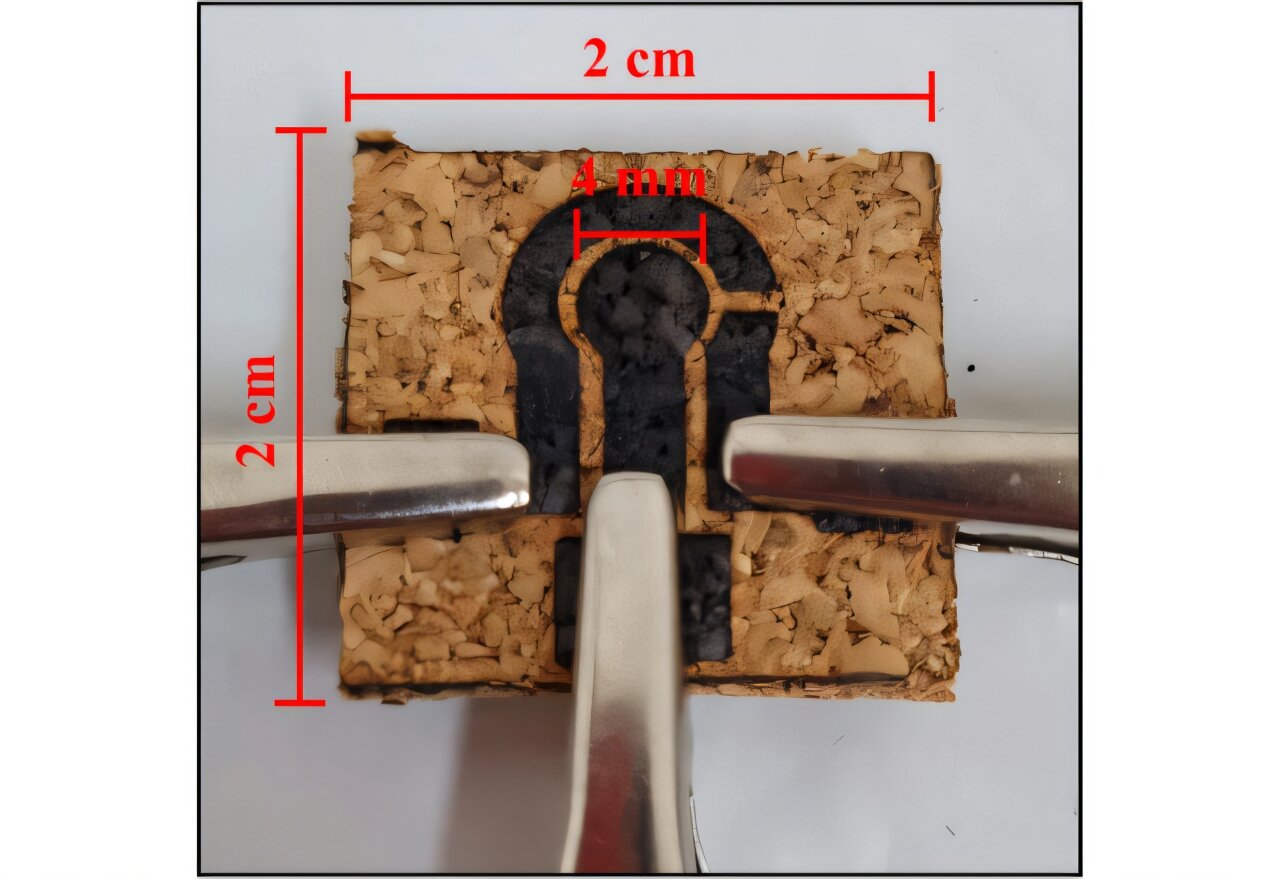
The project is currently undergoing laboratory validation and design refinement. Credit: Beatriz Germinare et al

A team of researchers from the Federal University of São Carlos (UFSCar) in the state of São Paulo, Brazil, has developed a sensor that can identify sodium nitrite (NaNO2) in various beverages, including mineral water, orange juice, and wine. This inorganic salt is used as a preservative and fixative to give products such as ham, bacon, and sausages their pink or red color. Depending on the amount, it can cause serious health problems by leading to the formation of nitrosamines, which are carcinogenic compounds.

“This risk motivated us to develop a simple, fast, and accessible way to detect the compound and ensure the quality and safety of liquid consumption,” says Bruno Campos Janegitz, head of the Laboratory of Sensors, Nanomedicine, and Nanostructured Materials (LSNano) at UFSCar. Janegitz coordinated the study, which was published in the journal Microchimica Acta.

“Detection [of NaNO2] in beverages, especially wines, is important for quality control, since its use is not legally permitted in Brazil and most countries,” the authors write in the article.

According to the researcher, LSNano projects aim to use materials from low-cost platforms that generate added value while respecting the environment. In this case, cork was chosen as the starting point because it is lightweight, natural, and inexpensive.

The samples were laser-marked to transform them into graphene, a highly conductive form of carbon, as if concentrated light had drawn paths in the cork. “This process is sustainable, doesn’t require toxic reagents, and results in a highly conductive material, which is essential because nitrite undergoes well-known electrochemical oxidation. Therefore, we need a highly conductive sensor to detect the compound,” Janegitz explains.

Device detects sodium nitrite in beverages
The project is currently undergoing laboratory validation and design refinement. Credit: Beatriz Germinare

Next, a waterproof spray was applied to the cork to prevent any liquid from seeping into the material and compromising the sensor’s response. Then, a layer of nail polish was applied to delimit the modified area. The samples were then placed in an oven at 40 °C for 30 minutes to dry and optimize the laser parameters.

See also  Sensor platform uses nanopore 'speed cameras' to pinpoint gases in complex mixtures

The next step in the project was to place samples of water, orange juice, and wine diluted in an electrolyte solution with salts simulating nitrite on the graphene.

The results showed that the sensor performed excellently, with high sensitivity and good stability. It was able to detect nitrite at concentrations compatible with those relevant to food and environmental safety.

The project is still in the laboratory validation phase, and improvements to the design are needed for practical use.

More information:
Beatriz F. Germinare et al, Cork-based electrochemical sensors obtained by laser-induced graphene: A green alternative for sodium nitrite detection in beverage samples, Microchimica Acta (2025). DOI: 10.1007/s00604-025-07471-9

Citation:
Sensor identifies sodium nitrite in drinks using laser-modified cork (2025, October 17)
retrieved 17 October 2025
from https://phys.org/news/2025-10-sensor-sodium-nitrite-laser-cork.html

This document is subject to copyright. Apart from any fair dealing for the purpose of private study or research, no
part may be reproduced without the written permission. The content is provided for information purposes only.


Source link

cork drinks identifies lasermodified nitrite Sensor Sodium
Share. Facebook Twitter Pinterest LinkedIn Tumblr Email

Related Posts

Improving PPE’s Antimicrobial Efficacy with ZnO Nanoparticles

December 5, 2025

PI Introduces Next-Generation 6-Axis Nanopositioning Alignment System

December 4, 2025

H.E. Máté Pesti’s Visit to Cubic Sensor and Instrument Co.

December 2, 2025

Nanostars Amplify SERS Signal and Boost Sensing

December 1, 2025
Add A Comment

Comments are closed.

Top Posts

The surprising flexibility of ice at the nanoscale

September 26, 2025

Attaching ‘fake targets’ to tumor cells enables antigen-independent immunotherapy

October 17, 2025

‘Bottlebrush’ particles deliver big chemotherapy payloads directly to cancer cells

September 20, 2025

Subscribe to Updates

Get the latest sports news from SportsSite about soccer, football and tennis.

Explore the future with our Nanotech blog—covering innovations, research, applications, and breakthroughs shaping science, medicine, and modern technology.

We're social. Connect with us:

Facebook X (Twitter) Instagram YouTube
Top Insights

Nanotechnology Plus Medicine Equal NanoMedicine

February 3, 2026

Improving PPE’s Antimicrobial Efficacy with ZnO Nanoparticles

December 5, 2025

PI Introduces Next-Generation 6-Axis Nanopositioning Alignment System

December 4, 2025

Subscribe to Updates

Get the latest creative news from FooBar about art, design and business.

  • Contact Us
  • Privacy Policy
  • Terms & Conditions

© 2026 elnano.com - All rights reserved.

Type above and press Enter to search. Press Esc to cancel.