
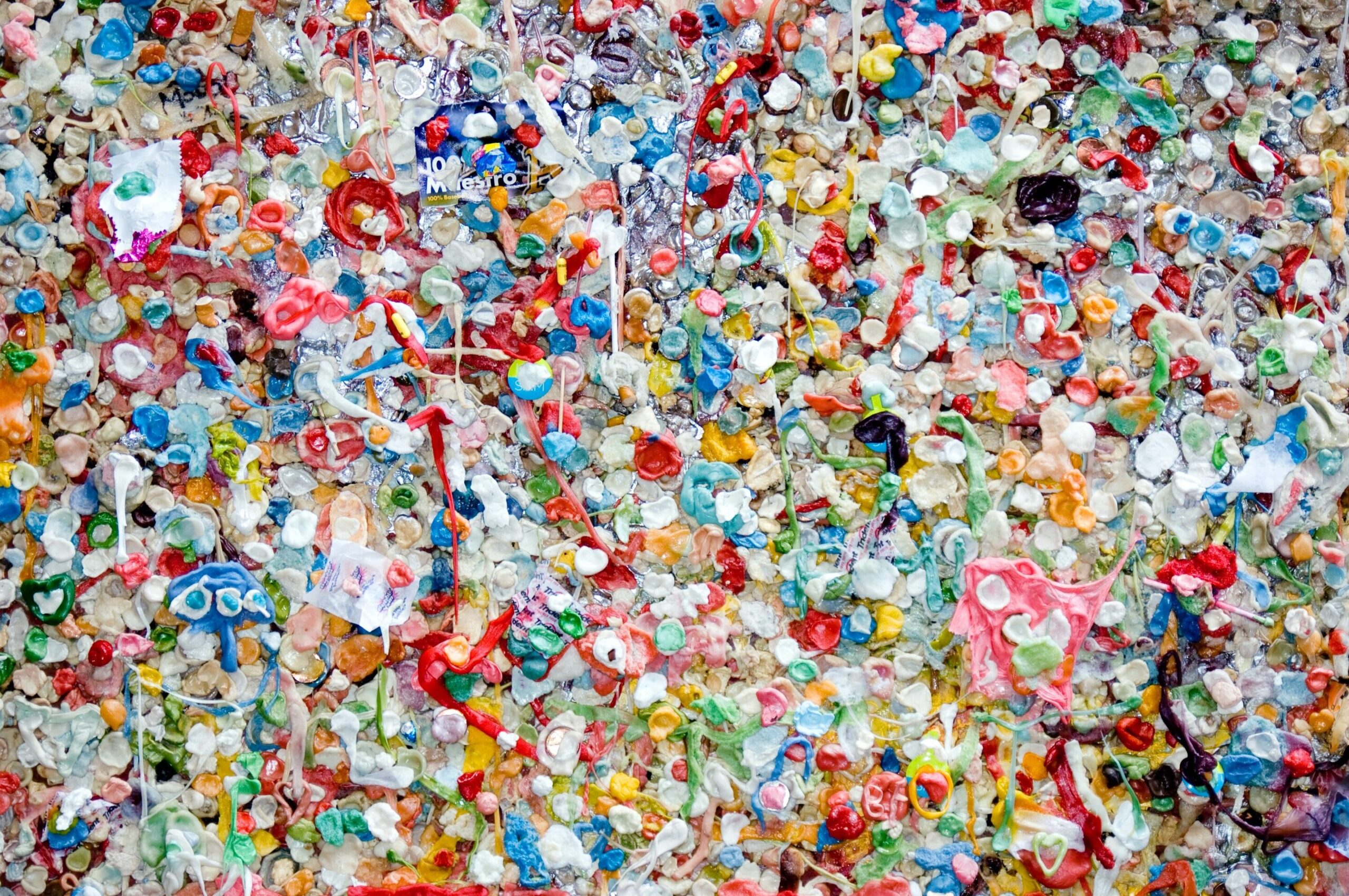
Microplastics are the crumbs of our plastic world, tiny pieces that come from bigger items breaking apart or from products like synthetic clothing and packaging. They’re now everywhere. Scientists estimate there are about 51 trillion of these particles floating in the world’s surface waters, and low levels have even been found in South African tap water.
That’s worrying because these particles can carry chemicals and bad bacteria, get eaten by fish and other wildlife, and may end up in our bodies.
We’re water scientists who are looking for ways to solve this problem. In a recent study, we tested a practical fix: two “magnetic cleaning powders” that can attach onto microplastics in water; the combined clumps can then be pulled out using a magnet. These materials are called magnetic nanocomposites (think: very fine powders with special surfaces).
The idea is simple: mix a small dose of powder into the water, let it attract and attach to microplastics, and then use a strong magnet to remove the powder-plastic clusters, leaving cleaner water behind.
Around the world, researchers have tried many different methods to capture microplastics, but our study is among the first to show that magnetic nanocomposites can work effectively not only under laboratory conditions but also in real-world samples, including municipal wastewater and drinking water.
This is the first study to use these specific nanomaterials for microplastic removal, proving both their high efficiency and their practical potential. Most existing filters struggle to catch the smallest plastics, the ones most harmful to health and the environment. The next step is to test these powders on a larger scale and develop simple, affordable systems that households and water treatment plants can use.
How well do the powders work?
In our research, we found that the powders were able to remove up to 96% of small polyethylene and 92% of polystyrene particles from purified water. When we tried the same approach in both drinking water and water coming out of a municipal wastewater treatment plant, the results were just as strong. In drinking water, the removal was about 94% and in treated wastewater, the removal was up to 92%.
Another finding from this study is that the size of the plastic particles matters. The smaller the microplastic, the easier it is for the powders to attach to it, because tiny particles can reach more of the powder’s special “sticky” surface. We saw very good results for small plastics (hundreds of micrometers), but bigger particles (3–5 millimeters) were hardly removed at all. This is because they don’t mix with the powder as well and there’s less surface for the powder to attach onto.
In everyday terms, these magnetic powders are excellent for the small microplastics that are hardest to catch with normal filters.
Now for the big question: why do the powders attach to plastic? Think of it as being like tiny magnets. The powder and the plastics have special surfaces. The powder has parts that are sticky for plastics. This stickiness happens because of different kinds of forces. The plastic and powders have opposite charges which pull them together or allow them to stick together.
The key point is that the powders are engineered or specifically made to grab onto plastics so that microplastics naturally cling to them in water.
Once the powders attach onto the microplastics, we use a strong magnet (magnetic force: 250kg) to pull the powder–plastic clumps out of the water. The plastics are then separated from the powder by washing and filtration, dried, and weighed. This allows us to check how much plastic was removed. The separated powders are regenerated and reused, while the plastics are safely discarded, preventing them from re-entering the water.
We also looked at real-world questions: can you reuse the powders? And are they safe? The powders themselves are made from safe, lab-engineered materials: tiny sheets of carbon and boron nitride (a material also found in cosmetics and coatings) that are coated with magnetic iron nanoparticles. This makes them stable in water, and easy to pull out with a magnet after they’ve captured the microplastics.
After three rounds of use, the tested powders were effective in removing plastics up to 80%. That means you don’t need a new batch of powder every time, which is important for keeping costs down. Treating 1,000 liters of water with this method costs about US$41 (R763), making it competitive with many existing treatment options.
For safety, we tested the filtered powder (the “filtrate”) on plant growth. The results showed minimal to no toxicity, as three different plants were able to grow well in the presence of the filtrate. This is a strong sign that the method is environmentally friendly when used as intended.
What does this study mean for households and cities?
In the short term, magnetic powders could be built into small cartridges or filter units that attach to household or community water systems, helping remove microplastics before the water is used for drinking or cooking.
But the bigger picture is just as important. Microplastics are not only a South African problem but are also a global pollutant that crosses borders through rivers, oceans, and even the air we breathe. Low-cost, scalable solutions such as magnetic powders can make a real difference in resource-limited settings, where advanced filtration systems are too expensive or impractical.
Looking ahead, further work will focus on scaling up the method, testing it under more diverse water conditions, and designing simple, affordable devices that households or treatment plants can adopt.
In short: this specialized magnetic powder can tackle a tiny pollutant with big consequences. With sensible engineering and careful recovery, magnetic nanocomposites offer a promising, practical path to clean water while protecting the ecosystem from microplastic pollution.
This article is republished from The Conversation under a Creative Commons license. Read the original article.
Citation:
We tested if a specialized magnetic powder could remove microplastics from drinking water: The answer is yes (2025, October 8)
retrieved 8 October 2025
from https://phys.org/news/2025-10-specialized-magnetic-powder-microplastics.html
This document is subject to copyright. Apart from any fair dealing for the purpose of private study or research, no
part may be reproduced without the written permission. The content is provided for information purposes only.