
Close Menu
  • News
    • Medical
    • Nanomaterials
    • AI & Robotics
    • 2D Materials
    • Metamaterials
    • Nanoelectronics
    • ETF’s
    • Medicine
  • Environment
    • Earth.com
    • TreeHugger
    • Nanomuscle
  • Beauty
    • Makeupanalysis
What's Hot

How Core-Shell Nanofibers Could Make Flexible Batteries More Heat-Resistant

September 1, 2026

Older Nanopore Models Lead CpG Analysis While Newer Tools Excel at Other DNA Marks

September 1, 2026

This Grain-of-Rice-Sized “Rainbow” Chip Could Transform 6G Communications

September 1, 2026
Facebook X (Twitter) Instagram
  • Contact Us
  • Privacy Policy
  • Terms & Conditions
Facebook X (Twitter) Instagram
Elnano – Global Innovative Nanotechnology SolutionsElnano – Global Innovative Nanotechnology Solutions
  • News
    • Medical
    • Nanomaterials
    • AI & Robotics
    • 2D Materials
    • Metamaterials
    • Nanoelectronics
    • ETF’s
    • Medicine
  • Environment
    • Earth.com
    • TreeHugger
    • Nanomuscle
  • Beauty
    • Makeupanalysis
Elnano – Global Innovative Nanotechnology SolutionsElnano – Global Innovative Nanotechnology Solutions
Home » Solid-state batteries edge closer to reality
Nanotech

Solid-state batteries edge closer to reality

September 20, 2025No Comments3 Mins Read
Share
Facebook Twitter LinkedIn Pinterest Email


Solid-state batteries edge closer to reality

A breakthrough in solid-state battery design could eliminate key barriers to electric vehicle performance, making future EVs safer, more efficient, and longer-lasting.
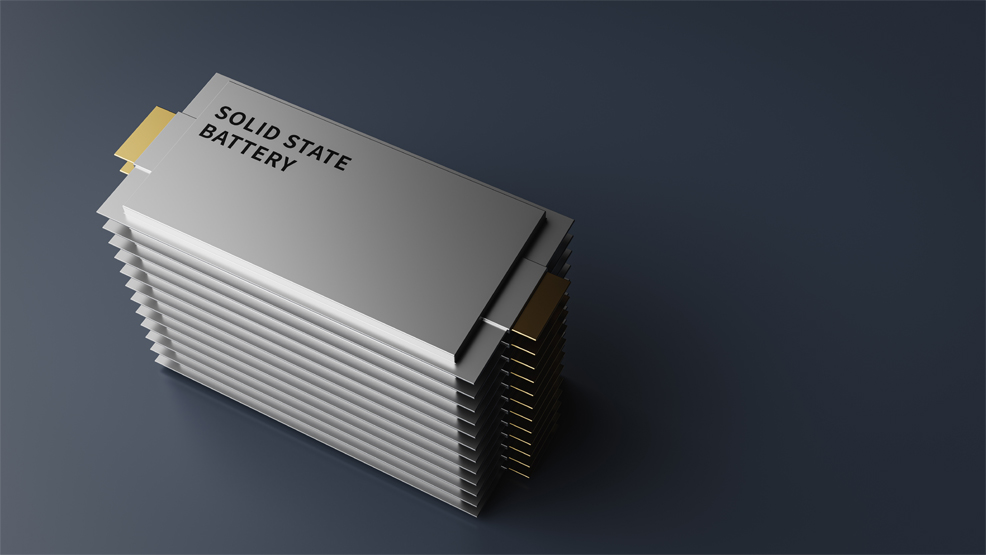
 

solid state battery future technology


The adoption of electric vehicles (EVs) is accelerating worldwide, driven by advances in technology and growing consumer interest in sustainable transportation. However, current lithium-ion batteries, which power all modern EVs, still face critical challenges. High costs, limited driving range, and long charging times remain the biggest obstacles to widespread adoption, with concerns around battery lifespan and safety also playing a role.

This is where the next generation of batteries comes into play. Solid-state batteries – seen as a game-changer for the EV industry – promise to address many of these issues. By replacing the flammable liquid electrolyte with a solid one, these could offer significant improvements in efficiency, energy density, and safety. Despite the potential, the development of solid-state batteries has been slowed by technical hurdles, particularly the resistance that occurs where the solid electrolyte meets the battery’s electrodes. This resistance can limit its ability to deliver power effectively.

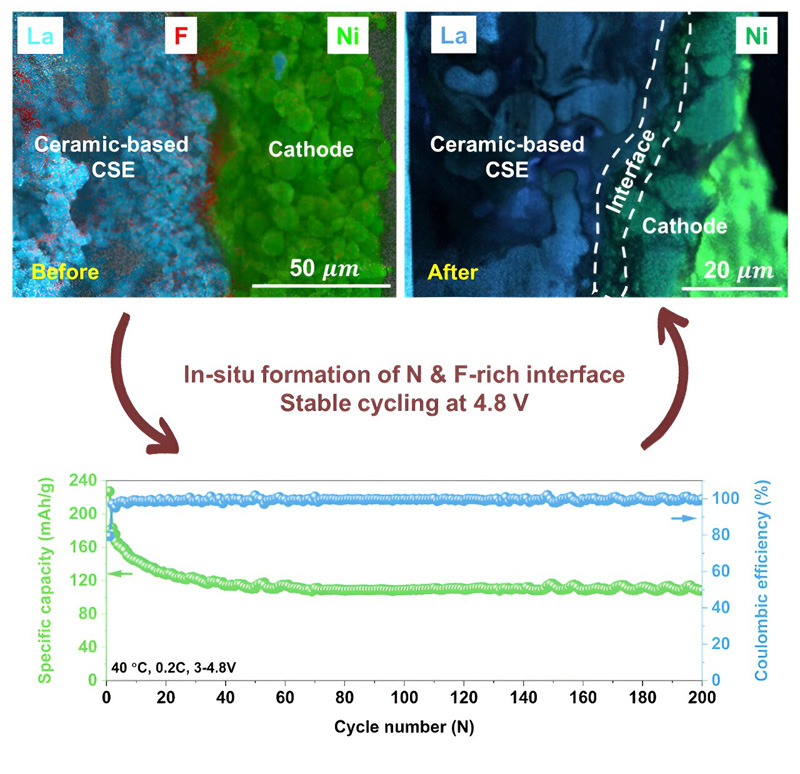
Now, researchers at McGill University have made a breakthrough that could overcome one of the most persistent challenges. Their new and innovative design uses a porous ceramic membrane, filled with a small amount of polymer, to eliminate interfacial resistance and allow lithium ions to flow more freely.
 

solid-state battery breakthrough design


“This not only improves the battery’s performance but also creates a stable interface for high-voltage operation – one of the industry’s key goals,” explains Professor George Demopoulos, from the Department of Materials Engineering at McGill, who led the research.

See also  Double-Layer Design Boosts Charge and Range of EV Batteries

Current lithium-ion battery cells typically operate at 3.6V to 3.7V, with a maximum of 4.2V before risking degradation. By contrast, the solid-state battery developed at McGill demonstrated remarkable stability at voltages as high as 4.8V without significant degradation. This ability to handle higher voltages safely is critical for extending the range and longevity of electric vehicle batteries. The researchers’ tests showed that the batteries can withstand over 200 charging cycles while retaining high energy density. While this is an early-stage result, further development and testing could match or exceed current lithium-ion battery cells, which are typically in the range of 1,000 to 2,000 cycles.

The team’s prototype design achieved an energy density of 398 Wh/kg – surpassing current industry targets, including the US Advanced Battery Consortium’s goal of 350 Wh/kg for high-performance EV batteries. This breakthrough suggests that future EVs powered by these solid-state batteries could travel further on a single charge while reducing the overall weight of the vehicle.

The research appears this month in the journal Cell Reports Physical Science. “This discovery brings us closer to building the next generation of safer and more efficient batteries for electric vehicles,” added Senhao Wang, first author on the study and a PhD graduate.


Comments »


If you enjoyed this article, please consider sharing it:


Source link

Batteries closer edge reality Solidstate
Share. Facebook Twitter Pinterest LinkedIn Tumblr Email

Related Posts

How Core-Shell Nanofibers Could Make Flexible Batteries More Heat-Resistant

September 1, 2026

Edge-Supported Design Makes Nano-Thick Skin Electronics Reusable and Easier to Handle

September 1, 2026

DNA Origami Nanosyringe Pierces and Reseals Membranes to Control Molecular Delivery

September 1, 2026

New Versatile Nanoplatelet Platform Optimizes Tumor Imaging and Cancer Destruction

September 1, 2026
Add A Comment

Comments are closed.

Top Posts

New Therapy Uses Tumor Chemistry to Trigger Cancer Cell Death

April 2, 2026

Scientists make dark exciton states shine through nanotube engineering

November 13, 2025

Court rulings increasingly demand scientific certainty—but the case of titanium dioxide shows that’s not always possible

September 22, 2025

Subscribe to Updates

Get the latest sports news from SportsSite about soccer, football and tennis.

Explore the future with our Nanotech blog—covering innovations, research, applications, and breakthroughs shaping science, medicine, and modern technology.

We're social. Connect with us:

Facebook X (Twitter) Instagram YouTube
Top Insights

How Core-Shell Nanofibers Could Make Flexible Batteries More Heat-Resistant

September 1, 2026

Older Nanopore Models Lead CpG Analysis While Newer Tools Excel at Other DNA Marks

September 1, 2026

This Grain-of-Rice-Sized “Rainbow” Chip Could Transform 6G Communications

September 1, 2026

Subscribe to Updates

Get the latest creative news from FooBar about art, design and business.

  • Contact Us
  • Privacy Policy
  • Terms & Conditions

© 2026 elnano.com - All rights reserved.

Type above and press Enter to search. Press Esc to cancel.