

A recent study published in Small investigates the mechanisms of resistive switching in monolayer hexagonal boron nitride (hBN) memristive devices using a fully optical, operando approach.
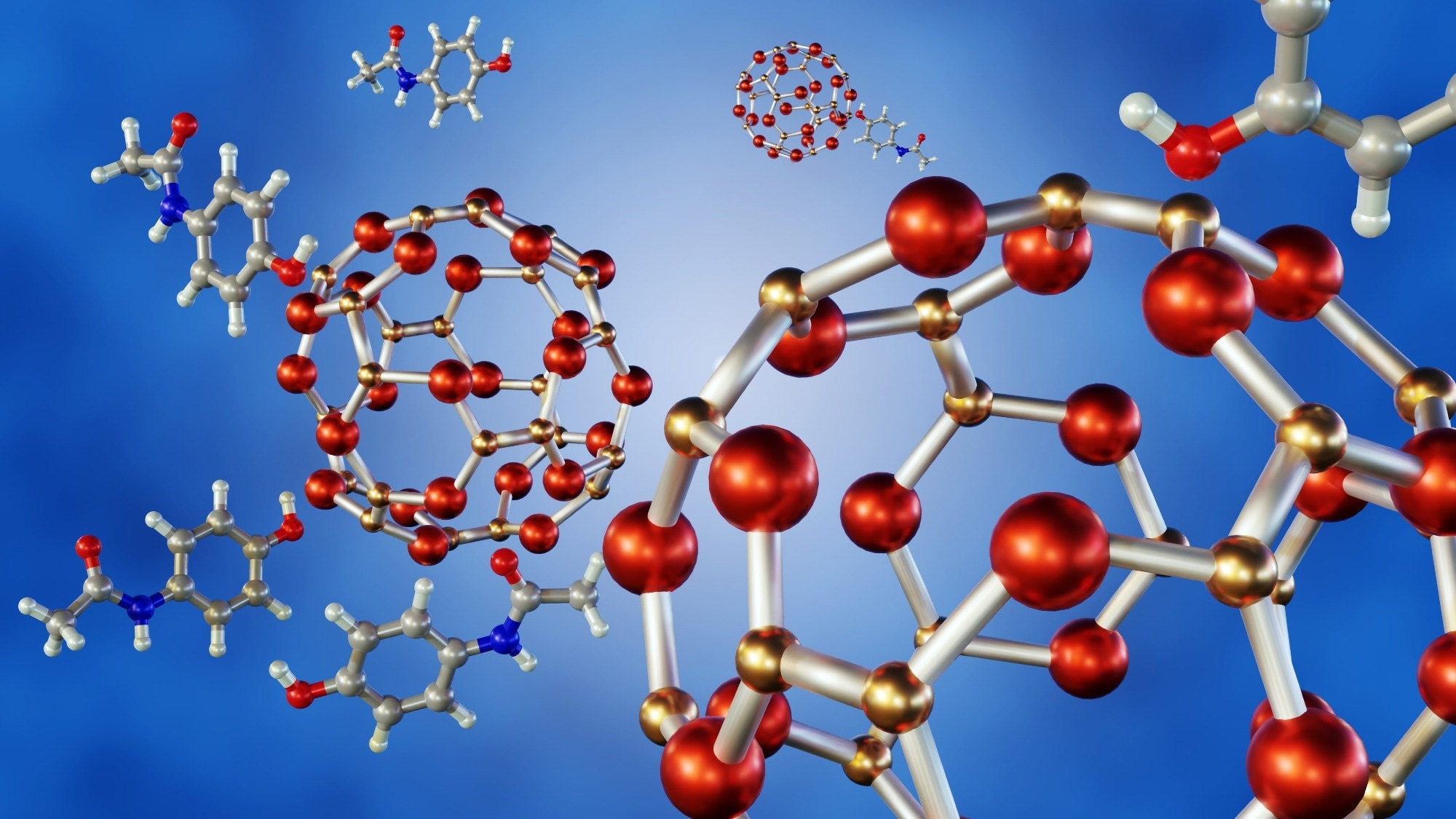 Image Credit: Love Employee/Shutterstock.com
Background
Resistive switching in memristive devices typically involves the formation of localized conductive paths within an insulating layer. These conductive filaments (CFs) are often associated with the migration of metal ions from electrodes or with defect-related vacancy clusters in the dielectric.
In layered two-dimensional (2D) materials such as hBN, switching mechanisms can differ due to the atomically thin structure and relatively high stability. Structural defects, such as vacancies or grain boundaries, may provide pathways that support filament formation by facilitating ion migration.
For instance, boron vacancies or grain boundary defects in hBN have been proposed as potential sites for CF nucleation. Conventional characterization techniques may be destructive or lack the temporal resolution to observe these dynamics in real time. As a result, non-destructive, in-situ techniques capable of monitoring switching behavior at relevant timescales are needed.
The Current Study
This study presents an optical method enhanced by plasmonic effects to observe resistive switching in hBN-based memristors in real time. The device consists of a vertical two-terminal structure incorporating monolayer hBN.
A gold nanoparticle (AuNP) approximately 80 nm in diameter is deposited onto the hBN surface, forming the top electrode, while a gold substrate serves as the bottom electrode. This nanoparticle-on-mirror (NPoM) configuration supports both electrical characterization and enhanced optical detection through localized surface plasmon resonances (LSPRs). These resonances amplify photoluminescence (PL) and dark-field (DF) scattering signals, enabling sensitive detection of changes in the active layer.
Optical characterization was conducted using a custom setup that included a high numerical aperture (NA) objective, continuous wave laser excitation for PL, and white light illumination for DF measurements. Collected PL and scattering signals were transmitted via optical fibers and analyzed spectrally with a high-sensitivity spectrometer.
Simultaneous electrical measurements, including current-voltage (I–V) characterization, were performed under controlled conditions to track resistive switching. Finite-difference time-domain (FDTD) simulations were used to model the plasmonic and optical response of the AuNP, accounting for ligand layers and material refractive indices.
Results and Discussion
The experiments showed that resistive switching in the hBN devices was accompanied by changes in optical signals. When a voltage threshold was reached, the device transitioned from a high-resistance state (HRS) to a low-resistance state (LRS), consistent with the formation of conductive filaments.
Optical measurements revealed a change in the PL signal near 620 nm, with increased intensity associated with the LRS. This change is interpreted as a modification of the local electronic environment, likely due to the formation of metallic filaments along defect pathways.
During switching, the dark-field scattering spectra showed a redshift, indicating that the local refractive index near the gold nanoparticle increased. Based on the spectral shift, this change in refractive index was estimated to be about one unit. This shift supports the presence of a conductive filament altering the optical properties of the surrounding medium, which is in line with the hypothesis of metal ion migration.
The data suggest that defect states are critical to enabling filament formation. These defects appear to support ion migration and aggregation, leading to the resistive switching behavior. Optical signals indicated a gradual growth of the filaments, implying a defect-mediated process rather than abrupt structural changes. This behavior supports the conclusion that switching is governed by localized dynamics involving defects and ion transport.
Conclusion
This work demonstrates that optical operando techniques, with plasmonic enhancement, can be applied to monitor resistive switching in hBN-based nanodevices. The study concludes that conductive filament formation is mediated by metal ion migration along defect pathways within the hBN monolayer.
Optical signals, including changes in photoluminescence and dark-field scattering, provide a means to observe these nanoscale dynamics in real time. The findings contribute to understanding how defects influence resistive switching and illustrate the utility of optical methods in studying 2D material-based electronic devices.
These insights may inform the design of future memristive devices and support the broader integration of 2D materials in electronic systems.
Journal Reference
Kelly DM., et al. (2025). Understanding Volatile Electrical Switching in hBN Nanodevices by Fully Optical Operando Investigation. Small. DOI: 10.1002/smll.202410569, https://onlinelibrary.wiley.com/doi/10.1002/smll.202410569