
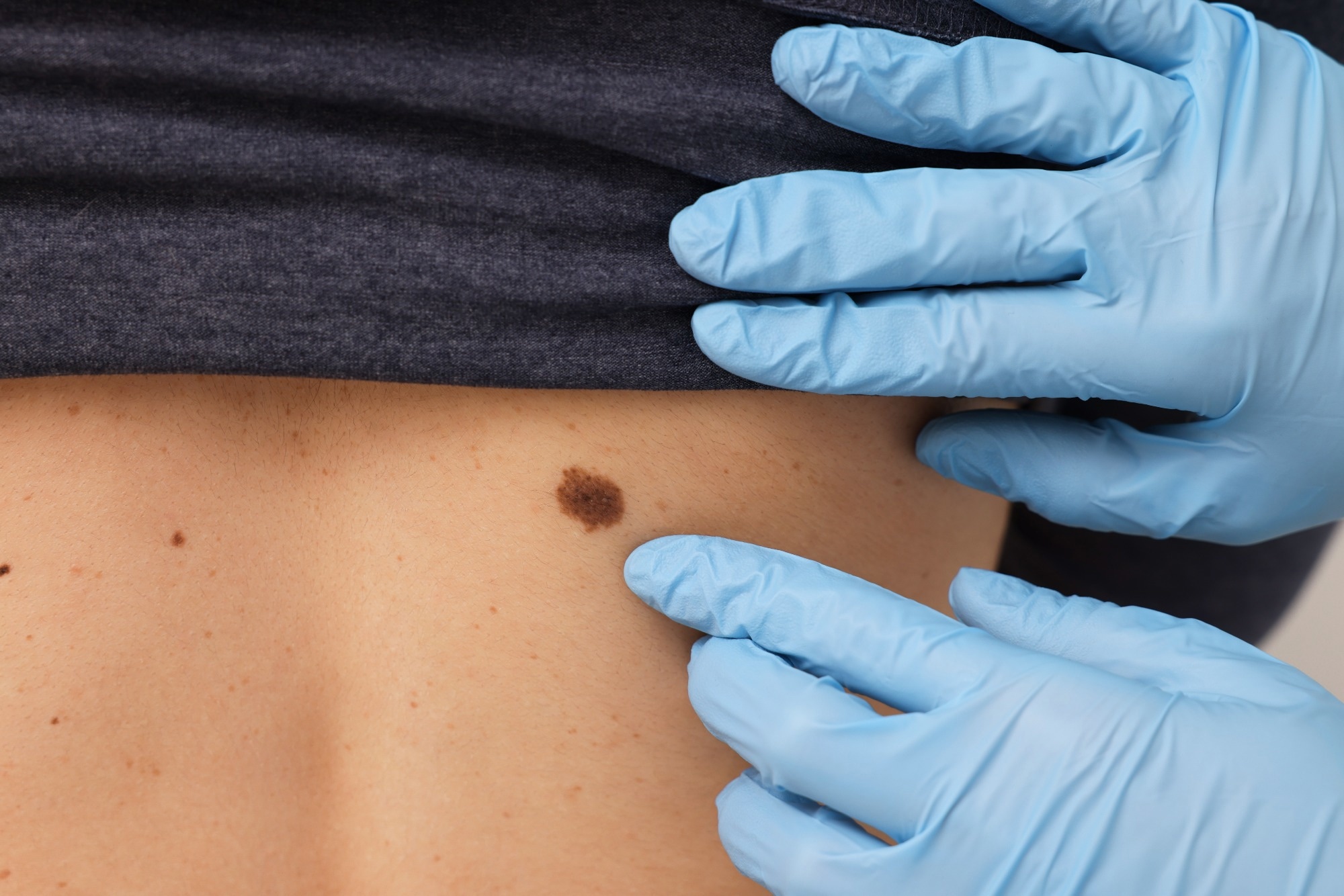
A recent study published in Small addresses the persistent difficulty of treating refractory melanoma, an aggressive form of skin cancer that often does not respond to existing therapies.
Although diagnostic tools and immunotherapies have improved in recent years, a substantial number of patients remain unresponsive to current treatment options, highlighting the need for alternative therapeutic approaches.
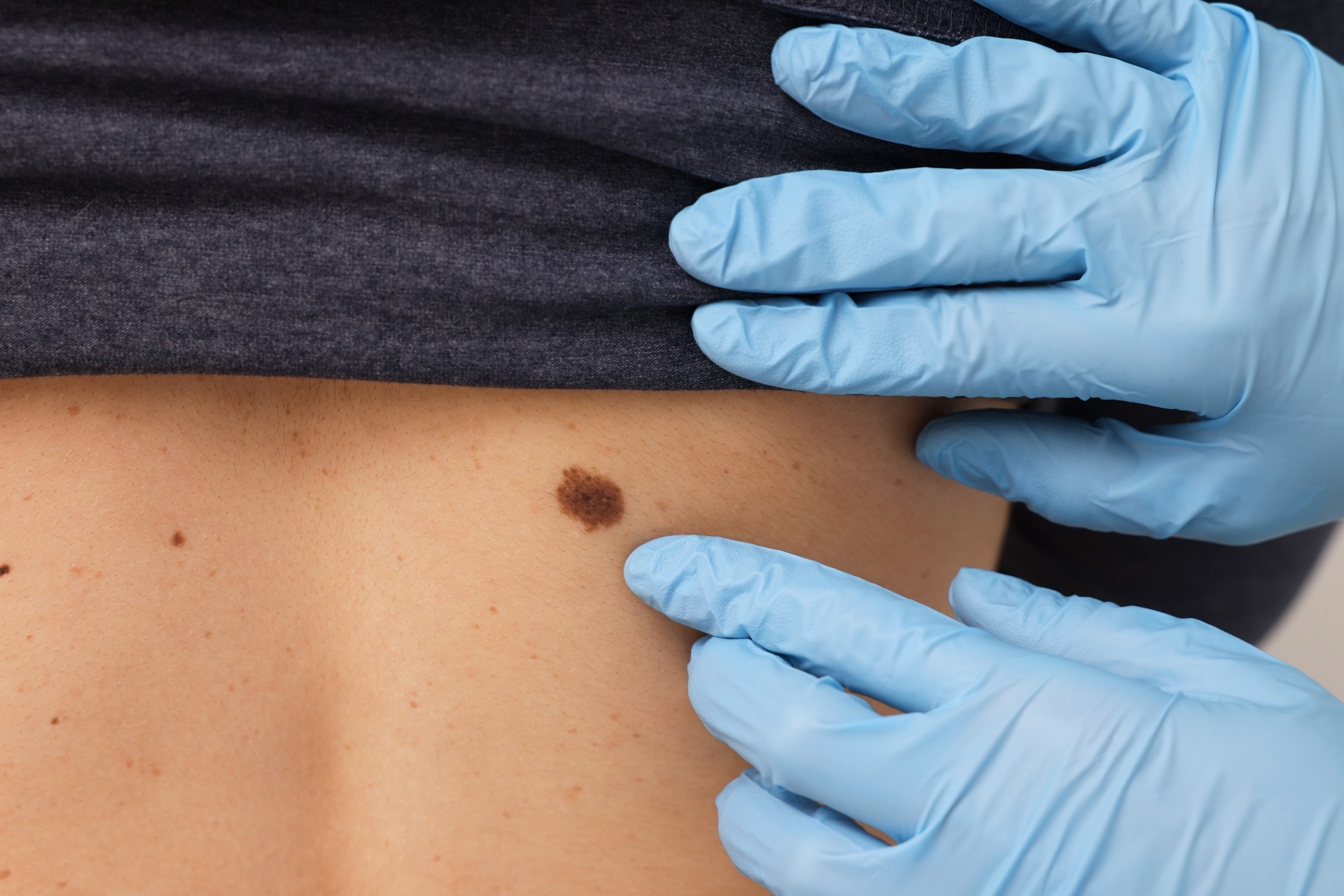
Image Credit: New Africa/Shutterstock.com
The researchers in this study explore a strategy that combines intracellular stress targeting with immune modulation.
Specifically, they investigate the co-administration of two hydrophobic drugs: copper diethyldithiocarbamate (CuET), which inhibits the p97-UFD1-NPL4 protein complex to induce endoplasmic reticulum (ER) stress and promote cytotoxicity; and 6-bromo-indirubin-3′-oxime (BIO), a GSK3 inhibitor that can influence inflammatory pathways and tumor cell growth.
Background
Melanoma becomes particularly difficult to treat once it develops resistance to standard therapies. Tumor cells can avoid immune detection and resist cell death mechanisms, reducing the effectiveness of many treatments. This study focuses on targeting both cellular stress pathways and immune checkpoints as a dual approach.
CuET disrupts protein degradation by inhibiting the p97-UFD1-NPL4 complex, leading to ER stress and apoptosis, especially in cancer cells already under stress. BIO, as a GSK3 inhibitor, affects β-catenin signaling and the production of inflammatory cytokines, which can help reshape the tumor microenvironment to enhance immune recognition.
Because both CuET and BIO are hydrophobic, systemic delivery is a challenge. To address this, the researchers developed liposome-polymer nanoparticles (LPNs) capable of encapsulating the drugs, improving their solubility, delivery precision, and release control.
The Current Study
The research included both in vitro and in vivo experiments to evaluate the drug delivery system. The team first established the optimal molar ratio of CuET to BIO using several melanoma cell lines, including B16F10 and YUMM1.7, along with their variants.
The drugs were co-loaded into LPNs made from phospholipids and stabilized with poly(vinylpyrrolidone), which improved their compatibility in aqueous environments. Particle size, surface charge, encapsulation efficiency, and stability were analyzed using dynamic light scattering and electron microscopy.
Cellular uptake and cytotoxicity were assessed using viability assays (including the sulforhodamine B method) in both two-dimensional cell cultures and three-dimensional tumor spheroids. Additional analyses (such as immunofluorescence, Western blotting, and flow cytometry) were used to track changes in β-catenin levels, immune marker expression, and T cell activation.
In vivo, the LPNs were tested in mouse models of melanoma, again using the B16F10 and YUMM1.7 cell lines, which exhibit features of therapy-resistant disease. Tumor growth, metastasis, and treatment-related toxicity were monitored through imaging, histological evaluation, and blood analysis.
Results and Discussion
The co-loaded nanoparticles demonstrated consistent particle size (100–150 nm), high encapsulation efficiency, and stability under physiological conditions. In vitro, the combination therapy showed a greater reduction in melanoma cell viability than either drug alone, indicating a synergistic cytotoxic effect.
One notable finding was BIO’s ability to counteract the accumulation of β-catenin induced by CuET. This suggests that the drug pair can modulate intracellular signaling in a way that may limit tumor proliferation and reduce metastatic potential. The combination also increased markers of ER stress and apoptosis, supporting the idea that the two drugs operate through complementary mechanisms.
Beyond direct effects on tumor cells, the study also examined the immune-related impact of the treatment. The combination therapy led to reduced expression of PD-L1 on tumor cells, potentially improving immune cell recognition. Flow cytometry revealed increased levels of immune activation markers such as CD69, along with changes in PD-1 expression on T cells. CuET alone increased PD-1 levels, a response that was moderated by the addition of BIO.
CuET was also found to suppress IL-2 secretion from activated T cells, directly influencing immune cell function. These results suggest that the therapy engages both tumor-intrinsic and immune-modulatory pathways, contributing to a more comprehensive anti-tumor response.
In vivo, treatment with the liposome-polymer nanoparticles led to a significant decrease in tumor size—about 47 % in B16F10 models and over 75 % in YUMM1.7 models. Importantly, this effect was achieved without significant toxicity. Mice maintained stable body weight, and blood and histological analyses showed no signs of liver or kidney damage.
Overall, the findings support the use of this nanocarrier system for delivering hydrophobic drug combinations, offering effective tumor suppression with a favorable safety profile.
Conclusion
This study presents a liposome-polymer nanoparticle system designed to deliver CuET and BIO in combination as a potential treatment for resistant melanoma. The formulation demonstrated stability, effective tumor suppression in vitro and in vivo, and a favorable safety profile.
By targeting ER stress, β-catenin signaling, and immune checkpoint pathways, the approach offers a multi-faceted therapeutic option for melanoma that has not responded to existing treatments.
Further research may explore the use of similar delivery systems for other drug combinations, particularly in cancers where treatment resistance remains a significant challenge.
Journal Reference
Paun R. A., et al. (2025). Liposome-Polymer Nanoparticles Loaded with Copper Diethyldithiocarbamate and 6-Bromo-Indirubin-3′-Oxime Enable the Treatment of Refractive Melanoma. Small, DOI: 10.1002/smll.202409012, https://onlinelibrary.wiley.com/doi/10.1002/smll.202409012