
As drug-resistant infections continue to rise, researchers are looking for new antimicrobial strategies that are both effective and sustainable. One emerging approach combines nanotechnology with “green” chemistry, using plant extracts instead of harsh chemicals to produce metal oxide nanoparticles.
A new study published in Biomolecules and Biomedicine now reports that zinc oxide nanoparticles (ZnONPs) biosynthesized from four desert plants with medicinal properties can inhibit a wide spectrum of bacteria, yeasts and filamentous fungi in laboratory tests. The work also links the plants’ rich phytochemical profiles to nanoparticle stability and potency, and uses computer modeling to explore how key compounds might interact with microbial targets.
The study is the first to produce ZnONPs from species that thrive in harsh, arid environments and are often under-used or even considered invasive. “By turning resilient desert plants into tiny zinc oxide particles, we were able to generate materials that are both eco-friendly to produce and surprisingly active against a range of microbes,” the authors write. “These green nanoparticles could form the basis for future antimicrobial formulations, pending further safety and efficacy testing.”
Turning desert plants into nanoparticles
Nanoparticles, typically 10–100 nanometers in size, are being explored for drug delivery, antimicrobial coatings, diagnostics and more. Conventional physical and chemical methods for making nanoparticles can be expensive, energy-intensive and environmentally damaging.
Green synthesis offers a more sustainable route. In this approach, plant extracts act as natural reducing, stabilizing and capping agents, replacing toxic reagents and often yielding more uniform particles.
In the new study, researchers collected the aerial parts of four desert plants in Tunisia. After drying and grinding the plant material, they prepared aqueous extracts and mixed them with zinc acetate under heating to form ZnONPs. The resulting nanoparticles were named according to their plant source:
- Thymelaea hirsuta
- Aloe vera
- Retama monosperma
- Peganum harmala
All four plants have a history of traditional medicinal use, including anti-inflammatory, antioxidant and antibacterial applications, making them promising candidates for green nanotechnology.
UV–Vis spectroscopy confirmed the formation of zinc oxide, while other techniques characterized the particles’ size and surface chemistry. The plant-derived compounds coating the nanoparticles included phenolic acids and flavonoids, which are known for their antioxidant and bioactive properties and likely helped stabilize the particles.
“These plants naturally produce a variety of phenolic and flavonoid compounds,” the researchers explain. “In our system, those molecules appear to play a dual role—driving the formation of zinc oxide nanoparticles and contributing to their biological effects.”
Broad antimicrobial activity in the lab
To assess antimicrobial potential, the team exposed a panel of clinically relevant microbes to the plant-based ZnONPs. The panel included Gram-positive and Gram-negative bacteria, Candida yeasts and Aspergillus fungi.
Across these groups, the green-synthesized ZnONPs showed notable inhibitory effects:
- Bacteria: Nanoparticles derived from Aloe vera produced the largest inhibition zones against certain Gram-positive bacteria, while those from Thymelaea hirsuta, Retama monosperma and Peganum harmala also suppressed growth, particularly of Staphylococcus aureus and Micrococcus luteus.
- Yeasts: Aloe vera ZnONPs inhibited all Candida species tested, and Peganum harmala ZnONPs showed strong activity against Cryptococcus neoformans.
- Filamentous fungi: ZnONPs from Peganum harmala and Aloe vera were especially effective against Aspergillus species, including A. fumigatus, an important cause of invasive fungal disease.
In contrast, the corresponding plant extracts and zinc acetate alone had weak or negligible antimicrobial effects in most cases. This suggests that transforming the zinc salt and plant biomolecules into nanoscale structures substantially enhances their antimicrobial potency.
How the compounds might work
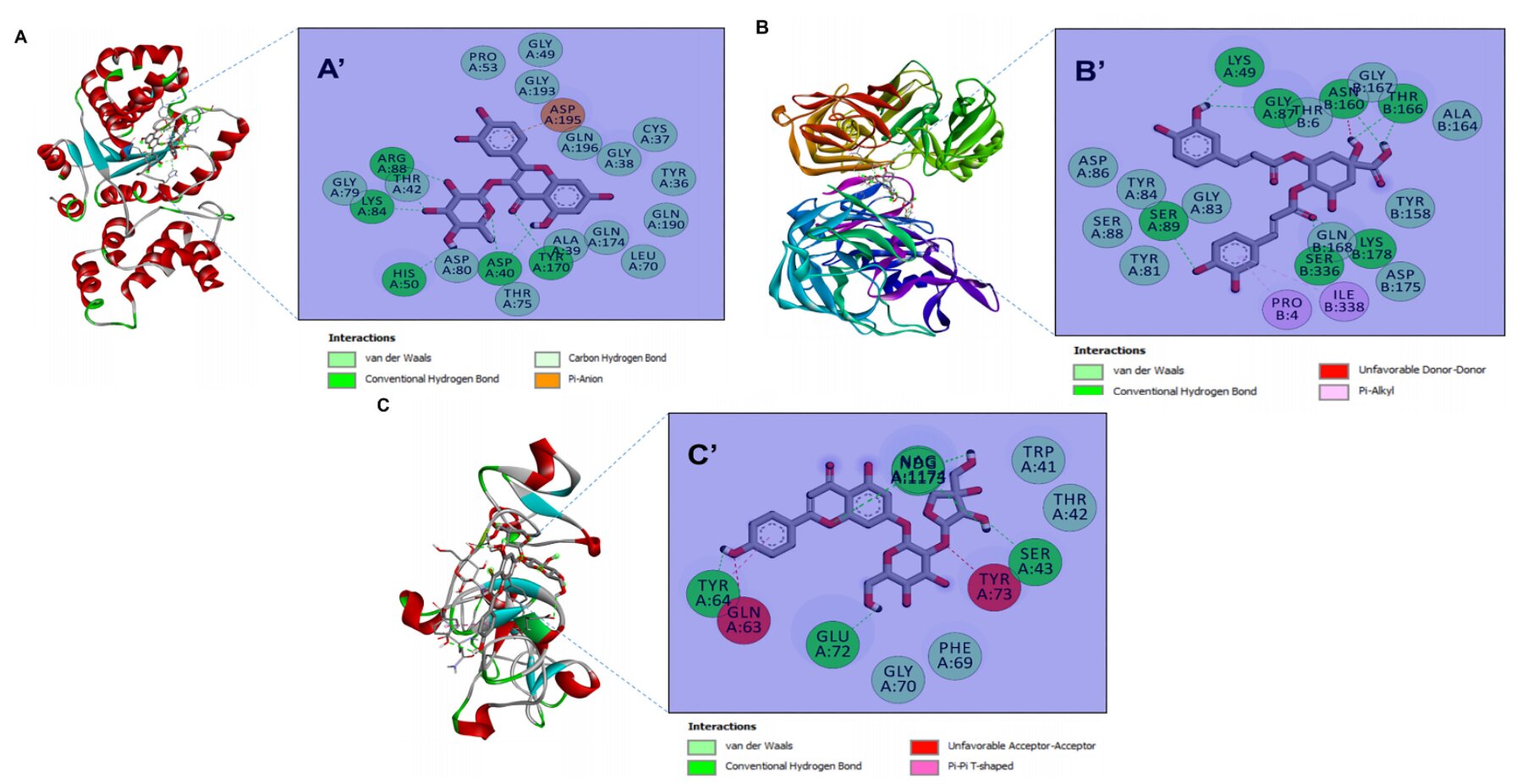
To gain insights into possible mechanisms, the researchers used molecular docking to model how selected plant-derived compounds could interact with microbial protein targets. They focused on enzymes and lectins relevant to bacterial and fungal biology.
Several phytochemicals showed strong predicted binding to bacterial and fungal enzymes, forming multiple hydrogen bonds within the active site pockets. Many compounds also displayed favorable drug-likeness and bioavailability profiles in computational pharmacokinetic analyses, and were predicted to be chemically accessible for synthesis.
These in silico findings do not replace experimental validation, but they support the idea that both the zinc oxide core and the plant-derived surface molecules may contribute to the observed antimicrobial effects.
“Our computational results suggest that specific phytochemicals associated with the nanoparticles can engage key microbial targets,” the authors note. “This, together with the known properties of zinc oxide itself, may help explain the broad-spectrum activity we observed.”
Promise and precautions
The study highlights several potential advantages of plant-based ZnONPs:
- They can be produced via a green, low-cost process from under-utilized desert plants.
- They show broad antimicrobial activity against bacteria, yeasts and molds, often outperforming the original plant extracts or zinc salts.
- Their phytochemical coating may offer additional opportunities to tune stability and biological activity.
However, the researchers emphasize that the work is at an early stage.
Further studies are needed to optimize nanoparticle size and uniformity, evaluate long-term stability, and assess safety, including cytotoxicity toward human cells and environmental impacts. In vivo models and real-world formulations will also be essential before any clinical or industrial applications can be considered.
Even so, the results provide a foundation for exploring green-synthesized zinc oxide nanoparticles as part of a broader toolkit against microbial infections, particularly in an era of rising antimicrobial resistance and growing demand for sustainable technologies.
More information:
Samira Jebahi et al, Green synthesis of plant-derived ZnO nanoparticles: Characterization, pharmacokinetics, molecular interactions, and in-vitro antimicrobial and antifungal evaluation, Biomolecules and Biomedicine (2025). DOI: 10.17305/bb.2025.12090
Citation:
Green-synthesized zinc oxide nanoparticles from desert plants show broad antimicrobial activity (2025, November 17)
retrieved 17 November 2025
from https://phys.org/news/2025-11-green-zinc-oxide-nanoparticles-broad.html
This document is subject to copyright. Apart from any fair dealing for the purpose of private study or research, no
part may be reproduced without the written permission. The content is provided for information purposes only.