
A new nano-based drug delivery technology could outwit tuberculosis (TB)—one of humanity’s most ancient diseases.
At the Wits Advanced Drug Delivery Platform (WADDP), postdoctoral researcher Dr. Lindokuhle Ngema is developing an inhalable nanosystem to transport TB medicines directly into the lungs, the very place where the bacterium which causes TB—Mycobacterium tuberculosis—hides and thrives.
The nanocarrier (miniature “container” for the medicine) can hold all four standard TB drugs in a single formulation and release them precisely at the infection site. The system is engineered to bypass the liver and bloodstream, reduce drug loss, and increase local concentration in the lungs.
“TB is clever,” says Ngema. “It hides in lung pockets where oral drugs can’t reach. Our system is designed to be smarter and to go exactly where it’s needed.”
An ancient enemy with modern consequences
Mycobacterium tuberculosis has been around for roughly 9,000 years. Despite remarkable scientific progress, it remains a major global killer, causing about 10 million new infections and 1.8 million deaths each year. In South Africa alone, TB claimed more than 56,000 lives in 2023.
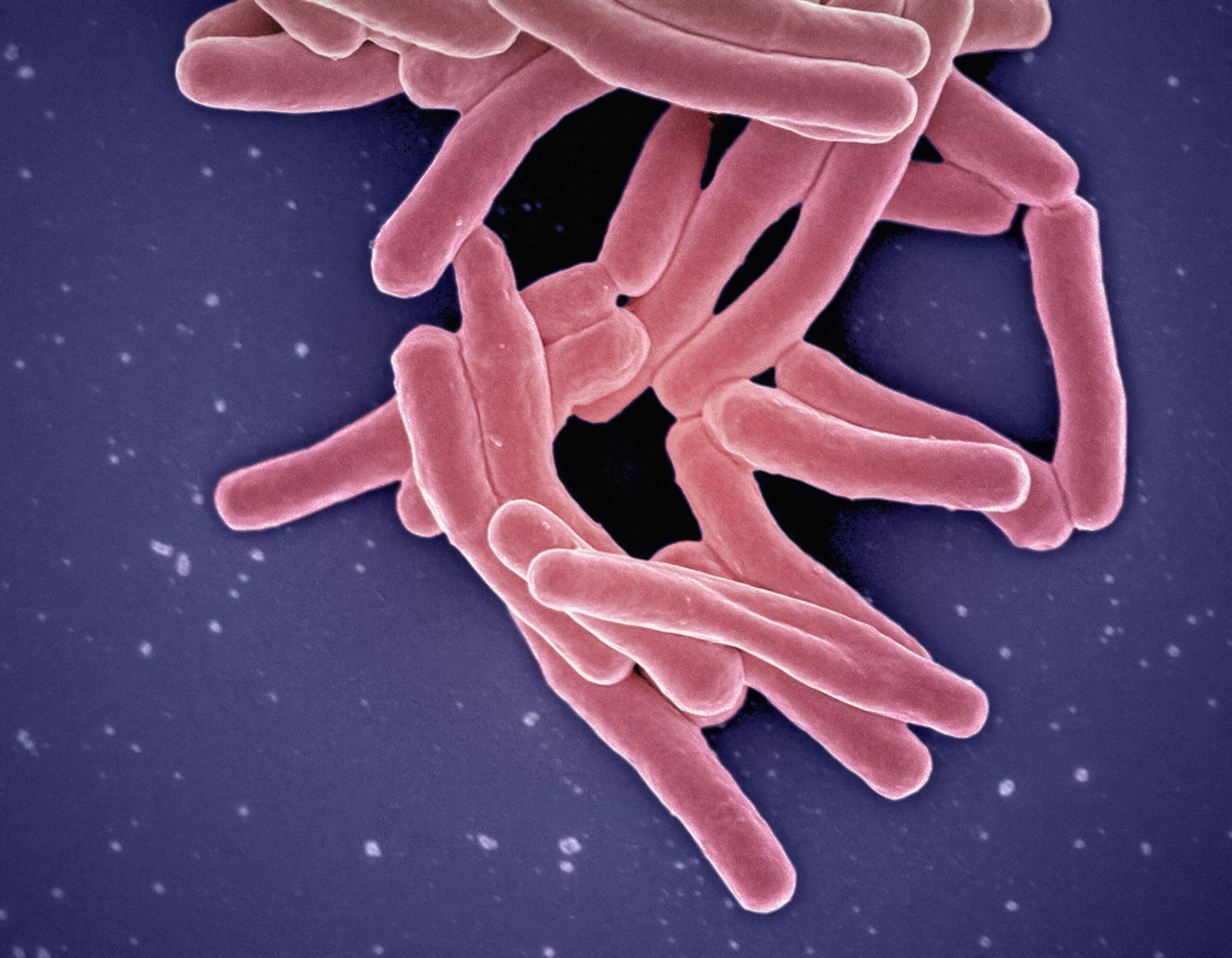
The bacillus (a slow-growing, rod-shaped bacterium) spreads through the air when infected people cough, sneeze or speak. While most South Africans receive the BCG vaccine in infancy to prevent TB, protection wanes by adolescence, leaving many adults vulnerable.
According to the World Health Organization (WHO), TB inflicts “catastrophic” costs on affected households. Its End TB Strategy calls for 80% fewer new cases and 90% fewer deaths by 2030—ambitious targets that demand new thinking and new technology.
“If we want to end TB, we must also address the limitations of one-size-fits-all drug delivery,” says Professor Yahya Choonara, director of WADDP. “Precision nanomedicine like this allows us to treat smarter, faster and with greater impact, which is exactly what the WHO’s End TB Strategy is calling for.”
Outwitting TB’s defenses
The standard TB treatment is four key anti-TB drugs: rifampicin, isoniazid, ethambutol and pyrazinamide. They are taken over six months, which creates challenges with adherence. Side effects include nausea, liver damage and neuropathy and may cause patients to stop taking their medicine. TB is thus able to evolve into multidrug-resistant (MDR) and extensively drug-resistant (XDR) forms.

The WADDP team believe that inhalation therapy could provide a breakthrough. By delivering medicine directly into the respiratory tract (from the nose and bronchi to the alveoli), inhaled treatment bypasses the body’s barriers and concentrates the drug where it is needed most.
“We hope that this could shorten treatment time, improve adherence, and help limit the rise of drug resistance,” explains Dr. Ngema.
Inside the nanosystem
This is a biocompatible carrier engineered at the molecular level to encapsulate four TB drugs. It is non-toxic and the body doesn’t recognize it as foreign or dangerous. Once inhaled, these nanoparticles travel deep into the lungs and gradually release their payload at the infection site.
A key feature is its traceability. Working with the Nuclear Medicine Research Institute (NuMeRI), nuclear imaging will be used to track how the nanoparticles move through the lung in real time.
These studies will confirm whether the drug reaches the “hidden” TB pockets that conventional therapy misses.
“The beauty of nanoscale science,” says Ngema, “is that you can design a system that responds to the environment inside the body. We can control where and when the drugs are released.”
The project was conceptualized at WADDP under Choonara, whose laboratory specializes in targeted nanomedicines and advanced drug delivery systems. Ngema spent three months in Professor Twan Lemmers lab at the RWTh Aachen University Hospital, Institute for Experimental Molecular Imaging (ExMI) in Germany conducting experiments to optimize the drug release profiles.
“We wanted to combine the four main TB drugs in a single inhalable dose, reducing treatment time and making therapy simpler for patients,” Ngema says. “Our early results show that this is possible. Now we’re working to translate it to real-world use.”
For Ngema, this research is as personal as it is scientific. “TB has taken too many lives for too long,” he says. “If we can make treatment easier, faster and smarter, then we’re not just improving outcomes, but restoring hope.”
Despite decades of research, TB remains a disease of inequality and thrives in the context of poverty and weakened health systems. In low-resource settings, lengthy oral regimens are hard to sustain. Each missed dose risks creating drug-resistant strains and further entrenching the epidemic.
Innovations such as this offer a way to shift the balance: less burden on patients, greater precision in treatment, and a higher chance of eradication.
Citation:
Breathing new life into tuberculosis treatment with inhalable nanomedicine (2025, November 4)
retrieved 4 November 2025
from https://phys.org/news/2025-11-life-tuberculosis-treatment-inhalable-nanomedicine.html
This document is subject to copyright. Apart from any fair dealing for the purpose of private study or research, no
part may be reproduced without the written permission. The content is provided for information purposes only.