
Close Menu
  • News
    • Medical
    • Nanomaterials
    • AI & Robotics
    • 2D Materials
    • Metamaterials
    • Nanoelectronics
    • ETF’s
    • Medicine
  • Environment
    • Earth.com
    • TreeHugger
    • Nanomuscle
  • Beauty
    • Makeupanalysis
What's Hot

Nanotechnology Plus Medicine Equal NanoMedicine

February 3, 2026

Improving PPE’s Antimicrobial Efficacy with ZnO Nanoparticles

December 5, 2025

PI Introduces Next-Generation 6-Axis Nanopositioning Alignment System

December 4, 2025
Facebook X (Twitter) Instagram
  • Contact Us
  • Privacy Policy
  • Terms & Conditions
Facebook X (Twitter) Instagram
Elnano – Global Innovative Nanotechnology SolutionsElnano – Global Innovative Nanotechnology Solutions
  • News
    • Medical
    • Nanomaterials
    • AI & Robotics
    • 2D Materials
    • Metamaterials
    • Nanoelectronics
    • ETF’s
    • Medicine
  • Environment
    • Earth.com
    • TreeHugger
    • Nanomuscle
  • Beauty
    • Makeupanalysis
Elnano – Global Innovative Nanotechnology SolutionsElnano – Global Innovative Nanotechnology Solutions
Home » Double-Layer Design Boosts Charge and Range of EV Batteries
Nanotech

Double-Layer Design Boosts Charge and Range of EV Batteries

October 28, 2025No Comments3 Mins Read
Share
Facebook Twitter LinkedIn Pinterest Email

Reviewed by Sarah KellyOct 28 2025

Double-layer silicon electrodes show potential for the delivery of faster charging, more affordable electric vehicle batteries with longer lifespans.
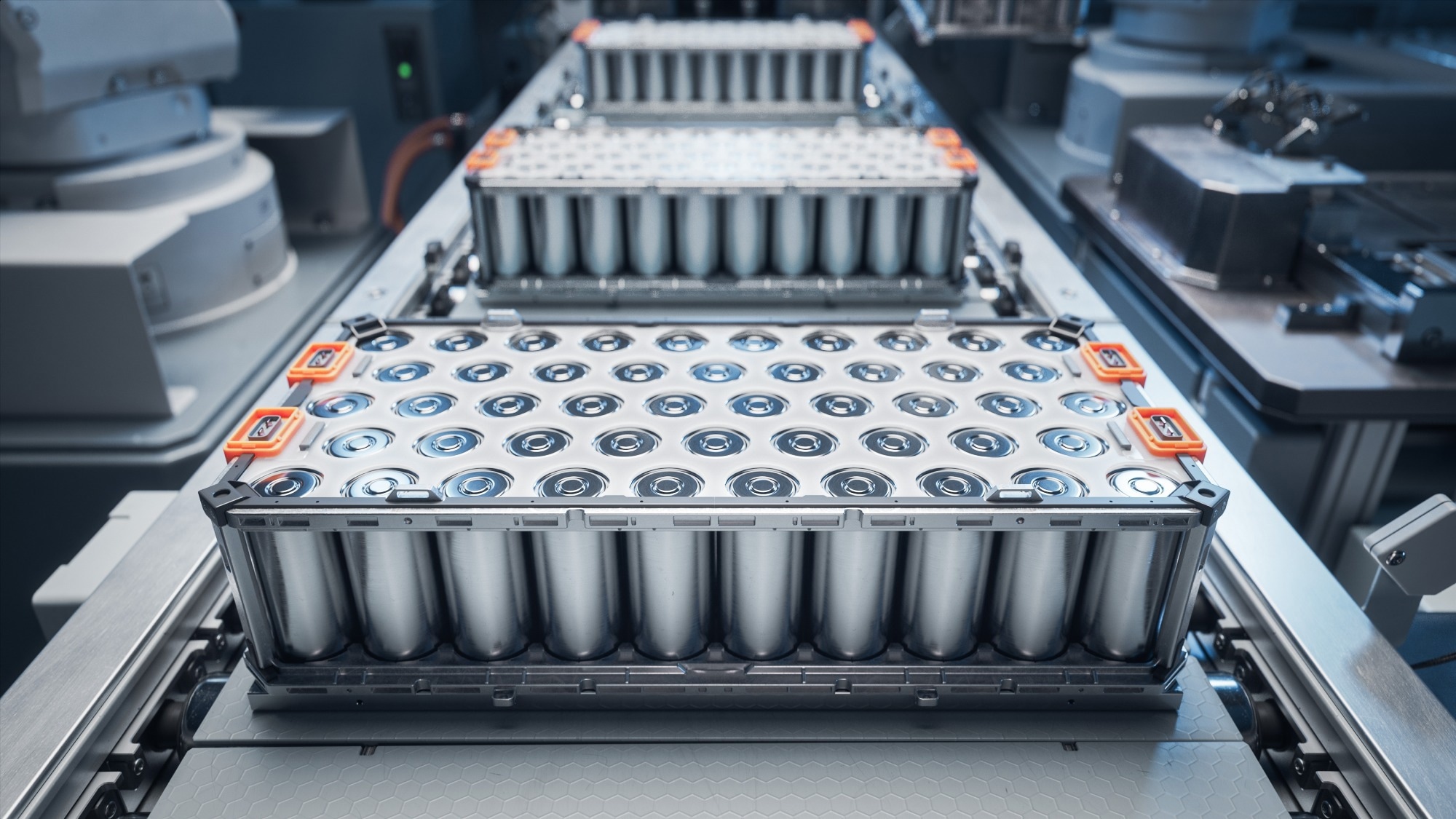
Close up of lithium-ion battery components in an electric vehicle battery production factory.
Study: Unravelling electro-chemo-mechanical processes in graphite/silicon composites for designing nanoporous and microstructured battery electrodes. Image credit: IM Imagery/Shutterstock.com

Researchers at Queen Mary University of London have revealed that a double-layer electrode configuration, informed by fundamental scientific principles via operando imaging, exhibits significant enhancements in the cyclic stability and rapid charging capabilities of automotive batteries, with considerable potential to lower costs by 20-30 %. The study was published in Nature Nanotechnology.

In this research, the team presents a double-layer design for silicon-based composite electrodes aimed at addressing significant challenges associated with silicon-based electrodes. This represents a significant advancement with considerable potential for the development of next-generation high-performance batteries.

The advancement of automotive batteries has been propelled over the past 20 years by the growing demand for extended driving range and rapid charging since the advent of electric vehicles (EVs).

Silicon electrodes offer a theoretical capacity that is 10 times greater and provide faster charging. However, their widespread use is limited by significant volume fluctuations of up to 300 % during charge and discharge cycles, resulting in rapid degradation and a limited lifespan.

Using multiscale multimodal operando imaging techniques, the researchers have uncovered remarkable insights into the electro-chemo-mechanical dynamics of graphite/silicon composite electrodes.

A new double-layer architecture has been proposed based on these enhanced mechanistic insights. It tackles critical challenges in material design and demonstrates considerably higher capacity and reduced degradation than traditional formulations.

In this research, we visualize for the first time the interaction between microstructural design and electro-chemo-mechanical performance across various length scales, from individual particles to complete electrodes, by incorporating multimodal operando imaging techniques.

Dr. Xuekun Lu, Study Lead, Queen Mary University of London

Dr. Lu believes the study will provide new opportunities for creating 3D composite electrode architectures, pushing the boundaries of energy density, charging speed, and cycle life for automotive batteries, potentially accelerating the large-scale adoption of EVs.

High silicon anodes are an important technology pathway for high energy density batteries in applications like Automotive. This study offers a much deeper understanding of the way in which their microstructure affects their performance and degradation, and will provide a basis for better battery design in the future.

Professor David Greenwood, CEO of the WMG High Value Manufacturing Catapult Center

Journal Reference:

Lu, X., et al. (2025) Unravelling electro-chemo-mechanical processes in graphite/silicon composites for designing nanoporous and microstructured battery electrodes. Nature Nanotechnology. doi.org/10.1038/s41565-025-02027-7.

See also  Heat-rechargeable design powers nanoscale molecular machines

Source:

Queen Mary University of London

Source link

Batteries Boosts charge design DoubleLayer Range
Share. Facebook Twitter Pinterest LinkedIn Tumblr Email

Related Posts

Improving PPE’s Antimicrobial Efficacy with ZnO Nanoparticles

December 5, 2025

PI Introduces Next-Generation 6-Axis Nanopositioning Alignment System

December 4, 2025

H.E. Máté Pesti’s Visit to Cubic Sensor and Instrument Co.

December 2, 2025

Nanostars Amplify SERS Signal and Boost Sensing

December 1, 2025
Add A Comment

Comments are closed.

Top Posts

New Class of Metamaterials Changes Physical Properties in Seconds

November 28, 2025

Sensor platform uses nanopore ‘speed cameras’ to pinpoint gases in complex mixtures

September 30, 2025

Silver-nanoring coating points to ‘self-regulating’ smart windows—without power or tinting

October 3, 2025

Subscribe to Updates

Get the latest sports news from SportsSite about soccer, football and tennis.

Explore the future with our Nanotech blog—covering innovations, research, applications, and breakthroughs shaping science, medicine, and modern technology.

We're social. Connect with us:

Facebook X (Twitter) Instagram YouTube
Top Insights

Nanotechnology Plus Medicine Equal NanoMedicine

February 3, 2026

Improving PPE’s Antimicrobial Efficacy with ZnO Nanoparticles

December 5, 2025

PI Introduces Next-Generation 6-Axis Nanopositioning Alignment System

December 4, 2025

Subscribe to Updates

Get the latest creative news from FooBar about art, design and business.

  • Contact Us
  • Privacy Policy
  • Terms & Conditions

© 2026 elnano.com - All rights reserved.

Type above and press Enter to search. Press Esc to cancel.