
Close Menu
  • News
    • Medical
    • Nanomaterials
    • AI & Robotics
    • 2D Materials
    • Metamaterials
    • Nanoelectronics
    • ETF’s
    • Medicine
  • Environment
    • Earth.com
    • TreeHugger
    • Nanomuscle
  • Beauty
    • Makeupanalysis
What's Hot

Nanotechnology Plus Medicine Equal NanoMedicine

February 3, 2026

Improving PPE’s Antimicrobial Efficacy with ZnO Nanoparticles

December 5, 2025

PI Introduces Next-Generation 6-Axis Nanopositioning Alignment System

December 4, 2025
Facebook X (Twitter) Instagram
  • Contact Us
  • Privacy Policy
  • Terms & Conditions
Facebook X (Twitter) Instagram
Elnano – Global Innovative Nanotechnology SolutionsElnano – Global Innovative Nanotechnology Solutions
  • News
    • Medical
    • Nanomaterials
    • AI & Robotics
    • 2D Materials
    • Metamaterials
    • Nanoelectronics
    • ETF’s
    • Medicine
  • Environment
    • Earth.com
    • TreeHugger
    • Nanomuscle
  • Beauty
    • Makeupanalysis
Elnano – Global Innovative Nanotechnology SolutionsElnano – Global Innovative Nanotechnology Solutions
Home » New “Black Metal” Device Generates 15x More Electricity
AI & Robotics

New “Black Metal” Device Generates 15x More Electricity

September 22, 2025No Comments4 Mins Read
Share
Facebook Twitter LinkedIn Pinterest Email
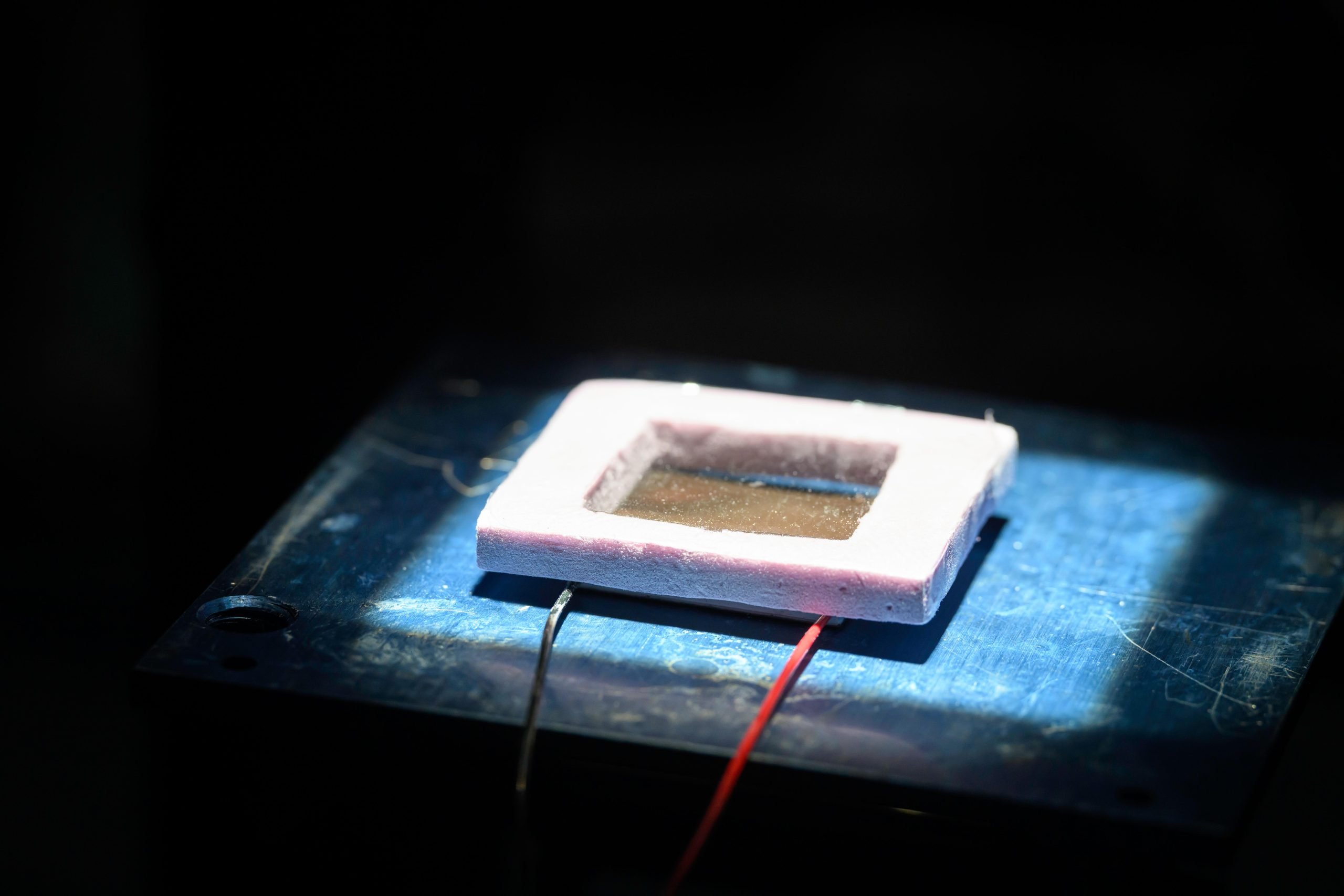
New, high-efficiency STEGs were engineered with three strategies: black metal technology on the hot side, covering the black metal with a piece of plastic to make a mini greenhouse, and laser-etched heat sinks on the cold side. Credit: University of Rochester / J. Adam Fenster

Researchers have developed a solar thermoelectric generator that is 15 times more efficient than the most advanced devices currently available.

Researchers seeking greater energy independence have explored solar thermoelectric generators (STEGs) as a potential way to produce solar electricity. Unlike the photovoltaic cells found in most solar panels, STEGs can capture various forms of thermal energy as well as direct sunlight. These devices consist of a hot side and a cold side separated by semiconductor materials, and the temperature difference between them generates electricity through the Seebeck effect.

However, widespread use of STEGs has been limited by their low efficiency. At present, most models convert less than 1 percent of incoming sunlight into electricity, far below the roughly 20 percent conversion rate achieved by standard residential solar panels.

Innovative approach at the University of Rochester

That gap in efficiency was dramatically reduced through new techniques developed by researchers at the University of Rochester’s Institute of Optics. In a study published in Light: Science and Applications, the team described their unique spectral engineering and thermal management methods to create a STEG device that generates 15 times more power than previous devices.
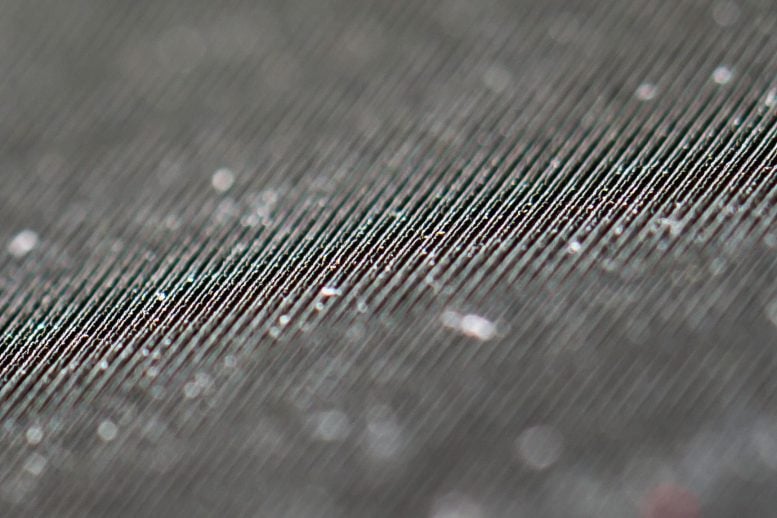
Close Up of Laser Etched Nanostructures
A close-up of laser-etched nanostructures on the surface of a solar thermoelectric generator. Credit: University of Rochester / J. Adam Fenster

“For decades, the research community has been focusing on improving the semiconductor materials used in STEGs and has made modest gains in overall efficiency,” says Chunlei Guo, a professor of optics and of physics and a senior scientist at Rochester’s Laboratory for Laser Energetics. “In this study, we don’t even touch the semiconductor materials—instead, we focused on the hot and the cold sides of the device instead. By combining better solar energy absorption and heat trapping at the hot side with better heat dissipation at the cold side, we made an astonishing improvement in efficiency.”

See also  Perovskite-Silicon Tandem Solar Cells Achieve Record-Breaking 33.1% Efficiency

Three strategies for efficiency gains

The team designed the new high-efficiency STEGs using three main strategies. For the hot side of the device, they applied a specialized black metal technology developed in Guo’s lab, which modified ordinary tungsten to selectively absorb light at solar wavelengths. By using intense femtosecond laser pulses to etch nanoscale structures into the metal’s surface, they increased its ability to capture energy from sunlight while limiting heat loss at other wavelengths.
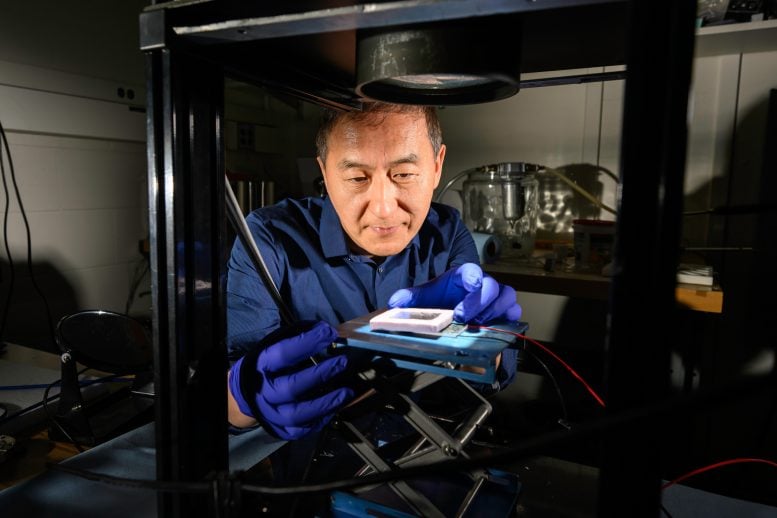
Chunlei Guo Tests a Solar Thermoelectric Generator
Rochester researcher Chunlei Guo tests a solar thermoelectric generator (STEG) etched with femtosecond laser pulses to boost solar energy absorption and efficiency. His lab’s innovative black metal technology design helps create a STEG device 15 times more efficient than previous devices, paving the way for new renewable energy technologies. Credit: University of Rochester / J. Adam Fenster

Second, the researchers “covered the black metal with a piece of plastic to make a mini greenhouse, just like on a farm,” says Guo. “You can minimize the convection and conduction to trap more heat, increasing the temperature on the hot side.”

Lastly, on the cold side of the STEG, they once again used femtosecond laser pulses, but this time on regular aluminum, to create a heat sink with tiny structures that improved the heat dissipation through both radiation and convection. That process doubles the cooling performance of a typical aluminum heat dissipator.
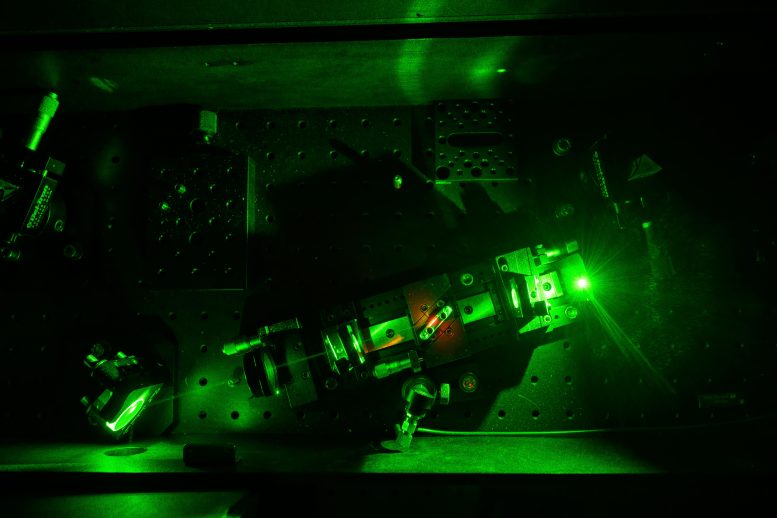
Device for Ultrafast Laser Etching of Metal Surfaces
Chunlei Guo uses a laser to generate ultrafast laser pulses that etch nanostructures onto metal surfaces, creating highly efficient STEGs. Credit: University of Rochester / J. Adam Fenster

In the study, Guo and his research team provided a simple demonstration of how their STEGS can be used to power LEDs much more effectively than the current methods. Guo says the technology could also be used to power wireless sensors for the Internet of Things, fuel wearable devices, or serve as off-grid renewable energy systems in rural areas.

Reference: “15-Fold increase in solar thermoelectric generator performance through femtosecond-laser spectral engineering and thermal management” by Tianshu Xu, Ran Wei, Subhash C. Singh and Chunlei Guo, 12 August 2025, Light: Science & Applications.
DOI: 10.1038/s41377-025-01916-9

See also  Nanoscale optical device enables independent control of light intensity and phase using electricity

The National Science Foundation, FuzeHub, and the Goergen Institute for Data Science and Artificial Intelligence supported the research.

Never miss a breakthrough: Join the SciTechDaily newsletter.

Source link

15x black device electricity Generates Metal
Share. Facebook Twitter Pinterest LinkedIn Tumblr Email

Related Posts

Ultra-fast laser platform enables fabrication and study of nanostructures in metal films

October 30, 2025

Pressure turns Ångström-thin semiconducting bismuth into a metal, expanding options for reconfigurable electronics

October 25, 2025

Shark-Proof Wetsuits Tested Against Great Whites. The Results Could Save Lives

October 1, 2025

Tiny Quantum Dots Could Transform How We See in the Dark

October 1, 2025
Add A Comment

Comments are closed.

Top Posts

Targeting Nanoparticles for Heart Repair

September 19, 2025

Dual-Mode Memory for Energy Efficiency

September 20, 2025

Exploring smart nanomaterials that detect and treat traumatic brain injuries simultaneously

November 13, 2025

Subscribe to Updates

Get the latest sports news from SportsSite about soccer, football and tennis.

Explore the future with our Nanotech blog—covering innovations, research, applications, and breakthroughs shaping science, medicine, and modern technology.

We're social. Connect with us:

Facebook X (Twitter) Instagram YouTube
Top Insights

Nanotechnology Plus Medicine Equal NanoMedicine

February 3, 2026

Improving PPE’s Antimicrobial Efficacy with ZnO Nanoparticles

December 5, 2025

PI Introduces Next-Generation 6-Axis Nanopositioning Alignment System

December 4, 2025

Subscribe to Updates

Get the latest creative news from FooBar about art, design and business.

  • Contact Us
  • Privacy Policy
  • Terms & Conditions

© 2026 elnano.com - All rights reserved.

Type above and press Enter to search. Press Esc to cancel.