
Researchers at Tel Aviv University have developed a new approach for using locked nucleic acids (LNAs)—a particularly stable type of RNA—to treat inflammatory bowel diseases such as Crohn’s disease and ulcerative colitis. The researchers encapsulated selected LNA molecules, which silence a key gene in colitis, within lipid (fat) nanoparticles that serve as targeted drug carriers and injected the nanoparticles into colitis-model mice.
The findings indicated improvement in all markers of systemic inflammation, with no side effects. According to the researchers, this innovative method may also be suitable for a wide range of other diseases—including rare genetic disorders, vascular and heart diseases, and neurological diseases such as Parkinson’s and Huntington’s.
The findings are published in the journal Nature Communications.
The study was conducted by the group of Prof. Dan Peer, a pioneer in the use of RNA molecules for therapy and vaccines, world expert in nanomedicine, and a senior faculty member at TAU’s Shmunis School of Biomedicine and Cancer Research, Department of Materials Sciences and Engineering at the Fleischman Faculty of Engineering, Jan Koum Center for Nanoscience and Nanotechnology, and Cancer Biology Research Center.
The group was led by Neubauer doctoral student Shahd Qassem together with Dr. Gonna Somu Naidu, a postdoctoral fellow who collaborated with researchers from F. Hoffman La-Roche (Roche) pharmaceutical company in Switzerland.
Prof. Peer explains, “Our study focused on unique RNA molecules called LNA. Unlike most RNA molecules, LNA molecules are very stable and do not break down easily. Consequently, until about 10 years ago, they were thought to have great potential as genetic drugs. However, experiments in laboratory animals, as well as clinical trials in humans (in chronic liver inflammation), showed that very large amounts of LNA are needed to achieve therapeutic efficacy.
“Moreover, administered by injection as a free drug, this high dosage proved very costly and caused severe side effects when spreading throughout the body. As a result, the effort to develop LNA-based drugs was abandoned. In our study we sought to test a new, better targeted and more effective approach.”
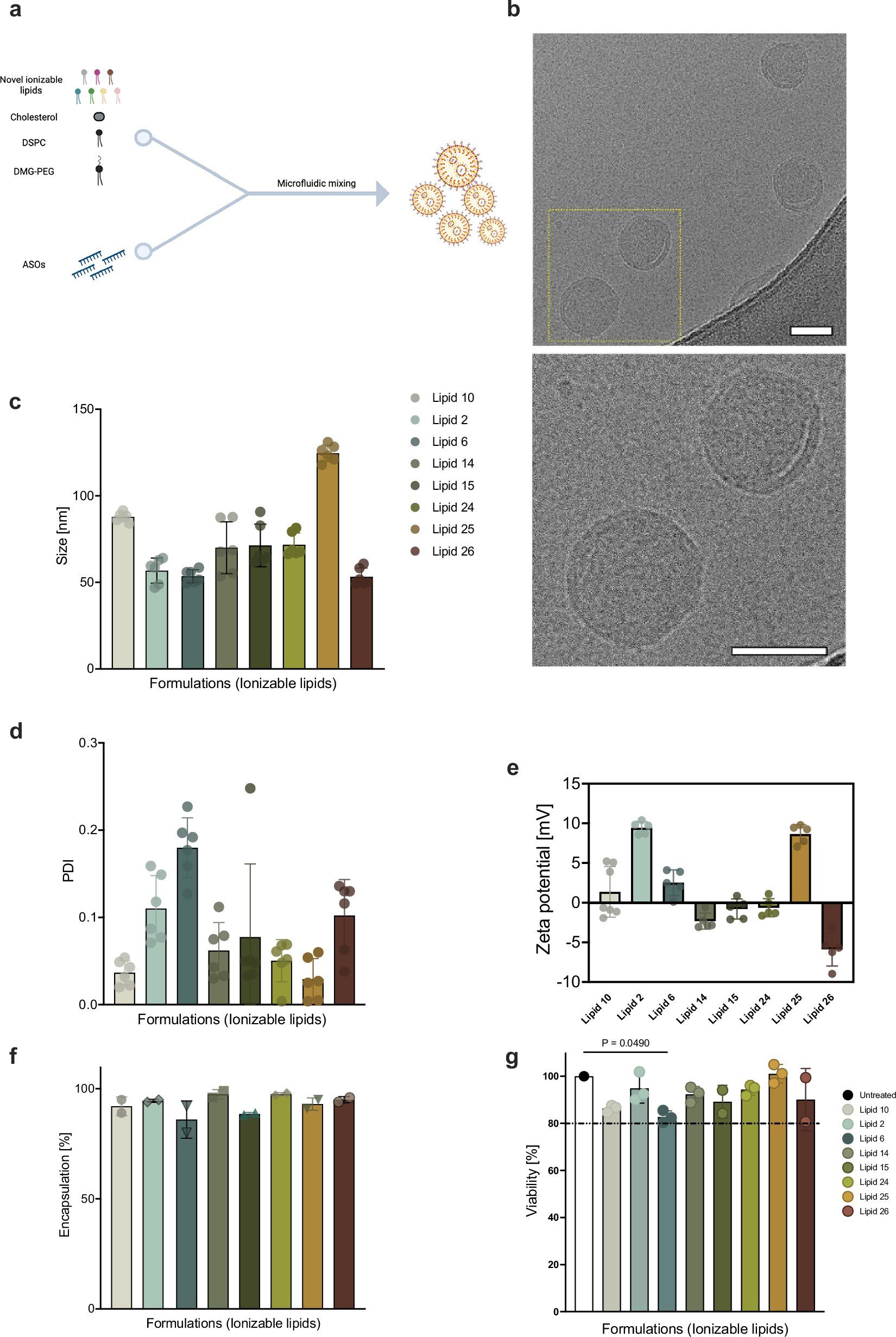
The researchers used a method previously developed at Prof. Peer’s lab for other RNA molecules (such as siRNA, mRNA, circRNA). Applying it to LNA, they encapsulated the molecules in lipid nanoparticles (LNPs) that serve as targeted drug carriers, delivering their therapeutic payload directly to the relevant organ in the body. Specifically, they chose an LNA molecule known to silence the TNFα gene, which plays a significant role in inflammatory bowel diseases.
Screening a lipid library developed in Prof. Peer’s lab over the past 13 years, they identified the most suitable lipid molecules and encapsulated the LNA molecules in them. The resulting LNPs were injected into mice in a model of chronic bowel diseases such as colitis.
The findings were highly encouraging: The dosage required to achieve the desired therapeutic effect was 30 times lower compared to past studies—in which LNA molecules were administered as a free drug without lipid encapsulation. At the current dosage, delivered precisely to the correct site, the drug proved highly effective in treating the disease, without causing any side effects.
Prof. Peer says, “Our study paves the way to developing new LNA-based drugs for inflammatory bowel diseases, as well as a wide range of other diseases—including rare genetic disorders, vascular and heart diseases, and neurological diseases such as Parkinson’s and Huntington’s. So far, we have demonstrated that the new method is effective in chronic bowel inflammation in mice. We hope to proceed to clinical trials in humans in the near future.”
More information:
Shahd Qassem et al, Targeting intestinal inflammation using locked nucleic acids delivered via lipid nanoparticles, Nature Communications (2025). DOI: 10.1038/s41467-025-63037-6
Citation:
Lipid nanoparticles enable targeted RNA therapy for inflammatory bowel diseases (2025, September 17)
retrieved 21 September 2025
from https://phys.org/news/2025-09-lipid-nanoparticles-enable-rna-therapy.html
This document is subject to copyright. Apart from any fair dealing for the purpose of private study or research, no
part may be reproduced without the written permission. The content is provided for information purposes only.