
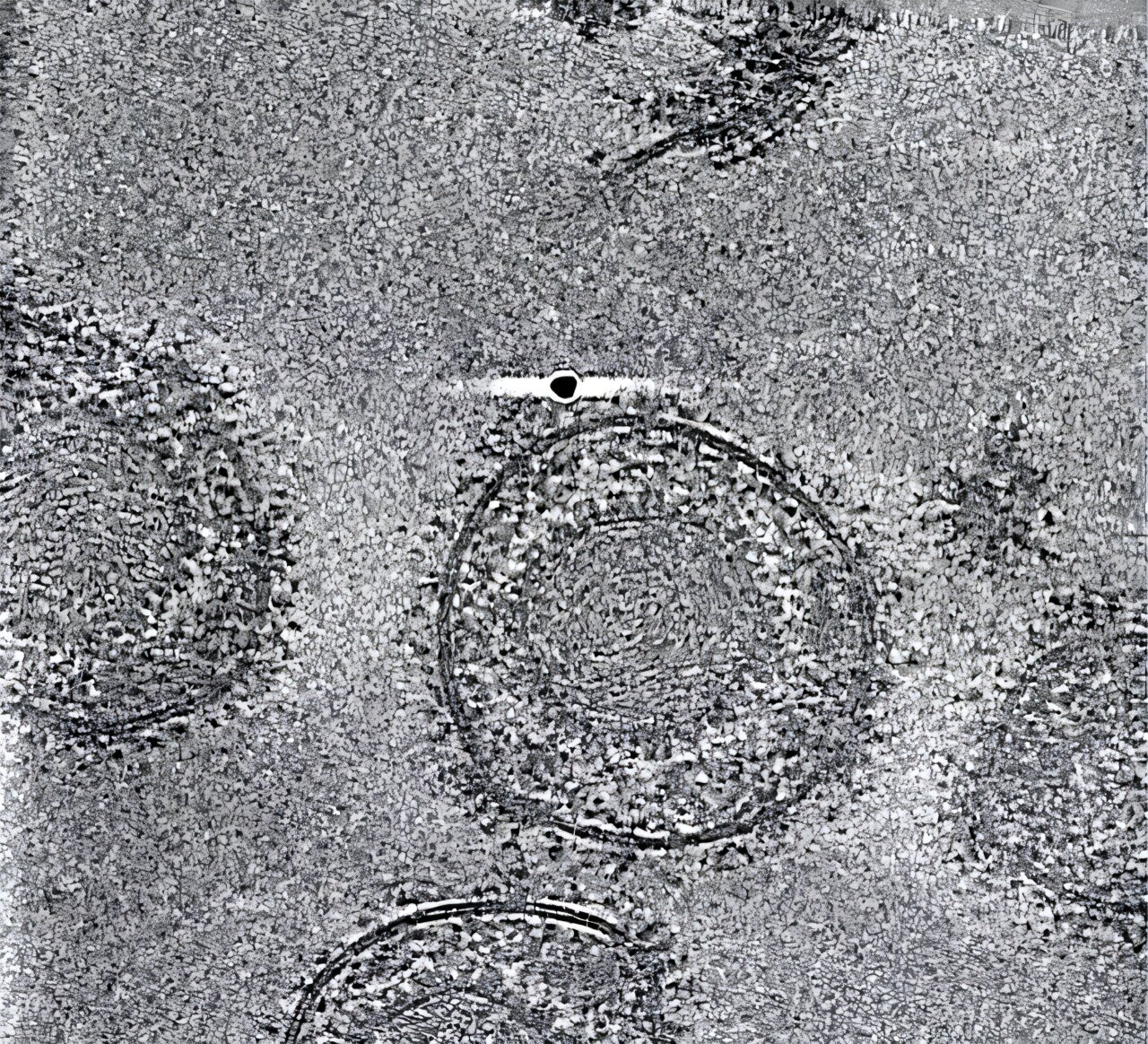
Burning, blisters, pain: More than 40 million people worldwide are infected with the herpes virus every year. The virus can pose a serious threat to newborns and people with weakened immune systems. Researchers in Hamburg and Göttingen have now generated a mini-antibody that neutralizes a protein essential for the infection. The findings, published in Nature, hold the promise of new therapies to treat and prevent severe herpes infections in the near future.
Once infected, the herpes virus remains in the body for life. Those affected carry a latent infection. It hides from the immune system in nerve cells and waits, largely inactive, for the right timing. When the opportunity arises—for example, when the immune system is weakened or under stress—the virus multiplies again to infect new “hosts.”
About 60% of the human population carries the herpes simplex virus type 1 (HSV-1), which usually causes facial skin lesions, known as cold sores. Almost 20% have genital herpes, which is primarily caused by the related herpesvirus HSV-2, but also by HSV-1.
What is primarily painful and unpleasant for otherwise healthy individuals can have drastic, sometimes fatal consequences for people with pre-existing conditions. Severe cases can affect the central nervous system. Newborns are particularly at risk: If the mother has an active herpes infection, the child can easily become infected during birth. This neonatal herpes often results in permanent neurological damage and can even be fatal for the child.
The drugs currently on the market are only effective in the case of an active herpes infection and cannot be used prophylactically or in the case of a latent, non-active infection.
Protein fuses cell membranes
To infect a host cell, the herpesvirus first docks onto its outer cell membrane. After that, it fuses its membrane envelope with that of the host cell. The virus then releases its genetic material into the attacked cell in order to produce new copies of itself.
A key protein for this fusion is a special protein termed glycoprotein B (gB). It is “energy-charged” and uses this energy to fuse the virus envelope with the cell membrane, thereby allowing the viral genetic material to penetrate the cells.
During this fusion process, gB changes its three-dimensional shape. It would therefore be a promising target for drugs. However, so far there are no antiviral agents that target gB, as critical regions of the protein are inaccessible or protected.
Researchers at the Leibniz Institute for Virology (LIV), the University of Hamburg (UHH), and University Medical Center Hamburg-Eppendorf (UKE) based at the Center for Structural Systems Biology (CSSB) in Hamburg, and the Max Planck Institute (MPI) for Multidisciplinary Sciences in Göttingen have trapped the gB complex in its previously elusive fusion-ready form.
They determined its high-resolution structure by cryogenic electron microscopy (cryo-EM), image processing and structural modeling. The microscopes and cutting-edge techniques available at the CSSB’s Advanced Light and Fluorescence Microscopy and cryo-EM facilities enabled this work.
The Göttingen team isolated a mini-antibody, known as a nanobody, from an immunized alpaca. This nanobody neutralizes gB at very low concentrations. It binds to the fusion-ready form of gB and blocks the movements and the energy release required for membrane fusion.
Alpacas, llamas, and other camels possess antibodies that are structurally simpler than a typical mammalian antibody. In the laboratory, these can be reduced in size to form so-called nanobodies. In Hamburg, researchers in the lab of Kay Grünewald, head of the Department of Structural Cell Biology at LIV, UHH and CSSB, produced a gB protein preparation that colleagues in Göttingen then used to immunize an alpaca, triggering the production of antibodies.

“The stress on our alpaca Max was very low, comparable to a vaccination and blood test in humans,” explains Dirk Görlich, director at the MPI and head of the Department of Cellular Logistics. After donating blood, Max’s work was done. The rest of the work was carried out in the laboratory using high-tech equipment, enzymes, bacteria, bacteriophages, and computers. Ultimately, nanobodies are produced microbiologically—in a process similar to that of brewing beer.
In the next step, the researchers used the blood sample to obtain the blueprints for around a billion different nanobodies. However, only a tiny fraction of these were directed against the actual target. Using bacteriophages, the Göttingen team isolated the gB-specific nanobodies and then produced individual candidates microbiologically. These were subsequently tested in Hamburg for their antiviral activity.
“During this process, we were able to identify exactly one nanobody that has a strong neutralizing effect. It is particularly exciting that it works against both HSV-1 and HSV-2,” reports Görlich.
In Hamburg, the team succeeded in elucidating the 3D structure of native of HSV-2 gB bound to the nanobody. This model and the other highly accurate cryo-EM models for the pre- and post-fusion states—solved with help of Maya Topf’s team, head of the Department Integrative Virology at LIV, UKE und CSSB, which applied advanced computational tools for model building and validation—revealed insights into critical sites of gB, thus deciphering the mechanism of neutralization.
“Our results suggest that the binding of the nanobody prevents the protein from changing its shape, which is the step required to fuse the membranes. This prevents infection,” says Grünewald.
The teams’ discoveries promise a new approach to treating and preventing herpes infections. “The nanobodies can not only be used to supplement existing medications for treating herpes infections. In the future, they could also protect people at risk against herpes infection or the recurrence of a latent infection,” says Benjamin Vollmer, lead scientist on the project in Grünewald’s group and first author of the study.
“There is still a long way to go, but people with weak immune systems will benefit all the more from these innovative antibodies. These include, for example, newborns, HIV-infected individuals, and people with cancer, autoimmune diseases, or an upcoming organ transplant.” If, for example, a pregnant woman suffers from an active herpesvirus infection, a prophylactic administration of the nanobodies to the expectant mother could protect the newborn from becoming infected.
The patent application to further develop the nanobodies for clinical use and to attract industry partners has already been filed.
More information:
Benjamin Vollmer et al, A nanobody specific to prefusion glycoprotein B neutralizes HSV-1 and HSV-2, Nature (2025). DOI: 10.1038/s41586-025-09438-5
Citation:
Alpaca-generated nanobody neutralizes a protein essential for herpes infection (2025, September 4)
retrieved 19 September 2025
from https://phys.org/news/2025-09-alpaca-generated-nanobody-neutralizes-protein.html
This document is subject to copyright. Apart from any fair dealing for the purpose of private study or research, no
part may be reproduced without the written permission. The content is provided for information purposes only.