
Hyundai to make use of nanotechnology in automobiles from 2025–2026
Hyundai Motor Group has unveiled its imaginative and prescient for the way forward for mobility, saying the event of six progressive nanotechnologies designed to boost the efficiency, effectivity, and security of its automobiles. This contains self-healing supplies.
Throughout a press convention held yesterday in Seoul, South Korea, Hyundai Motor Group revealed plans for a brand new era of high-tech automobiles incorporating nanoscale options, which it hopes to start mass producing by 2025–2026.
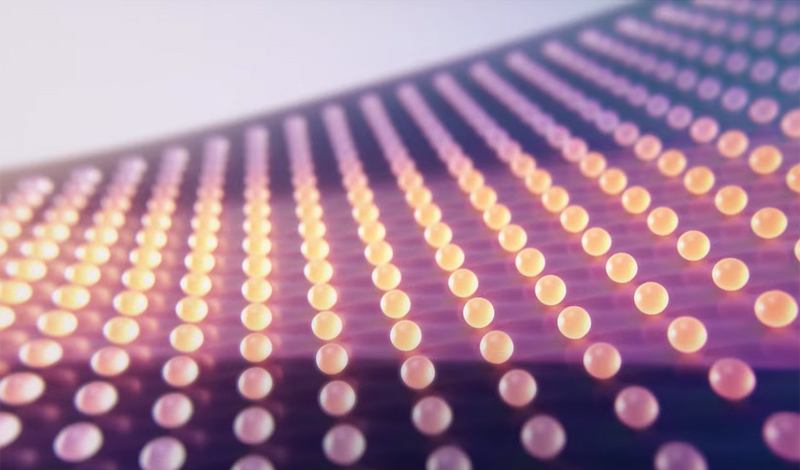
Nanotechnology is outlined as supplies or gadgets that work on a scale smaller than 100 nanometres (nm). A nanometre is one billionth of a metre or about 100,000 occasions narrower than a human hair. Particular person atoms, for comparability, are likely to vary in measurement from 0.1 to 0.5 nm. Many fascinating and distinctive bodily results develop into attainable at this degree of element, making nanotechnology a extremely promising know-how of the long run.
“Solely after we safe high degree supplies know-how in mobility can we enhance the efficiency and sturdiness of automotive elements and automobiles which is able to provide a aggressive edge within the fast-evolving future mobility market,” stated Lee Jong-soo, government vp of Hyundai Motor Group’s Institute of Superior Know-how Growth.
“Supplies innovation isn’t solely the inspiration of know-how but additionally a core a part of trade convergence, and it has all the time preceded know-how innovation,” added Jong-soo. “It’s a should to innovate nanomaterials, a key to mobility trade improvement.”
The six nanotechnology improvements being developed by Hyundai are as follows:
1. Self-healing polymer coating
Supposed for cameras and LIDAR sensors on self-driving automobiles, a brand new self-healing polymer coating will take away scratches or water, restoring the system and bettering the accuracy of impediment and pedestrian detection. The restoration course of will take simply two hours underneath ambient temperatures, which is dozens of occasions sooner than present self-healing supplies. For temperatures under freezing, it’s going to take round a day.
2. Oil capsule polymer coating
A by-product from the self-healing materials, these nano-capsules will defend car elements – specifically, the drive shaft – by lowering friction and different harm that accumulates over time, offering 50% larger effectiveness in comparison with current merchandise.
3. Clear photo voltaic cells
Home windows able to producing clear power might be a characteristic of those next-generation automobiles. Clear photo voltaic cells embedded within the glass will use perovskite to soak up 30% extra photo voltaic power than conventional silicon-based photo voltaic cells.
4. Tandem photo voltaic cells
The roofs, hoods, and doorways of electrical automobiles will incorporate each perovskite and silicon photo voltaic cells. This mixture (tandem) association might be much more environment friendly than perovskite alone, doubtlessly including as much as 40 km (25 mi) in driving vary. The perovskite layer will take in seen gentle, whereas the silicon layer will take in infrared gentle.
5. Seat stress sensors utilizing carbon nanotubes
Strain sensors will use carbon nanotubes (tiny cylindrical constructions identified for his or her elasticity and conductivity) to avoid wasting as much as 140W of power for EVs by transferring warmth to the contact floor of a automotive seat. Moreover, these sensors might be exact sufficient to analyse respiratory rhythms and coronary heart charges, providing a strategy to monitor the occupants’ well being.
6. Clear radiative cooling movie
A skinny layer of nanotechnology-based movie might be utilized to every automotive’s window, serving to to chill the inside by as a lot as 6.9°C throughout sizzling summer season climate.
Comments »
When you loved this text, please contemplate sharing it: