
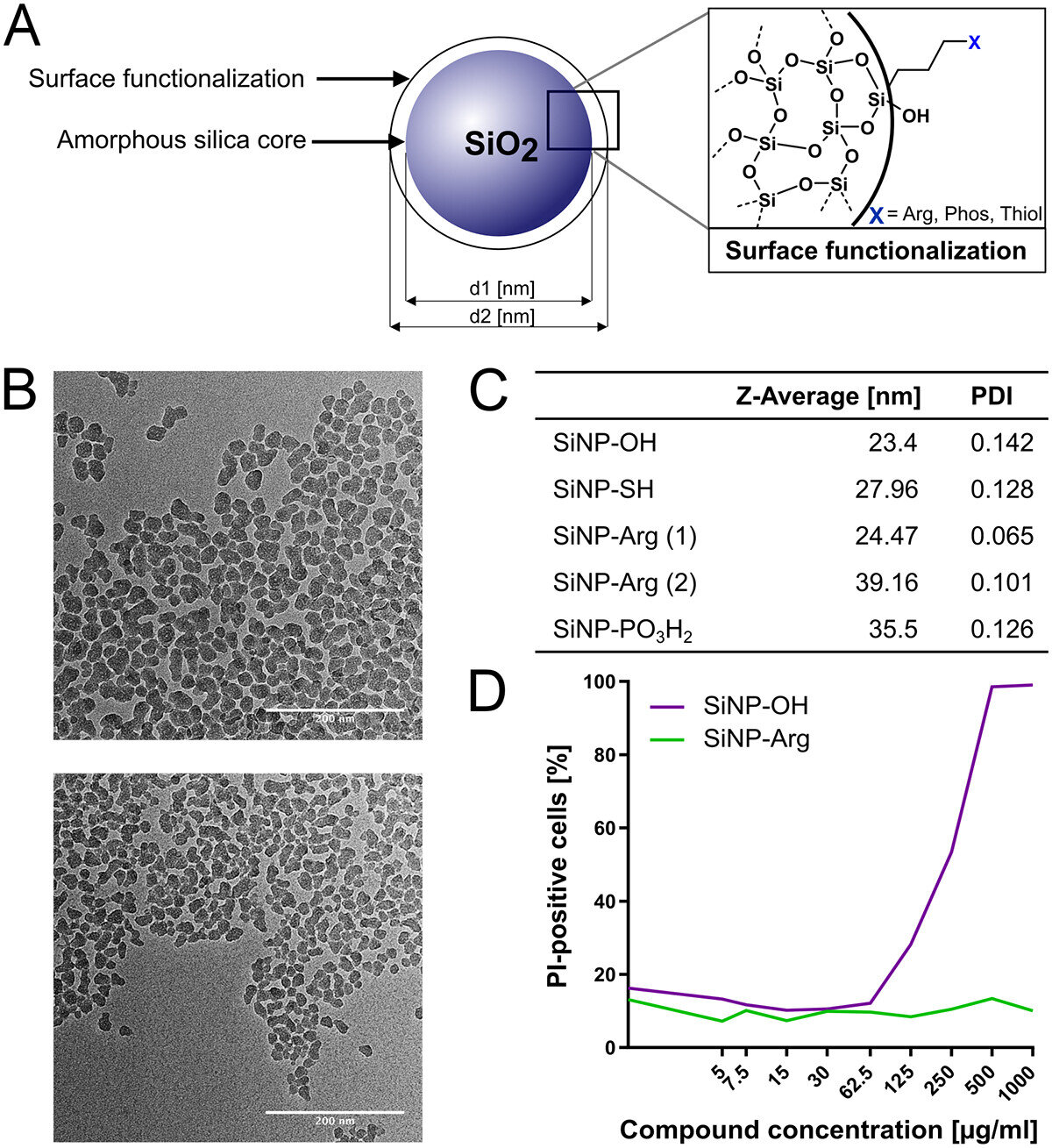
Researchers from the German Cancer Research Center (DKFZ) have collaborated with the SILVACX project group at Heidelberg University to develop a therapeutic vaccination concept that can mobilize the immune system to target cancer cells. The team showed that virus peptides coupled to silica nanoparticles can elicit effective T-cell responses against HPV-related tumors. In a mouse model, the nanoparticle-based vaccine was able to partially or completely suppress HPV-related tumors.
The findings are published in the journal OncoImmunology.
Human papillomaviruses are the main cause of cervical cancer and also play a major role in head and neck tumors and other types of cancer. Preventive HPV vaccinations ward off infection with the pathogens and can thus prevent the development of cancer. However, there are currently no therapeutic vaccines that combat existing precancerous lesions or tumors.
A new vaccination method developed by a research team led by Angelika Riemer from the DKFZ and the SILVACX project group based at Heidelberg University relies on silica nanoparticles. This stable material, also known as silicon dioxide or silicic acid, has already proven itself in various medical applications.
The silica particles are first coated to make them biocompatible. They are then loaded with short fragments of the viral proteins present in the cancer cells. To this end, the researchers select protein segments that are known to activate the human immune system.
After injection, specialized immune cells—known as antigen-presenting cells—take up the particles and present the viral epitopes on their surface. This activates cytotoxic T cells, which specifically recognize and destroy cancer cells. The combination with an additional adjuvant was particularly effective.
The researchers used mice whose immune systems had been “humanized,” meaning they can present the same epitopes as humans. In these animals, the vaccination led to a significant activation of cytotoxic T cells. In some of the mice, existing HPV-positive tumors were completely suppressed, and these mice survived longer.
“These are encouraging results that confirm our decision to continue developing the nanoparticle vaccine system. It is versatile and could be used in the future not only against HPV-associated cancers, but also against other tumors or infectious diseases,” explains study leader Riemer.
Silica nanoparticles are the core element of the therapeutic vaccination process. They protect the vaccine epitopes in the body from rapid degradation, thus ensuring their bioavailability and uptake and presentation by immune cells. They are also characterized by their stability and ease of manufacture. Vaccines based on silica nanoparticles could therefore also be used in regions where it is difficult to maintain the refrigeration chain required for most vaccines—an important advantage for global application.
More information:
Sebastian Kruse et al, A versatile silica nanoparticle platform for induction of T cell responses—applied for therapeutic vaccination against HPV16 E6/E7-positive tumors in MHC-humanized mice, OncoImmunology (2025). DOI: 10.1080/2162402X.2025.2548002
Citation:
Therapeutic vaccination against HPV-related tumors: Study shows nanoparticles make difference (2025, September 2)
retrieved 18 September 2025
from https://phys.org/news/2025-09-therapeutic-vaccination-hpv-tumors-nanoparticles.html
This document is subject to copyright. Apart from any fair dealing for the purpose of private study or research, no
part may be reproduced without the written permission. The content is provided for information purposes only.