
Close Menu
  • News
    • Medical
    • Nanomaterials
    • AI & Robotics
    • 2D Materials
    • Metamaterials
    • Nanoelectronics
    • ETF’s
    • Medicine
  • Environment
    • Earth.com
    • TreeHugger
    • Nanomuscle
  • Beauty
    • Makeupanalysis
What's Hot

Nanotechnology Plus Medicine Equal NanoMedicine

February 3, 2026

Improving PPE’s Antimicrobial Efficacy with ZnO Nanoparticles

December 5, 2025

PI Introduces Next-Generation 6-Axis Nanopositioning Alignment System

December 4, 2025
Facebook X (Twitter) Instagram
  • Contact Us
  • Privacy Policy
  • Terms & Conditions
Facebook X (Twitter) Instagram
Elnano – Global Innovative Nanotechnology SolutionsElnano – Global Innovative Nanotechnology Solutions
  • News
    • Medical
    • Nanomaterials
    • AI & Robotics
    • 2D Materials
    • Metamaterials
    • Nanoelectronics
    • ETF’s
    • Medicine
  • Environment
    • Earth.com
    • TreeHugger
    • Nanomuscle
  • Beauty
    • Makeupanalysis
Elnano – Global Innovative Nanotechnology SolutionsElnano – Global Innovative Nanotechnology Solutions
Home » Revolutionizing Nanoparticle Production with Laser Ablation
Nanoelectronics

Revolutionizing Nanoparticle Production with Laser Ablation

September 19, 2025No Comments2 Mins Read
Share
Facebook Twitter LinkedIn Pinterest Email

Reviewed by Frances BriggsJul 22 2025

A new review published in the International Journal of Extreme Manufacturing describes a more powerful method for producing ultra-clean, customizable nanoparticles, advancing artificial sensory systems and human-machine interfaces.
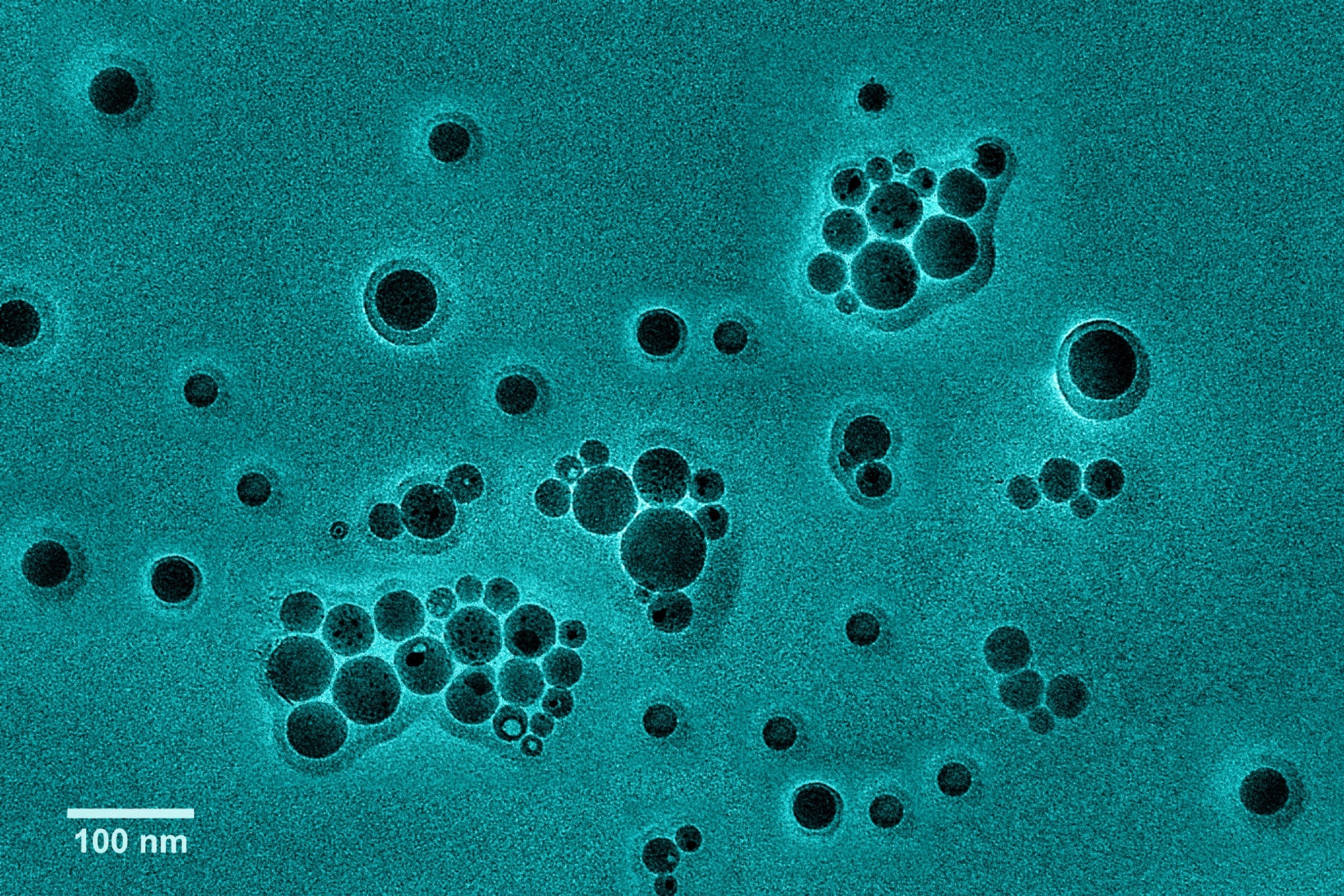
Cobalt nanoparticles covered by aluminum with a scale bar.

Image Credit: Georgy Shafeev/Shutterstock.com

The study focuses on laser ablation in liquids (LAL) as a promising alternative to traditional nanoparticle synthesis. The technique uses ultra-short laser pulses to break down metal targets submerged in liquid, producing highly pure, surfactant-free nanoparticles with controllable size, shape, and composition. 

Researchers from Ajou University and Samsung Electronics say LAL could simplify manufacturing for advanced electronics, offering cleaner production and greater scalability.

By fine-tuning the laser’s wavelength, intensity, pulse duration, and liquid medium choice, scientists can create a variety of nanostructures, including pure metals, alloys, metal oxides, and complex core–shell or heterostructures. These ligand-free particles are particularly suited to devices mimicking human senses and synapses, where clean surfaces improve sensitivity and response.

High-entropy alloys and noble-metal nanoparticles made via LAL have shown encouraging performance in these fields. Since these nanoparticles lack surface ligands or impurities, they can interact more efficiently with their surroundings, resulting in sensors that are more sensitive, quicker, and capable of performing many activities simultaneously.

For example, high-entropy alloy nanoparticles have demonstrated potential in hydrogen sensors and brain-like memory systems, whereas nanoparticles derived from noble metals with specific surface characteristics can improve light or gas detection.

Laser ablation in liquids offers a clean and scalable way to produce high-performance nanomaterials. This could fundamentally change how we design and integrate materials for flexible electronics and smart sensory systems.

Sungjun Park, Study Corresponding Author and Professor, Ajou University

Challenges remain in scaling LAL for mass production and maintaining nanoparticle stability without surfactants. The team recommends further research into real-time monitoring, continuous manufacturing, and practical device integration.

See also  Precision Linear Actuators Now with Fast Delivery Options

LAL could help close the gap between biologically inspired computation and nanomaterial synthesis as smart, immersive technologies become more pervasive in daily life. This would provide a new way of thinking about how to design materials for machines that see, feel, and think more like humans.

Journal Reference:

Choi, J.-G., et al. (2025). Scalable metal-based nanoparticle synthesis via laser ablation in liquids for transformative sensory and synaptic devices. International Journal of Extreme Manufacturing. doi.org/10.1088/2631-7990/ade836.

Source:

International Journal of Extreme Manufacturing

Source link

Ablation Laser Nanoparticle Production Revolutionizing
Share. Facebook Twitter Pinterest LinkedIn Tumblr Email

Related Posts

Water Walks on h-BN but Jumps on Graphene: Study Findings

December 3, 2025

Revolutionizing Coatings: Nanocellulose from Fenton Process

December 1, 2025

Cost-Optimized, High-Speed Fiber-Alignment System for Silicon Photonics

November 12, 2025

PI Enhances Support and Production

November 5, 2025
Add A Comment

Comments are closed.

Top Posts

Nanoscale optical device enables independent control of light intensity and phase using electricity

September 21, 2025

Birch leaves and peanuts turned into advanced laser technology

November 3, 2025

Selective crystallization method could improve manufacture of gene-therapy drugs

October 30, 2025

Subscribe to Updates

Get the latest sports news from SportsSite about soccer, football and tennis.

Explore the future with our Nanotech blog—covering innovations, research, applications, and breakthroughs shaping science, medicine, and modern technology.

We're social. Connect with us:

Facebook X (Twitter) Instagram YouTube
Top Insights

Nanotechnology Plus Medicine Equal NanoMedicine

February 3, 2026

Improving PPE’s Antimicrobial Efficacy with ZnO Nanoparticles

December 5, 2025

PI Introduces Next-Generation 6-Axis Nanopositioning Alignment System

December 4, 2025

Subscribe to Updates

Get the latest creative news from FooBar about art, design and business.

  • Contact Us
  • Privacy Policy
  • Terms & Conditions

© 2026 elnano.com - All rights reserved.

Type above and press Enter to search. Press Esc to cancel.