
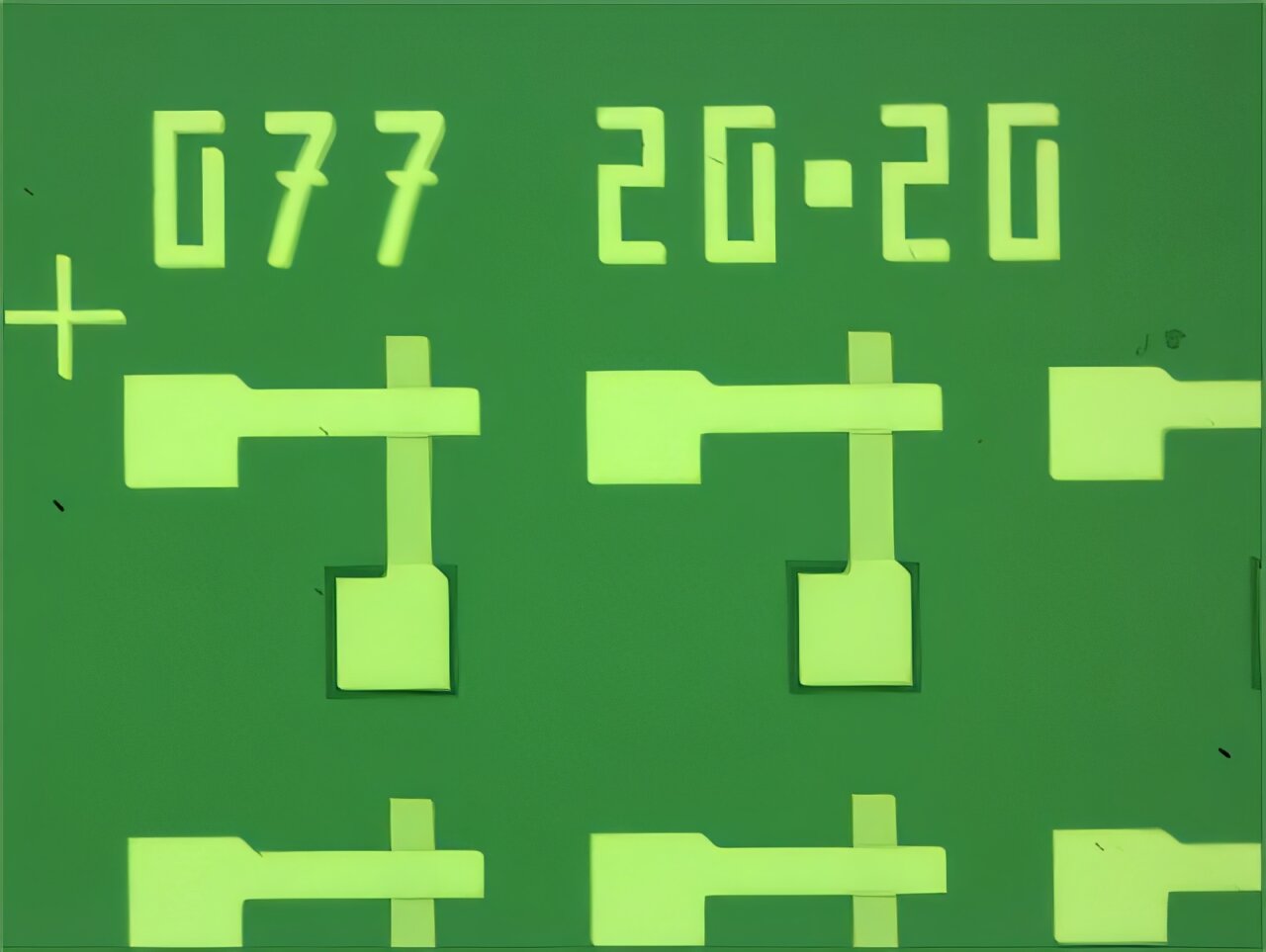
Researchers at Forschungszentrum Jülich, together with international collaborators, have demonstrated for the first time that memristors—novel nanoscale switching devices—can provide stable resistance values directly linked to fundamental constants of nature. This paves the way for electrical units such as electrical resistance to be traced back far more simply and directly than it has been possible to date. By contrast, conventional, quantum-based measurement technology is so demanding that it can only be carried out in a few specialized laboratories worldwide.
The paper is published in the journal Nature Nanotechnology.
Since 2019, all base units of the International System of Units (SI)—including the meter, second, and kilogram—have been based on fundamental natural constants. For example, the kilogram, which was once based on the “prototype kilogram,” is now linked to Planck’s constant h. A meter is defined by the speed of light, and a second by the oscillation of the cesium atom.
Thanks to laser interferometers and atomic clocks, units of length and time can be verified relatively easily worldwide. The situation is quite different for physical quantities such as mass and electrical units. Their metrological traceability is so complex that the measurements are feasible only in a handful of national metrology institutes.
Until now, the quantum Hall effect has served as the standard for electrical resistance. While it provides precise, reproducible values, it requires extreme laboratory conditions—temperatures close to absolute zero and magnetic fields stronger than those in clinical MRI systems. The measurements require sophisticated cryogenic systems and strictly controlled facilities.
Memristors offer a radically different approach. Originally developed as building blocks for novel computing architectures, they exhibit switching behavior that directly follows universal constants. Functionally, they act as programmable resistors—essentially transistors with memory. Conductive nanofilaments of individual silver atoms forms inside them. By applying electrical bias, these filaments can be adjusted with atomic precision so that their conductance changes not continuously, but in discrete quantum steps.
“For the first time, we have demonstrated that memristors can reliably generate discrete resistance states that are directly related to universal constants of nature—without the need for elaborate cooling systems or high magnetic fields,” says Ilia Valov of Forschungszentrum Jülich. “The precision level is already fully sufficient for the end user.”
The foundation of this work is the quantized electrical conductance G₀, derived from Planck’s constant h and the elementary charge e. In the experiments, memristors were reproducibly programmed in air at room temperature into stable conductance states of exactly 1·G₀ and 2·G₀, maintained over extended periods.
Measurements taken at participating research institutes in Italy, Germany, Spain, Turkey, and Portugal revealed a deviation of 3.8% for 1·G₀ and 0.6% for 2·G₀. The key lies in a process analogous to fine grinding: so-called “electrochemical polishing.” In this process, unstable atoms are removed from the conducting filament until only a stable quantized conduction channel remains.
This approach brings into reach a concept known as “NMI-on-a-chip”—the service of a national metrology institute condensed into a microchip. In the future, this could allow a measuring device to have its reference built directly into the chip. Lengthy calibration chains—from measurements in metrology institutes, through reference resistors and precision calibrators, down to the calibration of end-user devices—would no longer be necessary. Instead of repeatedly sending a multimeter to the calibration laboratory, it could check itself internally against the unchanging natural constant—a built-in calibration standard.
Applications range from simplified calibration procedures in industry to mobile measuring systems and portable standards for research in the field or in space. “We are at the beginning of a paradigm shift—moving away from complex large-scale facilities towards intrinsic, quantum-accurate standards that can be integrated into any chip,” Valov summarizes.
More information:
Gianluca Milano et al, A quantum resistance memristor for an intrinsically traceable International System of Units standard, Nature Nanotechnology (2025). DOI: 10.1038/s41565-025-02037-5
Citation:
Memristors achieve stable resistance values tied to fundamental constants of nature (2025, October 27)
retrieved 28 October 2025
from https://phys.org/news/2025-10-memristors-stable-resistance-values-fundamental.html
This document is subject to copyright. Apart from any fair dealing for the purpose of private study or research, no
part may be reproduced without the written permission. The content is provided for information purposes only.