
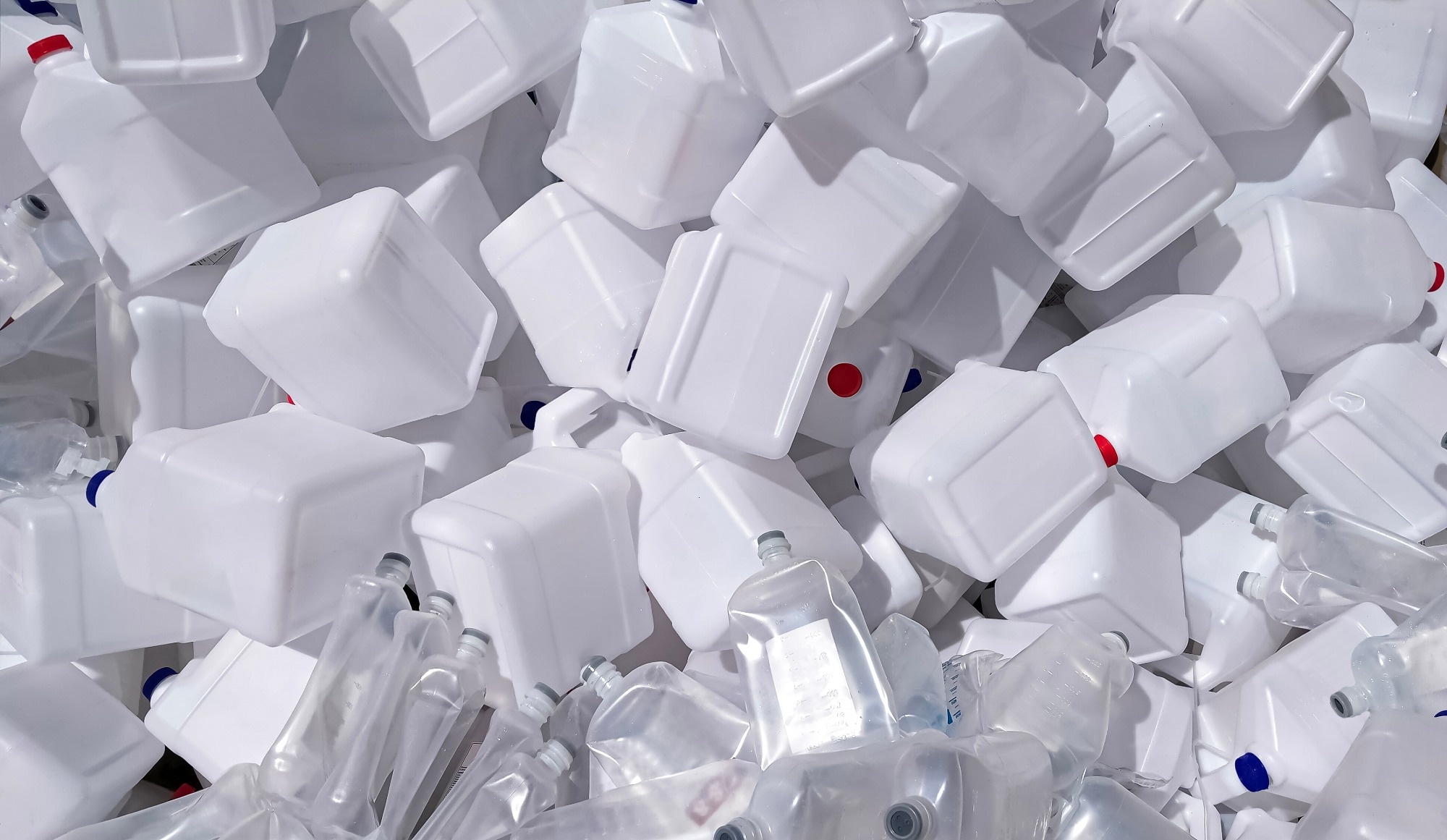
Researchers have developed a method to convert medical saline containers into clean-burning fuel using pyrolysis and nanotechnology. It may offer a sustainable solution to plastic waste and energy demands.
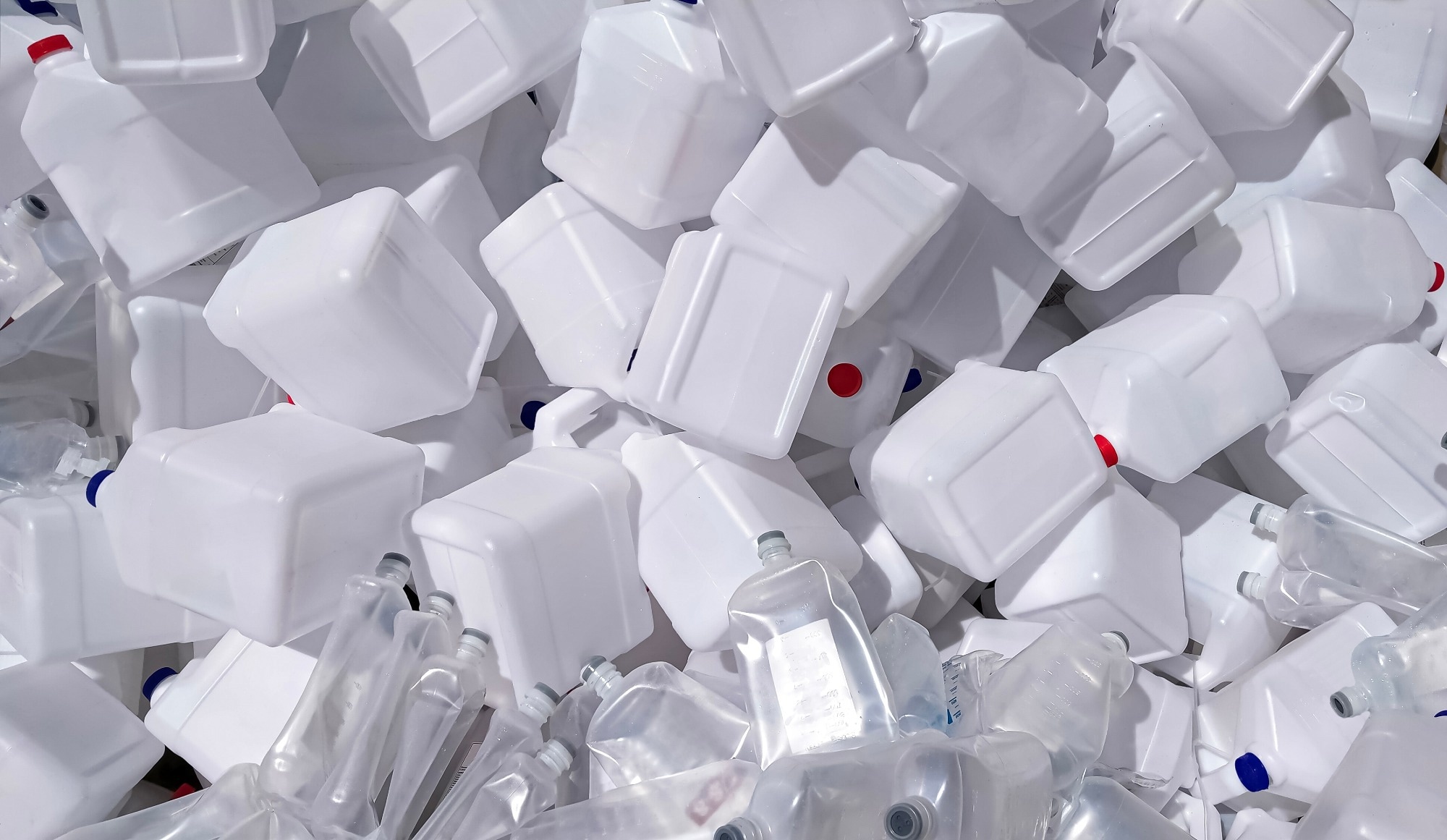
Image Credit: Kub The Shadow Simple Man/Shutterstock.com
The healthcare sector is generating a growing volume of single-use plastic waste. One in particular, saline container waste, is causing concern, as these containers are made from non-biodegradable plastics, contribute significantly to environmental pollution, and are difficult to manage using traditional disposal methods.
To address this, a team of researchers explored the use of pyrolysis, a thermochemical process that decomposes organic material in the absence of oxygen, to convert plastic medical waste into usable fuel. Their goal was to develop a method that not only mitigates waste but also yields a high-performance alternative to conventional fossil fuels.
The study, published in Engineering Reports, underlines the role of nanotechnology in enhancing fuel performance and reducing emissions, positioning their approach as a dual-purpose strategy for waste management and sustainable energy production.
Converting Saline Containers Into Usable Fuel
The process begins by sterilizing saline containers from healthcare facilities at 120 °C to eliminate pathogens. Then, the containers are mechanically shredded into smaller particles. The crushed plastic is subjected to pyrolysis at 560 °C, producing three primary byproducts: pyrolysis oil, char, and syngas.
The resulting liquid, Pyrolysis Oil of Saline Container Waste (POSCW), was then analyzed for fuel properties such as calorific value, viscosity, and combustion behavior. To test its viability as a fuel, researchers blended POSCW with conventional diesel in three different ratios: 25 %, 50 %, and 75 %.
To further enhance combustion efficiency and reduce emissions, the blends were also modified with two types of nanostructures: cerium oxide (CONP) and multi-walled carbon nanotubes (MWCNT). These additives are known for improving fuel reactivity and promoting more complete combustion.
Engine Testing and Performance Evaluation
All fuel blends were tested in a 5.2 kW single-cylinder, four-stroke compression ignition engine under varying load conditions. The engine was instrumented with a computerized data acquisition system to monitor key performance metrics, including in-cylinder pressure, heat release rate, brake thermal efficiency (BTE), and exhaust emissions.
Among the different formulations, the 25 % POSCW and 75 % diesel blend (POSCW25D75) delivered the best overall results when combined with both CONP and MWCNT. This blend achieved a peak in-cylinder pressure of 65.14 bar, higher than pure diesel and other tested blends, indicating superior combustion performance.
The hybrid nano-fuel also registered a brake thermal efficiency of 33.07 %, an improvement of 10.13 % over the 100 % POSCW blend. In addition, it significantly reduced brake-specific fuel consumption (BSFC) and lowered emissions of nitrogen oxides (NOx), carbon monoxide (CO), unburned hydrocarbons, and soot.
The study found that the POSCW25D75 blend performed well even without nanoparticles, suggesting that lower-concentration blends of pyrolysis oil can effectively substitute diesel. However, the inclusion of CONP and MWCNT clearly amplified fuel efficiency and emission control.
Economic and Environmental Advantages
Beyond technical performance, the study also explored the economic feasibility of large-scale POSCW production. The researchers noted that, with appropriate scaling, the production cost of POSCW could become competitive with fossil diesel, providing a cost-effective and environmentally beneficial fuel alternative.
The ability to convert a waste product into a usable, cleaner-burning fuel offers a two-pronged advantage: it helps reduce the burden of medical plastic waste and supports the global shift toward low-emission energy solutions.
Broader Implications and Future Applications
The success of POSCW in this study clearly shows the broader potential of recycling plastics with nanotechnology in sustainable energy research.
By optimizing combustion and lowering emissions, nanoparticle-enhanced fuels offer a high-performing alternative for industries seeking cleaner power sources, particularly in transportation and distributed energy generation.
The methodology used here could be applied to other forms of plastic and medical waste, presenting new pathways for waste-to-energy conversion. With further development, these techniques could help address plastic pollution at scale, particularly in developing regions where medical waste infrastructure is limited.
Conclusion: A Path for Clean Energy and Waste Reduction
This research presents a compelling case for the pyrolysis of medical plastic waste as a viable route to clean fuel production. The resulting POSCW, especially when enhanced with nanoparticles, performs comparably to diesel in CI engines, delivering higher efficiency and markedly lower emissions.
This approach supports key sustainability objectives and contributes to a more circular, resource-efficient economy by addressing plastic waste management and the need for sustainable fuels.
Future research may focus on optimizing pyrolysis parameters, improving nanoparticle dispersion, and evaluating long-term engine durability under real-world conditions. Such advancements will be crucial for translating laboratory success into industrial-scale solutions.
Journal Reference
P, T. Sathish., et al. (2025, September). Medical Waste to Energy: Pyrolysis Oil of Saline Containers Waste Fuelled CI Engine Characteristics Evaluation With Hybrid Nano-Fuel. Engineering Reports, 7(9), e70389. DOI: 10.1002/eng2.70389, https://onlinelibrary.wiley.com/doi/10.1002/eng2.70389