
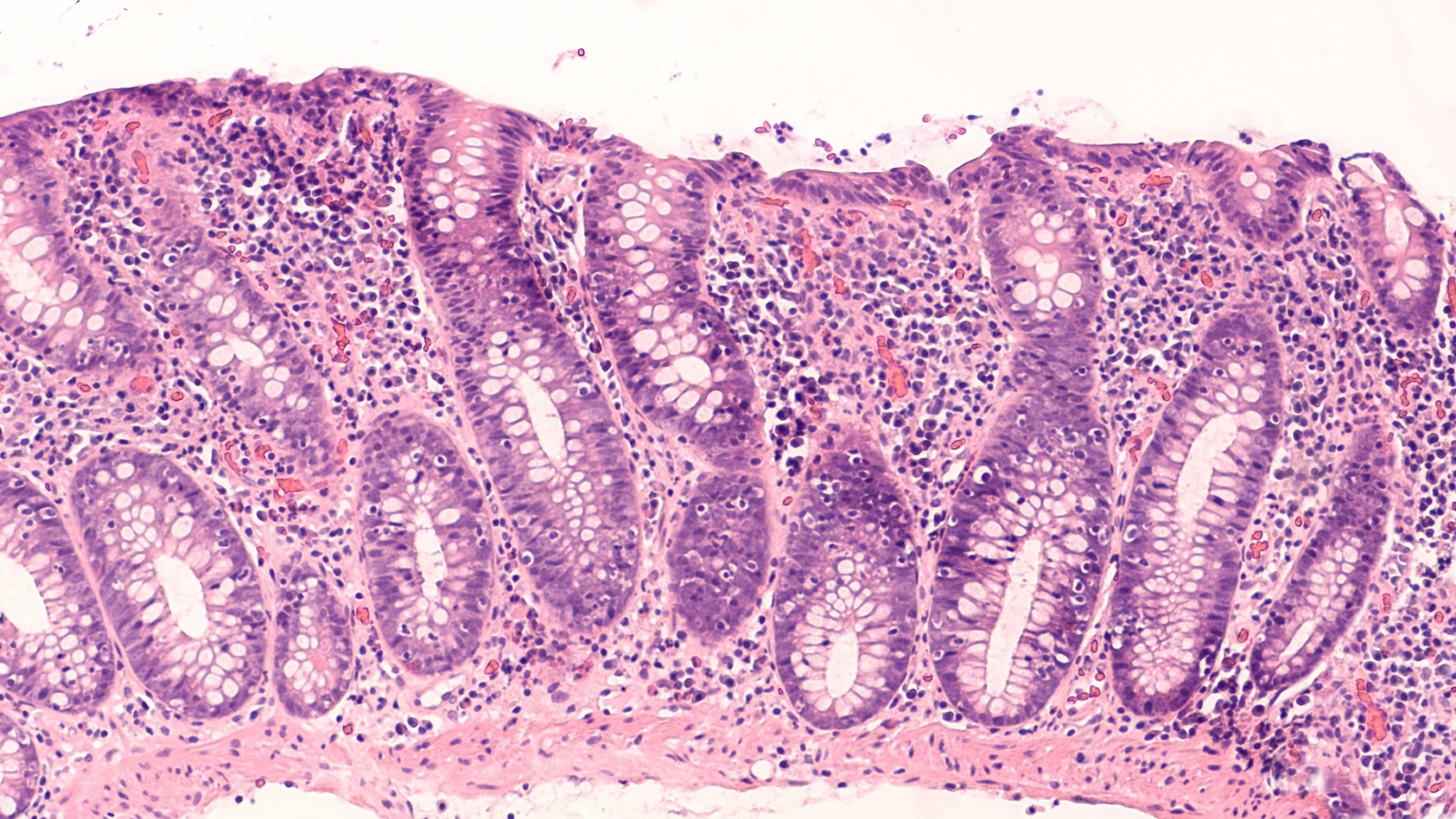
A preclinical study in Small reports a biomaterials-based strategy that delivers butyrate directly to inflamed colon tissue in mice, improving disease measures in a model of colitis.
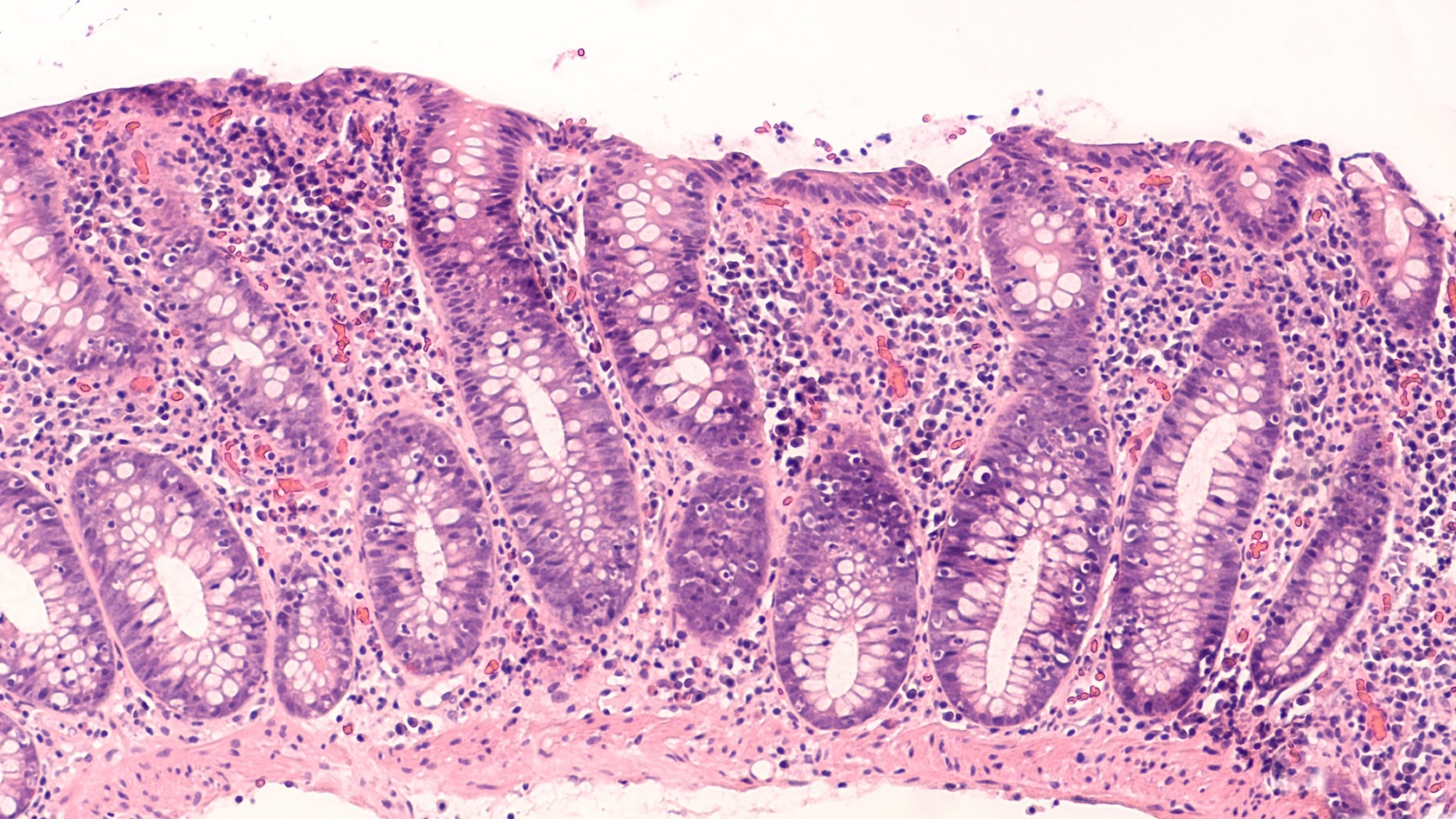 Study: Inulin-Butyrate Nanogel for Modulation of Gut Microbiome, Intestinal Barrier, and Regulatory T-Cells in Colitis. Image Credit: David A Litman/Shutterstock.com
The platform, an inulin-butyrate nanogel (IBN), is designed to work at three levels at once: reshaping the gut microbiome, restoring the intestinal barrier, and promoting immune regulation.
The work addresses a persistent problem in inflammatory bowel disease research: colitis is driven by excessive immune activation, epithelial barrier failure, and microbial imbalance. Most current therapies focus on suppressing inflammation, while doing less to correct those underlying defects.
Saving this report for later? Download a PDF here.
Butyrate is a short-chain fatty acid produced by commensal gut bacteria and is widely associated with intestinal homeostasis. It helps support epithelial integrity and is associated with regulatory T-cell activity.
Using it as a therapy has been difficult because orally administered butyrate is rapidly absorbed before it reaches the colon. It can also require relatively high doses and poses formulation challenges because of its odor and volatility.
To overcome those difficulties, the researchers chemically linked butyrate to inulin, a naturally derived polysaccharide that reaches the colon intact and can promote beneficial bacterial growth. The resulting conjugate self-assembled into nanogels in water, creating a delivery system intended to remain stable through the upper gastrointestinal tract and activate in the colon.
The Inulin-Butyrate Nanogel
The team synthesized the inulin-butyrate conjugate by esterifying inulin with butyric anhydride, then optimized the degree of substitution to balance drug loading, solubility, and structural stability.
Nuclear magnetic resonance spectroscopy confirmed the chemical composition, while transmission electron microscopy and dynamic light scattering revealed nanoscale particles with a uniform size distribution and stable surface properties.
Release studies suggested that the nanogel is activated by microbial enzymes rather than by the stomach or small intestine environment alone. It remained largely stable under acidic and neutral conditions, but released butyrate efficiently when exposed to both inulinase and esterase.
The authors propose a sequential process: inulinase first disrupts the nanogel structure, allowing esterase to access the ester bonds and release butyrate.
That mechanism is central to the design of the nanogel. It means the carrier is not simply protecting butyrate during transit, but is structured to respond to the enzymatic environment of the colon.
In Vivo Experiments for Colitis Treatment
The in vivo work used a dextran sodium sulfate-induced mouse model of colitis. Fluorescent imaging showed that the nanogel accumulated preferentially in inflamed colon tissue, with stronger signals in diseased mice than in healthy controls. The paper links that pattern to increased intestinal permeability at inflamed sites, which may favor nanoparticle retention.
Therapeutically, IBN outperformed inulin or butyrate alone across several readouts. Treated mice lost less body weight, retained more colon length, and showed lower inflammatory burden. Histological analysis also found less epithelial injury and reduced immune cell infiltration.
Effects On Microbiome, Barrier, And Immune Signals
One of the study’s main claims is that the nanogel acts across several interconnected disease pathways rather than through a single anti-inflammatory effect.
Microbiome profiling showed that IBN increased bacterial richness and diversity and shifted composition toward taxa associated with gut health, including Lactobacillus, Bifidobacterium, Bacteroides, and Clostridium XIVα. When mice were pretreated with antibiotics, the therapeutic effect was reduced, supporting the idea that microbiome engagement is an important part of the response.
The treatment also improved markers of the epithelial barrier. Expression of tight junction proteins, including ZO-1 and occludin, increased after IBN treatment, consistent with improved barrier integrity.
On the immune side, IBN reduced pro-inflammatory cytokines and increased anti-inflammatory mediators, including IL-10 and TGF-β. The study also found increased CD4+Foxp3+ regulatory T cells. The authors interpret this as being consistent with butyrate-linked immune regulation, although the full epigenetic mechanism is not directly established in this work.
The Study’s Importance
The study’s significance lies in its combined approach. Rather than treating colitis as a purely immune disorder, it frames disease as the product of a feedback loop involving dysbiosis, barrier breakdown, and mucosal immune dysfunction. The nanogel is presented as a way to intervene across all three.
That does not make it a ready clinical therapy. The results are preclinical and come from a mouse model of acute colitis, not from human trials. Still, the work offers a useful example of how microbiome-responsive biomaterials could be designed to deliver microbial metabolites more precisely and with broader biological impact than free small molecules alone.
The authors argue that naturally derived components, such as inulin and butyrate, may support biocompatibility and translational potential. But further work will need to test safety, manufacturability, dosing, and reproducibility in additional preclinical settings before any move toward human studies.
Journal Reference
Park, N., et al. (2026). Inulin-Butyrate Nanogel for Modulation of Gut Microbiome, Intestinal Barrier, and Regulatory T-Cells in Colitis. Small. DOI: 10.1002/smll.202513252