
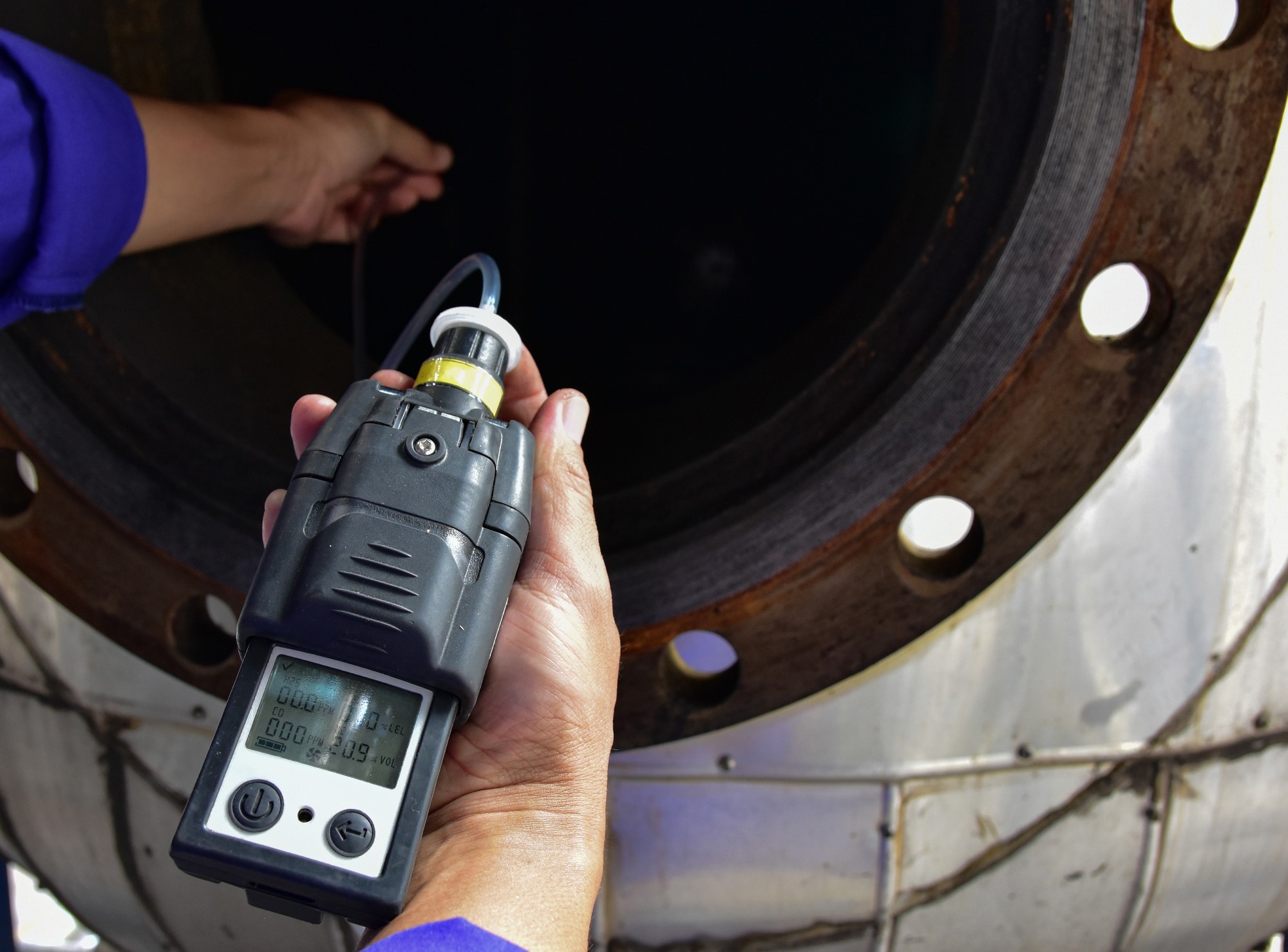
A simple tweak to zinc oxide nanoparticles – adding just 2 % silver – has created one of the most responsive hydrogen sensors ever reported. Its fast, accurate detection could overhaul hydrogen safety systems across the industry.
 Study: High-performance hydrogen gas sensor based on Ag-incorporated ZnO nanoparticles. Image Credit: Tum ZzzzZ/Shutterstock.com
The recent Scientific Reports publication describes a new hydrogen gas sensor built using silver-incorporated zinc oxide (ZnO) nanoparticles, demonstrating exceptionally high sensitivity, fast response, and strong selectivity while remaining simple and economical to produce.
Hydrogen is a clean, renewable fuel, but because it is colorless, odorless, and critically, becomes explosive above 41,000 ppm in air, it requires extremely reliable monitoring.
Existing sensors often suffer from low sensitivity or slow response and recovery times, especially when based on pure ZnO or complex composite structures.
Creating the ‘Most Responsive’ Hydrogen Sensor
Researchers synthesized Ag-doped ZnO nanoparticles via thermal decomposition, a fast and scalable method.
Zinc acetate dihydrate and citric acid (1:1 molar ratio) served as the precursor system, with silver nitrate added at 0, 2, 4, 6, and 8 mol% relative to zinc acetate.
The mixed powders were ground for 30 minutes, and then heated at 600 °C for three hours to form pure and doped ZnO nanoparticles.
For sensing tests, the nanoparticle powders were dispersed in deionized water, ultrasonicated, and deposited onto alumina substrates patterned with gold inter-digital electrodes.
Measurements were performed between 150 and 350 °C inside a controlled gas chamber, with real-time current changes recorded during 100-second hydrogen exposures.
Get all the details: Grab your PDF here!
Key Findings for the Sensor’s Responsiveness
Structural analysis confirmed the formation of Zn-O bonds and the presence of silver as a secondary metallic phase rather than a fully substituted dopant.
Importantly, Ag incorporation increased the porosity and surface area of the nanoparticles. These factors strongly influenced gas adsorption and sensing performance.
The strongest response was achieved with the 2 % Ag-doped ZnO sample, which delivered an extraordinary 4357 % response, roughly 29 times higher than pure ZnO.
The 8 % Ag sample exhibited the fastest response and recovery times, despite having a lower overall response.
The researchers found that sensor performance improved at higher hydrogen concentrations and temperatures. This is consistent with the catalytic spill-over effect, where silver facilitates the dissociation and movement of hydrogen across the surface.
At the same time, the formation of a Schottky barrier at the Ag-ZnO interface enhanced electron transport in the presence of hydrogen, further boosting sensitivity.
Detection Limit, Sensitivity, and Stability
The study reported highly competitive detection metrics:
- Sensitivity (2 % Ag sample): 0.787 ppm-1
- Limit of Detection (LOD): 0.49 ppb
Repeatability tests at 350 °C showed that the 2 % doped sensor maintained a response above 4000 % over eight cycles, with only minor fluctuations attributed to partial hydrogen retention between exposures.
Selectivity experiments demonstrated a strong positive response to hydrogen and a negative response to nitrogen dioxide (NO2).
The negative NO2 signal reflects its behavior as an oxidizing gas that depletes conduction electrons in ZnO, contrasting with the electron-releasing reaction pathway seen for hydrogen.
Significance of the Study
The research shows that controlled Ag incorporation, in particular at 2 %, can substantially enhance ZnO’s sensing capabilities without complex and expensive composite architectures.
The combination of high response, low detection limits, fast dynamics, and repeatable behavior suggests strong potential for industrial safety systems and future hydrogen technologies.
Journal Reference
Torkamani, R., Aslibeiki, B., Salari, S., Azizi, H., Peddis, D., & Sarkar, T. (2025). High-performance hydrogen gas sensor based on Ag-incorporated ZnO nanoparticles. Scientific Reports, 15(1), 1-15. DOI: 10.1038/s41598-025-22222-9