
Close Menu
  • News
    • Medical
    • Nanomaterials
    • AI & Robotics
    • 2D Materials
    • Metamaterials
    • Nanoelectronics
    • ETF’s
    • Medicine
  • Environment
    • Earth.com
    • TreeHugger
    • Nanomuscle
  • Beauty
    • Makeupanalysis
What's Hot

Nanotechnology Plus Medicine Equal NanoMedicine

February 3, 2026

Improving PPE’s Antimicrobial Efficacy with ZnO Nanoparticles

December 5, 2025

PI Introduces Next-Generation 6-Axis Nanopositioning Alignment System

December 4, 2025
Facebook X (Twitter) Instagram
  • Contact Us
  • Privacy Policy
  • Terms & Conditions
Facebook X (Twitter) Instagram
Elnano – Global Innovative Nanotechnology SolutionsElnano – Global Innovative Nanotechnology Solutions
  • News
    • Medical
    • Nanomaterials
    • AI & Robotics
    • 2D Materials
    • Metamaterials
    • Nanoelectronics
    • ETF’s
    • Medicine
  • Environment
    • Earth.com
    • TreeHugger
    • Nanomuscle
  • Beauty
    • Makeupanalysis
Elnano – Global Innovative Nanotechnology SolutionsElnano – Global Innovative Nanotechnology Solutions
Home » ‘Self-tuning’ film paves the way for future wireless and radar devices
Nanotech

‘Self-tuning’ film paves the way for future wireless and radar devices

November 4, 2025No Comments3 Mins Read
Share
Facebook Twitter LinkedIn Pinterest Email
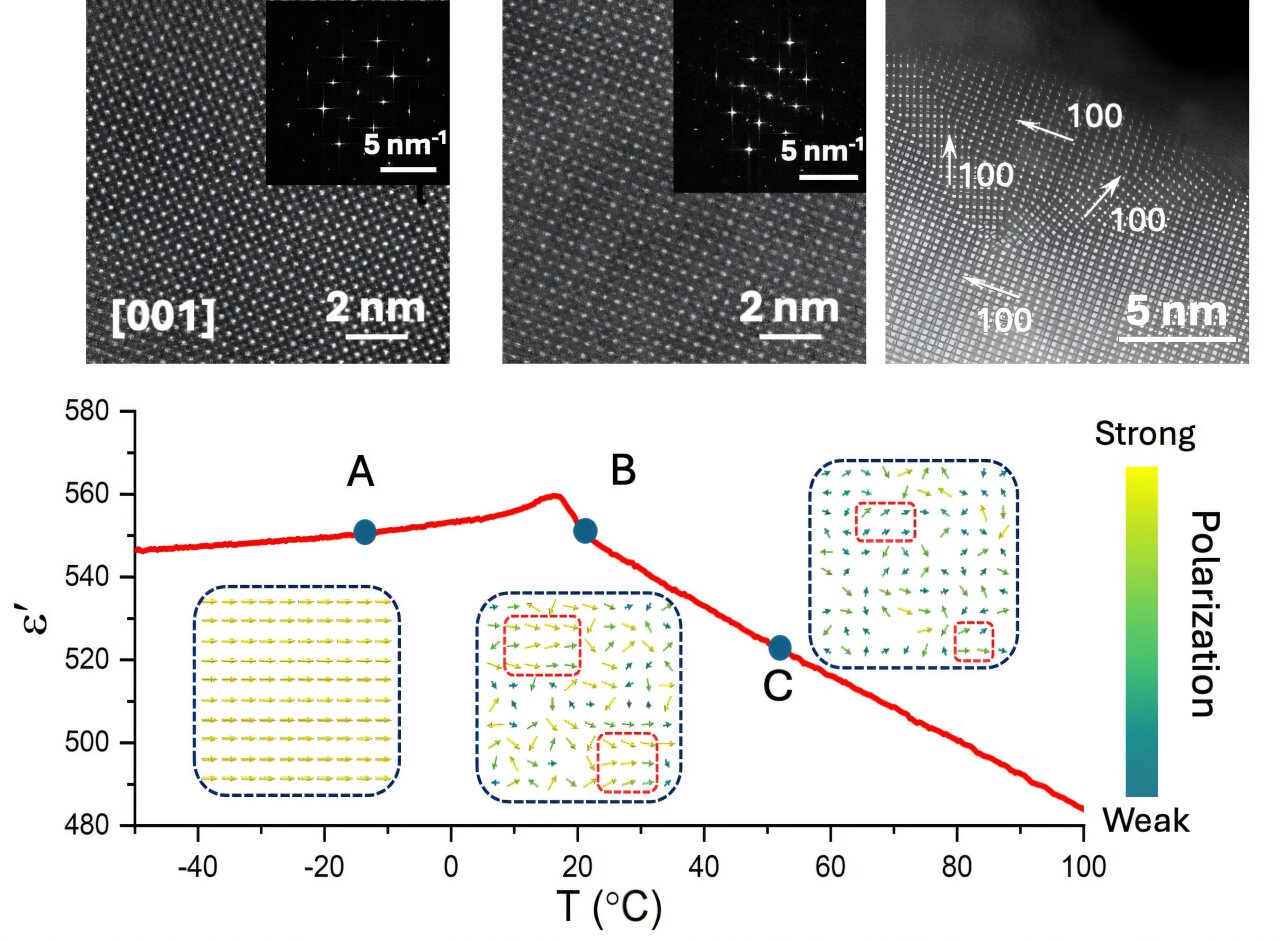
The new material shows an unusually high level of tunability. Credit: Queen Mary University of London

A research team from Queen Mary University of London has discovered a new way to engineer thin films that can “tune” themselves much more effectively than existing materials, making them highly responsive and efficient.

Ferroelectric films are used in modern communications and sensing systems, such as 5G, 6G, radar, and medical imaging. They need to adapt quickly to changing signals and frequencies. Until now, scientists have faced a tradeoff between making materials highly tunable and keeping them energy-efficient, but this new approach breaks that trade-off by making the material adaptable without wasting energy.

The work is published in the journal Nature Communications.

In tests, the new material, co-developed by Dr. Hanchi Ruan, Dr. Hangfeng Zhang, and other researchers, showed an unusually high level of “tunability.” Its ability to change how it behaves reached about 74% at microwave frequencies. The team was surprised to find they only needed to apply a low voltage to achieve this, where normally, such performance would require much more energy or would cause significant energy losses.

Dr. Haixue Yan, Reader at School of Engineering and Materials Science at Queen Mary University of London, said, “The key to our method is the creation of tiny nanoclusters—small groups of atoms, far smaller than a human hair—inside the material.

“Normally, in barium titanate, atoms sit in a perfectly regular arrangement, like seats in a neatly packed stadium. By carefully swapping a small number of titanium atoms with tin, we disturb that perfect order and form tiny, irregular pockets where the atoms are slightly out of place. These nanoclusters move more easily when an electrical signal is applied, which makes the whole material much more responsive.”

See also  Optical Study of Switching in hBN Devices

Professor Yang Hao, QinetiQ/Royal Academy of Engineering Research chair and Professor of Antennas and Electromagnetics at Queen Mary, who led this research, said, “This work could lead to the next generation of smaller, faster, and more energy-efficient wireless and radar devices. Phones could connect more reliably, satellites could communicate more clearly, and medical scanners could deliver sharper images.

“More broadly, the method of engineering nanoclusters through atomic substitution could inspire advances in many technologies, from sensors and defense systems to future quantum devices.”

More information:
Hanchi Ruan et al, Engineering polar nanoclusters for enhanced microwave tunability in ferroelectric thin films, Nature Communications (2025). DOI: 10.1038/s41467-025-64642-1

Provided by
Queen Mary, University of London


Citation:
‘Self-tuning’ film paves the way for future wireless and radar devices (2025, November 3)
retrieved 4 November 2025
from https://phys.org/news/2025-11-tuning-paves-future-wireless-radar.html

This document is subject to copyright. Apart from any fair dealing for the purpose of private study or research, no
part may be reproduced without the written permission. The content is provided for information purposes only.


Source link

Devices film future paves radar Selftuning wireless
Share. Facebook Twitter Pinterest LinkedIn Tumblr Email

Related Posts

Improving PPE’s Antimicrobial Efficacy with ZnO Nanoparticles

December 5, 2025

PI Introduces Next-Generation 6-Axis Nanopositioning Alignment System

December 4, 2025

H.E. Máté Pesti’s Visit to Cubic Sensor and Instrument Co.

December 2, 2025

Nanostars Amplify SERS Signal and Boost Sensing

December 1, 2025
Add A Comment

Comments are closed.

Top Posts

Smart Antennas Shape Satellite Internet Tech to Come

September 18, 2025

Nanotechnology Plus Medicine Equal NanoMedicine

February 3, 2026

PI Introduces Next-Generation 6-Axis Nanopositioning Alignment System

December 4, 2025

Subscribe to Updates

Get the latest sports news from SportsSite about soccer, football and tennis.

Explore the future with our Nanotech blog—covering innovations, research, applications, and breakthroughs shaping science, medicine, and modern technology.

We're social. Connect with us:

Facebook X (Twitter) Instagram YouTube
Top Insights

Nanotechnology Plus Medicine Equal NanoMedicine

February 3, 2026

Improving PPE’s Antimicrobial Efficacy with ZnO Nanoparticles

December 5, 2025

PI Introduces Next-Generation 6-Axis Nanopositioning Alignment System

December 4, 2025

Subscribe to Updates

Get the latest creative news from FooBar about art, design and business.

  • Contact Us
  • Privacy Policy
  • Terms & Conditions

© 2026 elnano.com - All rights reserved.

Type above and press Enter to search. Press Esc to cancel.