
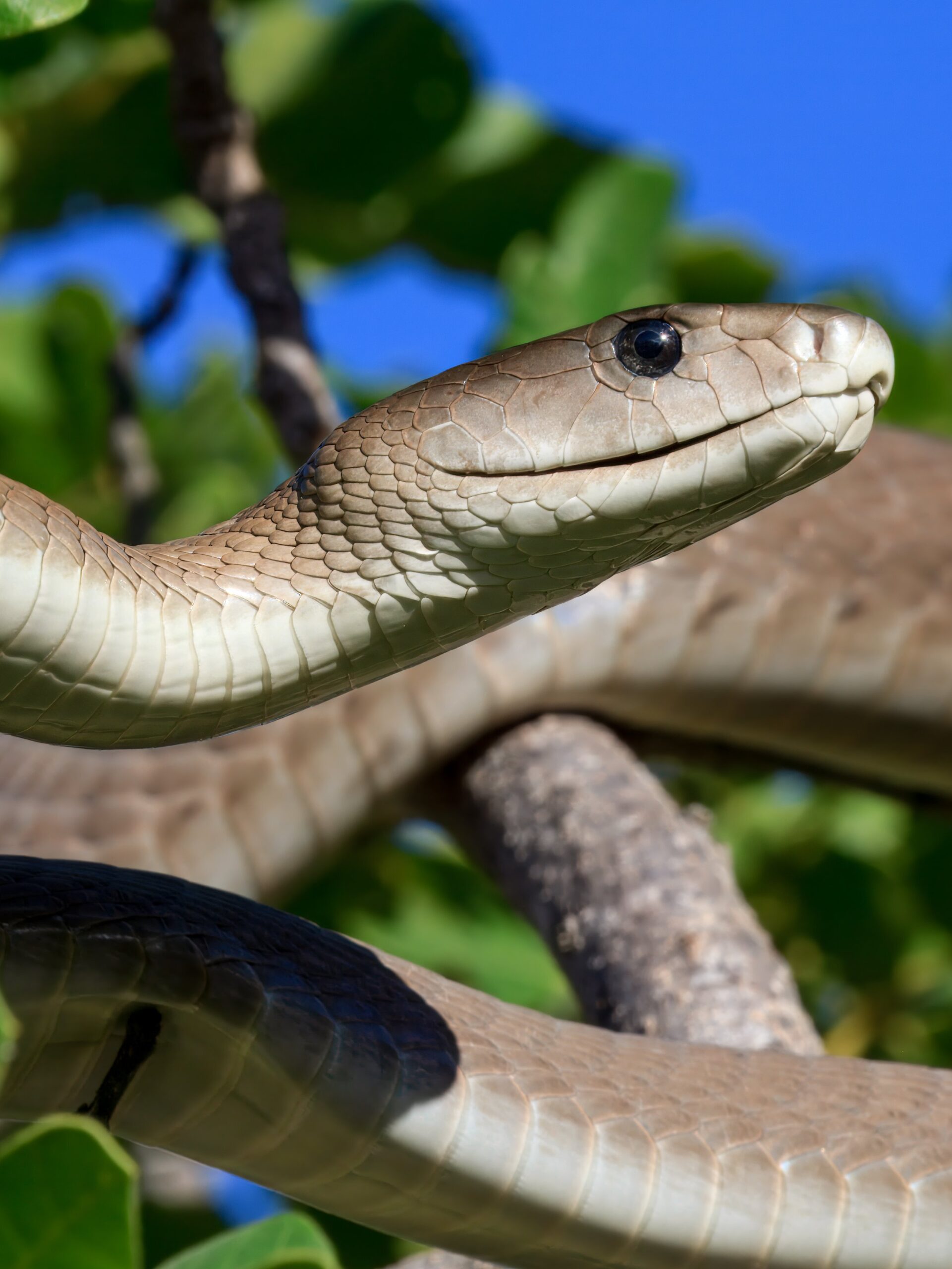
Snakebite envenoming is among the world’s deadliest yet most overlooked tropical diseases. The WHO has classified snakebite envenoming as one of 21 neglected tropical diseases, resulting in between 100,000 and 150,000 deaths worldwide each year. Three times as many survive with serious disabilities, including amputations and permanent tissue damage.
Snakebite victims are therefore dependent on antivenom, but the existing types have serious limitations: these include that they do not cover all medically relevant snake species and that they cannot always neutralize all medically relevant toxins found in snake venoms. This makes it difficult to provide correct and optimal treatment.
Now, an international team of researchers led by Professor Andreas Hougaard Laustsen-Kiel from DTU Bioengineering has developed a broad-spectrum antivenom against snake venoms, which shows impressive potential in laboratory studies. The antivenom covers a total of 17 different African snake species (including cobras, mambas, and rinkhals), provides better protection against tissue damage, has a lower risk of immune reactions, and, according to the researchers, can be produced at a lower cost than existing antivenoms.
The results have just been published in the journal Nature and mark the culmination of several years of intensive research with a clear goal: to develop an antivenom that can make a real difference for snakebite victims.
“We have both a moral and global responsibility to contribute to solving this problem. It’s great that DTU supports this kind of research and gives us the opportunity to work on some of the challenges facing the world—especially in Africa, where the problem is really acute,” says Hougaard Laustsen-Kiel.
In sub-Saharan Africa, more than 300,000 snakebite cases are recorded annually. More than 7,000 people lose their lives, while around 10,000 undergo amputations. The actual extent—also globally—is probably much greater, as many cases go unreported.

Why is the new antivenom such a major achievement?
Existing antivenoms are produced by immunizing horses with snake venom and extracting antibodies from their blood. The result is a large, undefined mixture of antibodies, only a small proportion of which target and neutralize the most dangerous toxins. This method produces a product with great variation in quality and a risk of serious side effects.
“The horses’ blood is purified slightly and then given to people who have been bitten by a venomous snake. The antivenom works, but can cause harmful side effects—it’s similar to a blood transfusion from a horse. At the same time, the quality varies because different horses are used in each production,” explains Hougaard Laustsen-Kiel, continuing:
“Instead, we have developed an antivenom that does not require us to constantly extract antibodies from animals. Instead, we used phage display technology to develop our antivenom. This method makes it possible to select and copy effective antibody fragments (nanobodies) and later produce them on a large scale and with consistent quality. This means that we would be able to produce the antivenom in large quantities without compromising on quality.”
There is also no single antivenom that covers all relevant African snake species. This can be particularly problematic if a person is bitten somewhere in Central Africa, where several venomous species live side by side. For example, the venom of the cape cobra and the spitting cobra contain very different toxins: the cape cobra’s venom consists primarily of neurotoxins that paralyze the nervous system, while the spitting cobra’s venom is rich in cytotoxins, which, among other things, break down tissue and can lead to amputation.
This great variation means that an antivenom that works against one species does not necessarily work against another—and therefore, it is crucial to develop an antivenom that covers several species.
The researchers have now developed a more effective and broadly effective antivenom by combining eight carefully selected nanobodies into a cocktail that targets venom from 18 medically relevant African snake species. Nanobodies are a special type of antibody that originates from antibodies found in animals in the camel family. Nanobodies are both smaller and more stable than ordinary antibodies.
The researchers developed these nanobodies to bind strongly and precisely to many different similar toxins, which enables the antivenom to neutralize venom from multiple species.
During in vivo testing, the antivenom has shown promising results and covered a wide spectrum of snake species, increasing its potential for effective treatment in real-life cases. In experiments where the antivenom was mixed directly with the venom before being injected, it successfully neutralized venom from 17 out of 18 tested different snake species, with the exception of one of the green mambas.
The new antivenom also shows promising results against local tissue damage. Nanobodies penetrate tissue faster and deeper than the larger antibodies in current antivenoms. Even with delayed treatment, nanobodies appear to effectively reduce tissue damage, whereas current antivenoms have only a limited effect.
At the same time, nanobodies carry a much lower risk of serious immune reactions compared to today’s antivenoms. This means treatment could be started earlier, without waiting for clear symptoms—unlike current practice, where clinicians often delay administration to avoid triggering dangerous side effects.

When will the antivenom be available on the market?
Although the antivenom shows promising results, it has not yet been tested on humans, and there is still some way to go before it reaches the market.
The effectiveness of the antivenom is limited when it’s given after venom exposure. The venom from certain species, such as the black mamba and forest cobra, was only partially neutralized. This shows that both the composition of the venom and the timing of treatment are very important—and that the antivenom does not yet provide full protection in all cases.
The researchers are still working on fine-tuning and improving the content of the antivenom so that the final version can provide even better protection for snakebite victims and increase the chance of saving lives.
“We have already upgraded one of the nanobodies included and are in the process of improving another. We are constantly learning new things along the way, and it may turn out that some minor adjustments will need to be made in the future,” explains Hougaard Laustsen-Kiel.
Investments in development and production are difficult to attract in Africa—especially because the hardest-hit countries are often poor and have limited purchasing power. Nevertheless, Hougaard Laustsen-Kiel points out that the new antivenom has economic advantages: “We estimate that the antivenom can be produced at less than half the current price. This is partly because less active substance is needed to achieve the same effect. At the same time, nanobodies have very high physical stability, which could lower storage costs.”
The researchers are working hard to secure the necessary funding so that development of the antivenom can be accelerated. With the right support, the researchers estimate that clinical trials could begin in one to two years, and that a finished product could potentially be ready within three to four years—with the potential to save thousands of lives.
Hougaard Laustsen-Kiel has been in dialogue with several companies, organizations, and partners to find a way forward, but no final decisions have been made yet. However, the antivenom appears to be a very promising candidate for a groundbreaking treatment.
“Of course, I have to be careful not to promise too much, but if no other antivenoms emerge that are better, I am quite convinced that our antivenom—compared to those currently on the market—has the broadest coverage of snake species,” says Hougaard Laustsen-Kiel.
“We are ready to get started and hope that someone will invest in the project. Our antivenom has the potential to fundamentally change how snakebites are treated around the world.”
More information:
Andreas Laustsen, Nanobody-based recombinant antivenom for cobra, mamba and rinkhals bites, Nature (2025). DOI: 10.1038/s41586-025-09661-0. www.nature.com/articles/s41586-025-09661-0
Citation:
Nanobody-based antivenom shows effectiveness against 17 African snake species (2025, October 29)
retrieved 30 October 2025
from https://phys.org/news/2025-10-nanobody-based-antivenom-effectiveness-african.html
This document is subject to copyright. Apart from any fair dealing for the purpose of private study or research, no
part may be reproduced without the written permission. The content is provided for information purposes only.