
A multi-institutional team led by University of Washington scientists have engineered a new vaccine platform combining mRNA and computational protein design, producing in mice a potent immune defense against both Wuhan-Hu-1 and omicron BA.5 SARS-CoV-2.
Messenger RNA vaccines proved effective during the COVID-19 pandemic. Ways to further optimize the encoded proteins have remained an ongoing pursuit. Protein nanoparticle immunogens, which can display multiple antigen copies in precise arrays, amplify antibody responses by clustering B cell receptors. Integrating these two approaches could yield vaccines that trigger both strong antibody and T cell immunity while retaining the speed and scalability of mRNA production.
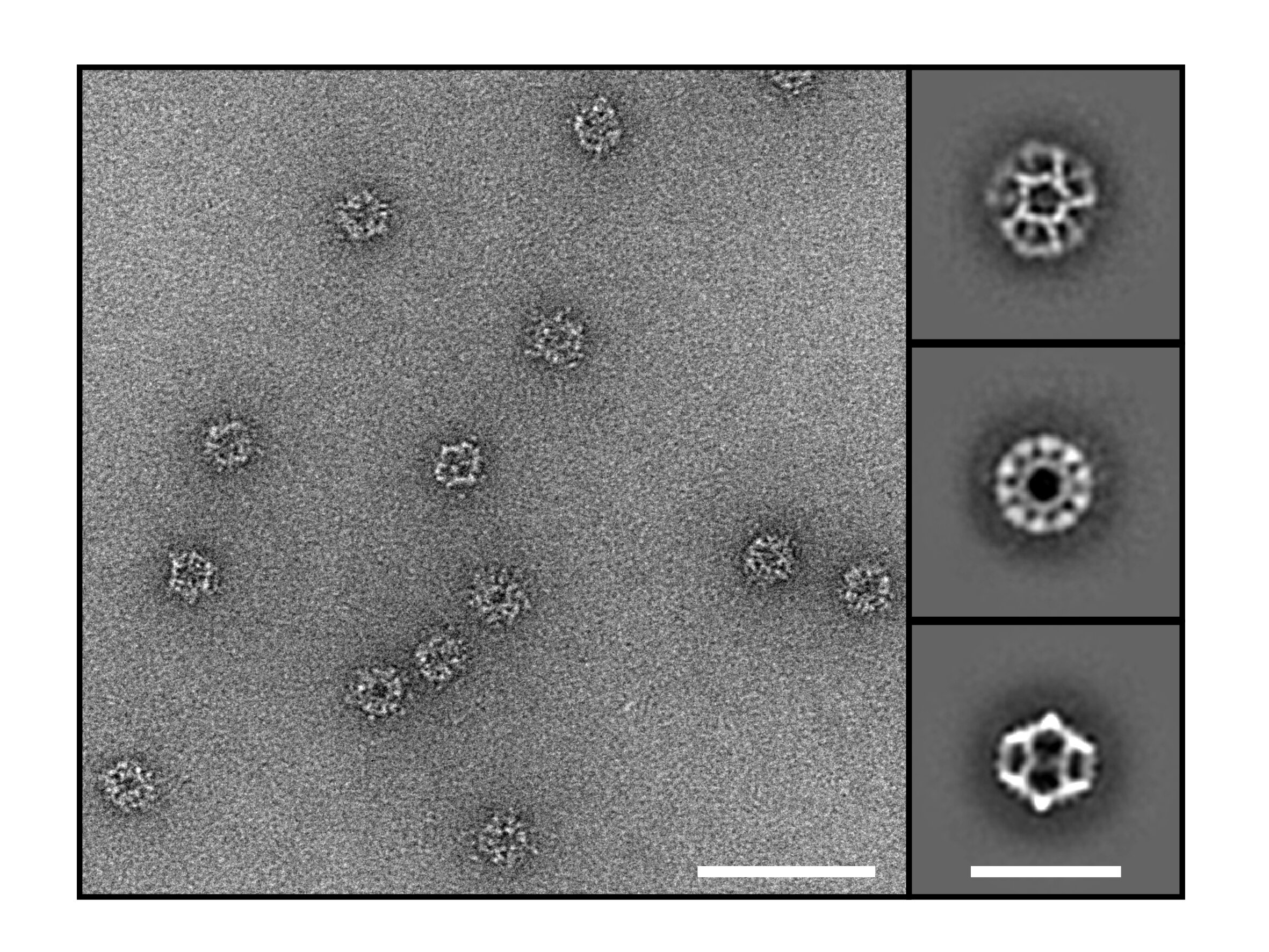
In the study, “Computationally designed mRNA-launched protein nanoparticle immunogens elicit protective antibody and T cell responses in mice,” published in Science Translational Medicine, researchers genetically fused a stabilized SARS-CoV-2 receptor binding domain variant, Rpk9, to a computationally optimized 60-subunit scaffold nanoparticle, I3-01NS.
BALB/c mice served as the primary model for evaluating protection. Each immunogenicity group contained 10 animals receiving either lipid nanoparticles–encapsulated mRNA or adjuvanted protein formulations, with 5 animals receiving empty lipid nanoparticles as negative controls. Challenge experiments used mice in 5 groups of 4 to 6 animals per group per time point for Wuhan-Hu-1 MA10 and in 5 groups of 4 or 5 animals per group per time point for omicron BA.5 MA10.

C57BL/6 mice were used to measure antigen-specific T cell responses, with 5 animals per group for lung and spleen assays after prime and boost immunizations.
mRNA-launched RBD nanoparticles outperformed the comparator mRNA vaccines across experiments. In the single-dose Wuhan-Hu-1 arm, Rpk9–I3-01NS mRNA elicited ~28× higher titers than membrane-anchored S-2P mRNA and ~11× higher than secreted RBD-trimer mRNA.
Even the lowest mRNA dose produced responses comparable to or greater than those achieved with substantially higher doses of standard spike-encoding formulations. Serum analyses after boosting showed persistent neutralization against Wuhan-Hu-1, while additional assays demonstrated cross-reactivity to omicron BA.5.
C57BL/6 mice receiving the nanoparticle mRNA displayed abundant antigen-specific CD8 T cells in both lungs and spleen. Protein-delivered counterparts did not elicit these responses, indicating distinct engagement of cellular immunity by the mRNA platform.

Single-dose vaccination protected mice from lethal challenge with mouse-adapted Wuhan-Hu-1 SARS-CoV-2, preventing weight loss and eliminating detectable virus in lung tissue. Two-dose immunization blocked severe disease after an omicron BA.5 challenge, suppressing viral replication in respiratory tissue and preserving body weight across observation days.
Authors present mRNA-launched protein nanoparticle immunogens as a way to combine multivalent antigen display with nucleic acid manufacturing speed. Their I3-01NS results are a proof of concept, showing a genetically deliverable, computationally designed scaffold that could serve across pathogens when paired with appropriately engineered antigens.
Written for you by our author Justin Jackson, edited by Gaby Clark, and fact-checked and reviewed by Robert Egan—this article is the result of careful human work. We rely on readers like you to keep independent science journalism alive.
If this reporting matters to you,
please consider a donation (especially monthly).
You’ll get an ad-free account as a thank-you.
More information:
Grace G. Hendricks et al, Computationally designed mRNA-launched protein nanoparticle immunogens elicit protective antibody and T cell responses in mice, Science Translational Medicine (2025). DOI: 10.1126/scitranslmed.adu2085
© 2025 Science X Network
Citation:
mRNA nanoparticles drive potent SARS-CoV-2 immunity in mice (2025, October 17)
retrieved 17 October 2025
from https://phys.org/news/2025-10-mrna-nanoparticles-potent-sars-cov.html
This document is subject to copyright. Apart from any fair dealing for the purpose of private study or research, no
part may be reproduced without the written permission. The content is provided for information purposes only.