

Close Menu
  • News
    • Medical
    • Nanomaterials
    • AI & Robotics
    • 2D Materials
    • Metamaterials
    • Nanoelectronics
    • ETF’s
    • Medicine
  • Environment
    • Earth.com
    • TreeHugger
    • Nanomuscle
  • Beauty
    • Makeupanalysis
What's Hot

Nanotechnology Plus Medicine Equal NanoMedicine

February 3, 2026

Improving PPE’s Antimicrobial Efficacy with ZnO Nanoparticles

December 5, 2025

PI Introduces Next-Generation 6-Axis Nanopositioning Alignment System

December 4, 2025
Facebook X (Twitter) Instagram
  • Contact Us
  • Privacy Policy
  • Terms & Conditions
Facebook X (Twitter) Instagram
Elnano – Global Innovative Nanotechnology SolutionsElnano – Global Innovative Nanotechnology Solutions
  • News
    • Medical
    • Nanomaterials
    • AI & Robotics
    • 2D Materials
    • Metamaterials
    • Nanoelectronics
    • ETF’s
    • Medicine
  • Environment
    • Earth.com
    • TreeHugger
    • Nanomuscle
  • Beauty
    • Makeupanalysis
Elnano – Global Innovative Nanotechnology SolutionsElnano – Global Innovative Nanotechnology Solutions
Home » Novel Method Boosts Durability of Zinc-Ion Batteries
Nanoelectronics

Novel Method Boosts Durability of Zinc-Ion Batteries

September 18, 2025No Comments3 Mins Read
Share
Facebook Twitter LinkedIn Pinterest Email

Researchers from the University of Technology Sydney and the University of Manchester‘s National Graphene Institute have created a novel method to extend the life of zinc-ion batteries, providing a more secure and environmentally friendly alternative for energy storage. Nature Communications reported the findings.
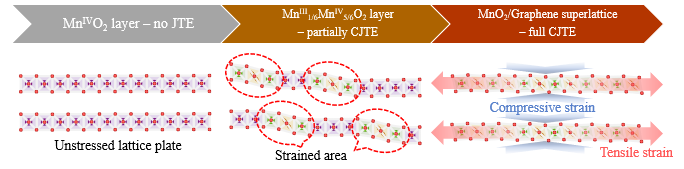
two-dimensional (2D) manganese-oxide/graphene superlattice

Image Credit: The University of Manchester

A two-dimensional (2D) manganese-oxide/graphene superlattice that initiates a distinct lattice-wide strain mechanism was created by the researchers. This method significantly improves the cathode material’s structural stability, allowing the battery to function dependably for up to 5,000 charge-discharge cycles. Compared to contemporary zinc-ion batteries, that is around 50% longer.

The study provides a workable path toward scalable water-based energy storage solutions.

Atomic-Level Control Over Battery Durability

The breakthrough is based on the Cooperative Jahn-Teller Effect (CJTE). A lattice distortion is generated by a 1:1 ratio of manganese ions (Mn³⁺ and Mn⁴⁺). When combined with a layered 2D structure on graphene, this ratio results in long-range, homogenous strain across the material.

This strain helps the cathode withstand degradation during repeated cycling.

The end result is a low-cost, aqueous zinc-ion battery that is more durable and does not pose the same safety hazards as lithium-ion cells.

This work demonstrates how 2D material heterostructures can be engineered for scalable applications. Our approach shows that superlattice design is not just a lab-scale novelty, but a viable route to improving real-world devices such as rechargeable batteries. It highlights how 2D material innovation can be translated into practical technologies.

Guoxiu Wang, Study Lead and Corresponding Author and Professor, University of Technology Sydney

Towards Better Grid-Scale Storage

Zinc-ion batteries are commonly regarded as a good alternative for stationary storage, which involves storing renewable energy for homes, companies, and the power grid. However, due to their short lifespan, their practical application has been limited.

See also  Double-Layer Design Boosts Charge and Range of EV Batteries

The study demonstrates how chemical control at the atomic level may overcome the barrier.

Our research opens a new frontier in strain engineering for 2D materials. By inducing the cooperative Jahn-Teller effect, we’ve shown that it’s possible to fine-tune the magnetic, mechanical, and optical properties of materials in ways that were previously not feasible.

Rahul Nair, Study Co-corresponding Author and Professor, The University of Manchester

The researchers also proved that their synthesis process can be scaled up using water-based methods that do not require hazardous solvents or excessive temperatures, which is a step toward making zinc-ion batteries more feasible to manufacture.

Journal Reference:

Wang, S., et al. (2025) Cooperative Jahn-Teller effect and engineered long-range strain in manganese oxide/graphene superlattice for aqueous zinc-ion batteries. Nature Communications. doi.org/10.1038/s41467-025-60558-y

Source:

The University of Manchester

Source link

Batteries Boosts Durability Method ZincIon
Share. Facebook Twitter Pinterest LinkedIn Tumblr Email

Related Posts

Water Walks on h-BN but Jumps on Graphene: Study Findings

December 3, 2025

Cost-Optimized, High-Speed Fiber-Alignment System for Silicon Photonics

November 12, 2025

Plasma strategy boosts antibacterial efficacy of silica-based materials

November 5, 2025

Nanoscale Ceramic Film Boosts High-Frequency Performance

November 5, 2025
Add A Comment

Comments are closed.

Top Posts

New PI Factory in the USA to Strengthen Customer Support and Mitigate Trade Pressures

October 3, 2025

Researchers develop fat-like nanoparticles to treat fatty liver disease

October 3, 2025

Cat whiskers inspire highly sensitive, next-generation wearable pressure sensors

September 18, 2025

Subscribe to Updates

Get the latest sports news from SportsSite about soccer, football and tennis.

Explore the future with our Nanotech blog—covering innovations, research, applications, and breakthroughs shaping science, medicine, and modern technology.

We're social. Connect with us:

Facebook X (Twitter) Instagram YouTube
Top Insights

Nanotechnology Plus Medicine Equal NanoMedicine

February 3, 2026

Improving PPE’s Antimicrobial Efficacy with ZnO Nanoparticles

December 5, 2025

PI Introduces Next-Generation 6-Axis Nanopositioning Alignment System

December 4, 2025

Subscribe to Updates

Get the latest creative news from FooBar about art, design and business.

  • Contact Us
  • Privacy Policy
  • Terms & Conditions

© 2026 elnano.com - All rights reserved.

Type above and press Enter to search. Press Esc to cancel.